Official Construction Freeze and Scale-Back
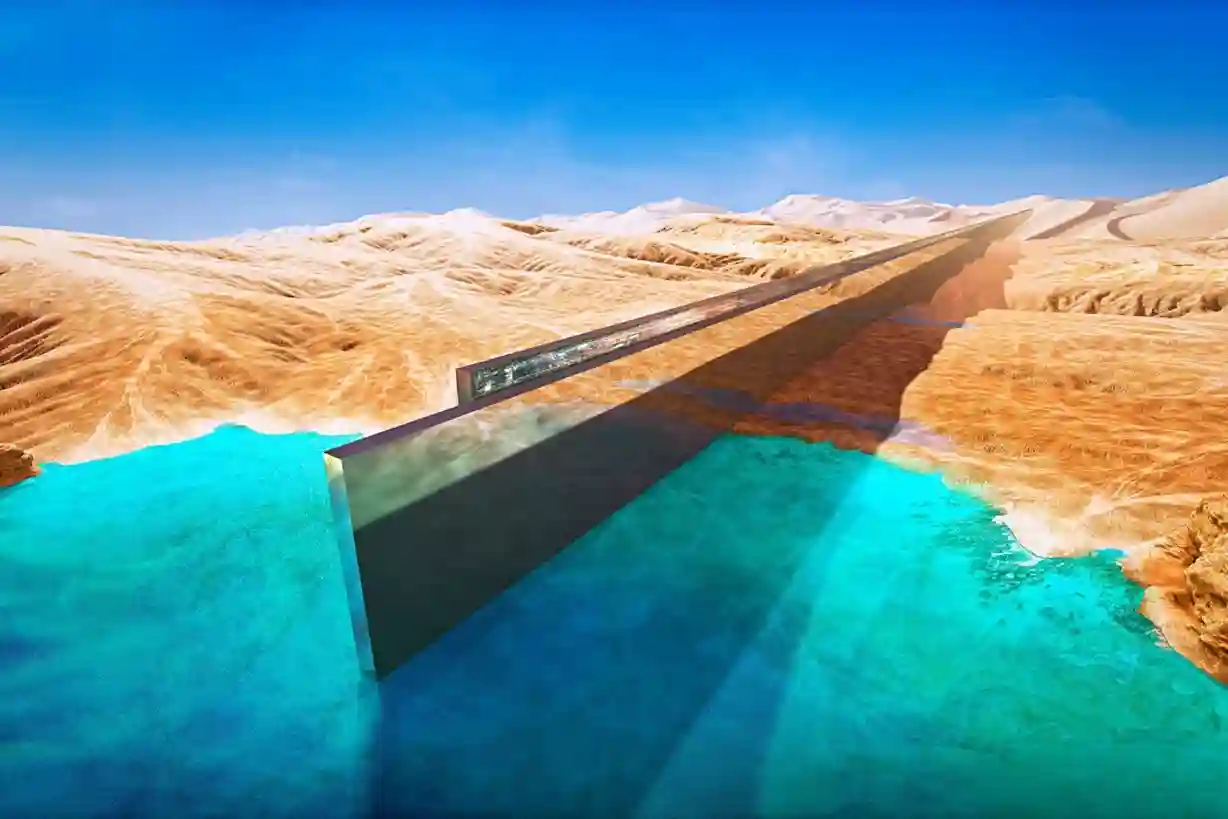
Saudi Arabia’s PIF has officially suspended active construction on The Line until at least after 2030.
Following an extensive strategic review led by NEOM’s Chief Executive Aiman al-Mudaifer, the kingdom decided to pause new work on its flagship linear city.
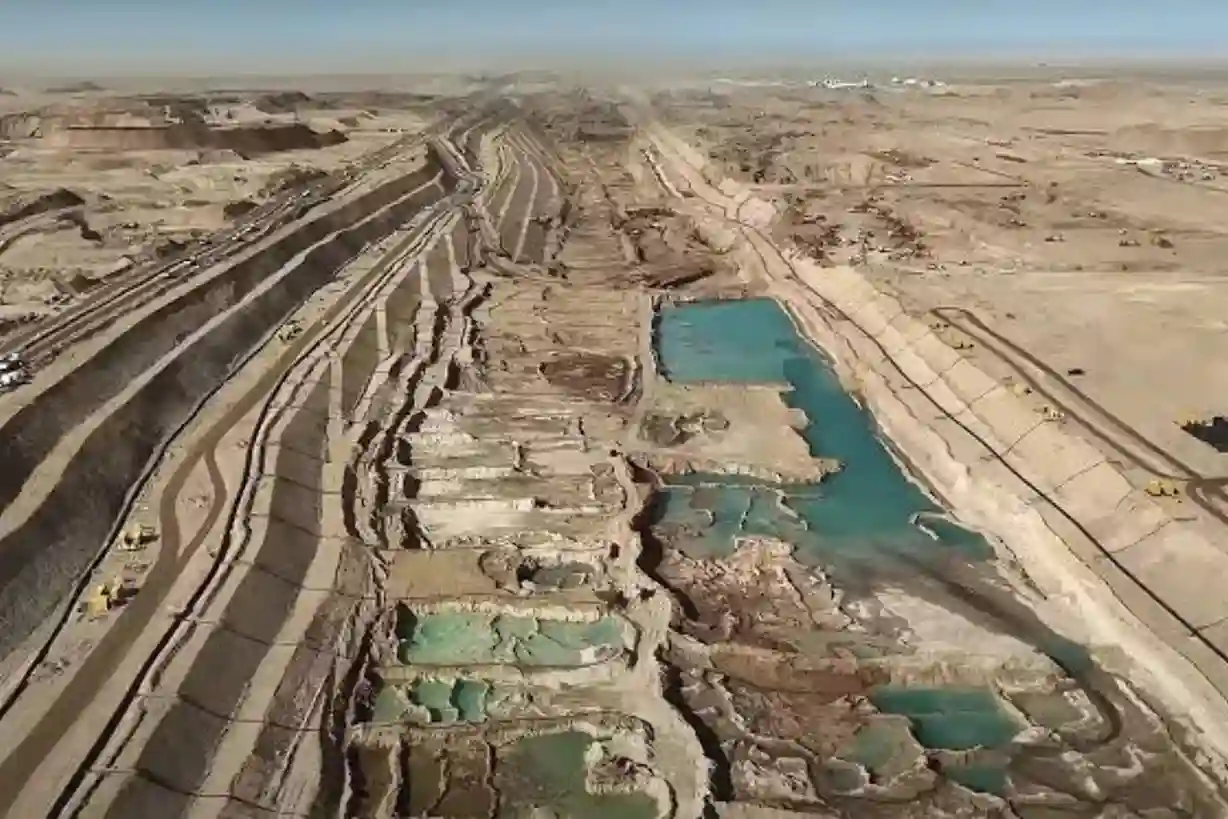
Out of the originally planned 170-kilometer mirrored skyscraper corridor, contractors completed only 2.4 kilometers of foundational piling work before heavy construction was idled.
Furthermore, the projected 2030 population target, which was initially envisioned at 9 million, then scaled down to 1.5 million, and later 300,000, has now been capped at a maximum of up to 100,000 residents.
Reporting from Semafor, Middle East Monitor, Fast Company, and House of Saud confirms that this decision represents a major shift toward a grounded development approach.
Financial Dynamics and Realignment
Managing hyper-scale infrastructure requires continuous balancing between capital expenditure profiles, global macroeconomic shifts, and long-term economic returns.
As development conditions evolved globally, financial evaluations highlighted the necessity of realigning funding models to maintain long-term balance across broader national development portfolios.
Capital Allocation Models and Long-Term Projections
The initial financial baseline for The Line was projected at SAR 1.875 trillion. However, as engineering studies, material sourcing requirements, and long-term site logistics advanced, updated long-term completion estimates expanded to over SAR 3.75 trillion.
Extended full-lifecycle forecasts across the entire multi-decade buildout indicated total capital requirements could eventually reach upwards of SAR 33 trillion.
When managing projects of this magnitude, multi-decade financial commitments must be continually evaluated against return-on-investment timelines.
Unforeseen global inflation in raw material costs, specialized machinery, and technical labor meant that maintaining the original construction pace without adjustment would create disproportionate cash flow demands.
Financial analysis referenced by Al Estiklal via the Financial Times notes that these expanding capital profiles prompted a thorough re-evaluation of how national investment resources are allocated across competing development deadlines.
Sovereign Investment Balance and Global Market Impacts
Global energy market fluctuations and elevated global interest rates have influenced international capital flows.
While initial master plans anticipated substantial participation from global private equity and foreign direct investment (FDI) channels, global institutional capital adopted a cautious stance toward long-horizon, non-revenue-generating mega-structures.
As a result, domestic sovereign financing mechanisms primarily led by the Public Investment Fund (PIF) absorbed the vast majority of early-phase capital outlays, exceeding SAR 187.5 billion in direct expenditures.
To prevent prolonged liquidity strain and safeguard broader economic stability, financial planners initiated a strategic slowdown.
As detailed in coverage by L’Orient Today via Bloomberg, recalibrating capital outlays allows the investment framework to maintain healthy reserves, control public debt levels, and ensure that ongoing public works remain fully funded without overburdening state liquidity.
Strategic Portfolio Adjustments and Contract Restructuring
To optimize financial efficiency, project administrators executed structured portfolio realignments.
This included portfolio valuation adjustments of approximately SAR 30 billion across various development tracks and the renegotiation or temporary deferral of major infrastructure contracts totaling over SAR 31.69 billion.
These adjustments directly affected heavy civil works, including underground rail, tunneling, and mass structural steel packages across international engineering consortia.
Rather than maintaining high capital expenditure on long-horizon urban structures, financial resources are being systematically redirected toward immediate, revenue-generating, and operationally functional assets.
Reporting from House of Saud emphasizes that this capital realignment supports high-value industrial developments, such as:
- Expanding logistics capacity at the Oxagon industrial port
- Constructing scalable, artificial intelligence data center infrastructure powered by advanced cooling technologies
- Advancing commercial-scale renewable energy and green hydrogen production facilities
This phased approach protects capital, aligns spending with immediate commercial utility, and ensures that sovereign investments deliver measurable economic returns.
Geographic and Structural Engineering Challenges
Constructing a continuous 170-kilometer linear corridor flanked by twin 500-meter-tall mirrored structures presents unprecedented civil engineering, geotechnical, and structural design challenges.
Spanning diverse natural landscapes from coastal marine soils and coral formations to rugged granite mountain passes and open desert plateaus demands ground engineering and structural dynamics that exceed standard urban construction methods.
Geotechnical Constraints and Foundation Engineering
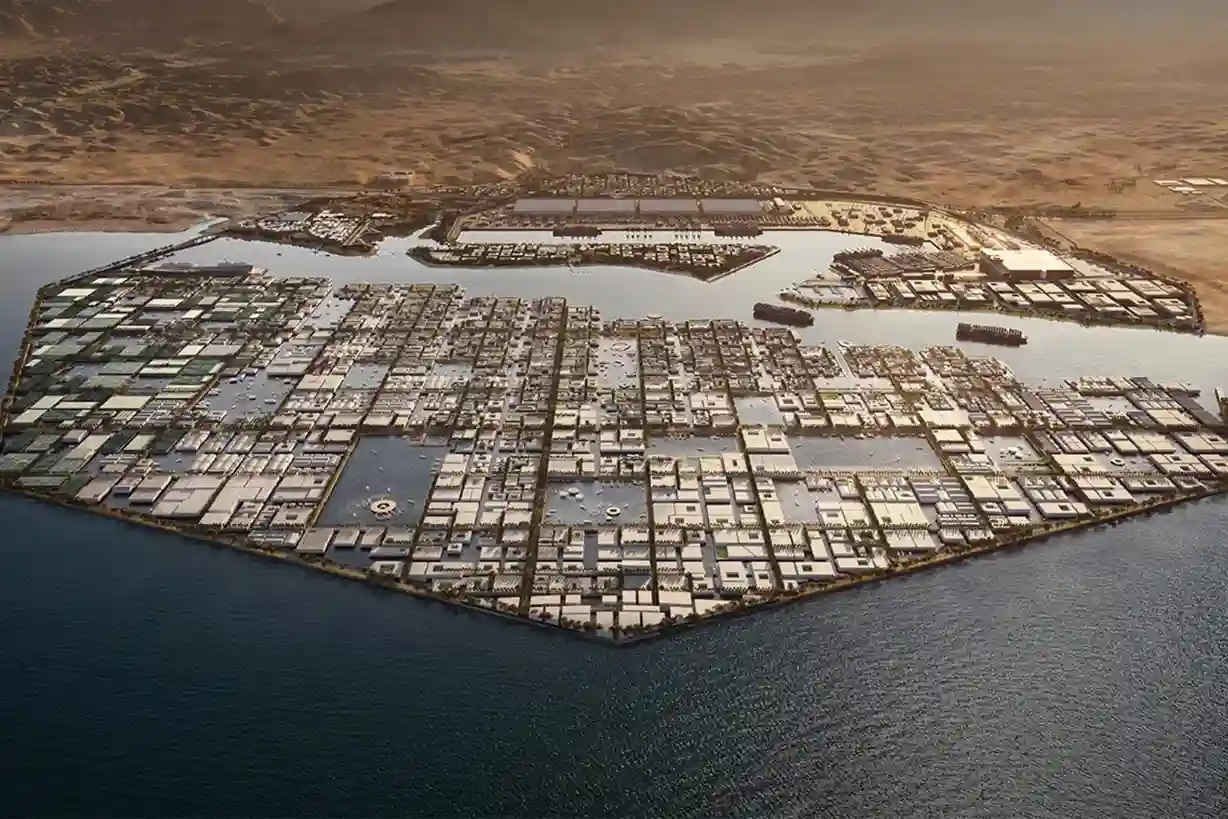
The geological diversity along the 170-kilometer alignment introduces severe variations in soil bearing capacity, rock mechanics, and subsurface hydrologic profiles.
Near the Red Sea coast, foundation crews encountered low-density marine sediments and shallow groundwater tables requiring specialized soil stabilization, continuous dewatering, and deep friction piling.
Conversely, moving inland toward the mountain corridors requires extensive rock blasting and excavation through granitic rock formations.
Executing deep foundational piling at this scale created unexpected timeline overruns. To support twin structures rising 500 meters into the air, engineers had to drive tens of thousands of continuous reinforced concrete piles deep into shifting strata.
Internal technical audits reviewed by The Wall Street Journal via Wikipedia highlighted significant engineering constraints during early-phase site preparation, including piling density overruns, unexpected subterranean rock fractures, and complex excavation logistics across uneven terrain.
Managing structural settlement across differing geological zones remains a primary engineering concern, as even minimal differential soil settling could induce immense structural shear stress across continuous glass and steel facades.
Complexities in Vertical Mobility and Underground Transport Corridors
The foundational concept of “Zero Gravity Urbanism” relies on stacking residential, commercial, and civic spaces vertically within a narrow 200-meter-wide footprint, supported entirely by underground mass transit and utility distribution spine lines.
Designing and building this subterranean transport corridor beneath heavy vertical structures presents severe spatial and mechanical bottlenecks.
The design mandates that all long-distance transit and bulk supply logistics operate below ground level.
Constructing continuous high-speed rail tunnels directly under the load-bearing piles of 500-meter-tall towers requires continuous vibration damping and structural isolation to prevent dynamic stress from transferring to the buildings above.
Furthermore, managing vertical transportation for tens of thousands of daily occupants within high-rise modules requires advanced multi-directional elevator grids that are still in early technical development.
Co-locating high-voltage electrical conduits, primary water mains, district cooling lines, and automated waste systems within a narrow subterranean trench creates significant maintenance access challenges and increases fire safety risks.
Design Re-evaluations and Structural Risk Mitigation
Beyond ground-level engineering, the atmospheric and environmental conditions of the region introduce complex structural physics challenges.
A continuous 500-meter-tall mirrored facade creates massive wind load pressures, particularly where thermal updrafts from the desert floor meet coastal winds.
Modeling wind shear dynamics along a static linear wall revealed potential structural fatigue over time, requiring additional structural bracing and flexible joints to absorb aerodynamic forces.
Thermal dynamics also presented major design hurdles. The desert climate experiences extreme daily temperature fluctuations between daytime heating and nighttime cooling.
Across a multi-kilometer glass facade, these thermal cycles cause continuous expansion and contraction, placing immense mechanical stress on structural joinery, thermal seals, and mirrored panels.
As detailed in technical reviews reported by the Financial Times via Middle East Monitor, engineering groups and architectural teams were mandated to simplify the twin-building geometry.
This redesign phase aims to reduce raw material costs by billions of SAR, lower structural wind loads, and replace continuous mirrored glass with modular, segmented facades that are safer and more cost-effective to construct and maintain.
International Market Volatility and Capital Sensitivity
Global infrastructure developments of unmatched scale do not operate in isolation; they are deeply interconnected with international capital markets, global supply chains, and broader regional stability.
As global macroeconomic conditions shifted and geopolitical tensions fluctuated, international investment funds re-evaluated their risk exposure to long-term capital commitments across the Middle East.
External Regional Dynamics and Maritime Trade Impacts
Regional security conditions and ongoing volatility in surrounding maritime corridors, particularly across the Red Sea trade routes, created unexpected headwinds for international logistics and capital commitments.
The Red Sea serves as a primary shipping artery connecting Asia, Europe, and North Africa. Heightened maritime security risks led to increased ocean freight rates, elevated war-risk insurance premiums for cargo vessels, and extended shipping schedules around the African continent.
These external factors directly impacted the cost and delivery schedules of specialized raw materials, heavy machinery, and structural components required for early-phase construction along the coastal sections of the corridor.
Analysis published by Semafor highlights that wider regional instability and security concerns weighed heavily on global corporate sentiment, prompting international developers and financial partners to adopt a cautious “wait-and-see” approach toward multi-decade, fixed-location megastructures.
Foreign Direct Investment Sensitivity and Co-Financing Targets
The financial model for the development originally relied on a co-financing strategy, anticipating that international institutional capital, sovereign wealth partners, and foreign private equity would fund up to 50%, equivalent to over SAR 937.5 billion of the total long-term capital requirements.
Broadening the investor base was designed to distribute financial risk and ensure long-term global commercial integration.
However, global monetary tightening, marked by elevated interest rates from central banks worldwide, significantly increased the cost of capital. International private equity firms and institutional pension funds shifted their investment priorities toward lower-risk, shorter-duration assets offering immediate yield.
As detailed in the House of Saud Analysis, as foreign private capital commitments slowed, a larger portion of the immediate funding burden fell back on domestic sovereign financing channels.
Rather than allowing public investment funds to absorb prolonged capital shortfalls without matching foreign equity inflows, project leadership opted to recalibrate development timelines until international co-financing conditions improve.
Debt Management and Capital Conservation
Faced with a tightening global credit environment, financial planners had to weigh the trade-offs between accelerating construction through high-cost international debt issuance or conserving sovereign capital for high-yielding domestic projects.
Taking on substantial foreign-denominated debt during a period of elevated global interest rates would impose significant multi-decade debt servicing costs, potentially exceeding tens of billions of SAR annually.
Demonstrating strategic financial prudence, decision-makers chose to adjust construction velocity rather than over-leveraging public balance sheets.
By pausing capital-intensive work on non-revenue-generating urban infrastructure, sovereign funds can be directed toward domestic industrial manufacturing, digital infrastructure, and energy transition projects that yield tangible, short-term economic returns.
This measured response safeguards national liquidity, maintains favorable credit ratings, and preserves long-term financial flexibility in an unpredictable global economic environment.
Reallocating Capital Toward Practical Infrastructure and Global Events
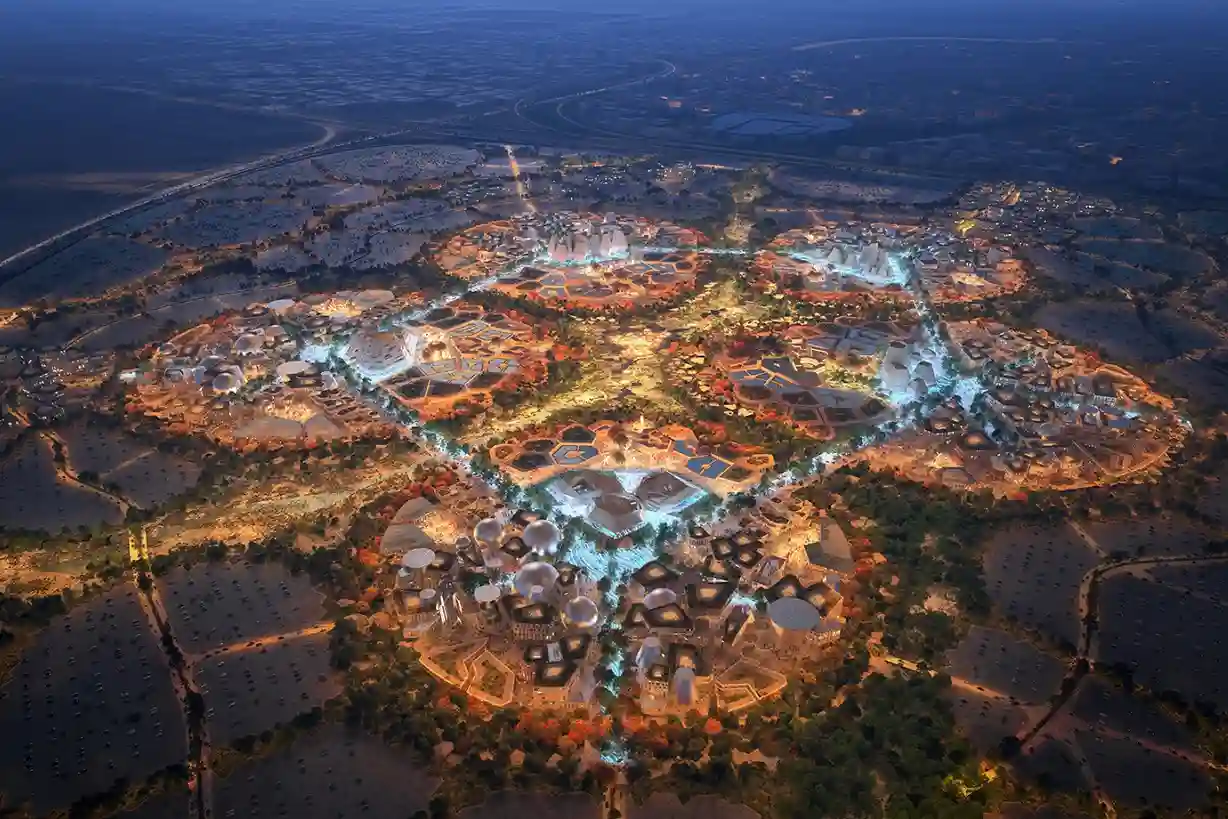
Saudi Arabia is reprioritizing its capital allocations toward urgent, time-sensitive national commitments.
State funding is being redirected toward building essential sports, hospitality, and transport infrastructure needed to host Riyadh Expo 2030 and the 2034 FIFA World Cup.
Within NEOM itself, funding has shifted away from utopian housing concepts toward revenue-generating industrial assets, such as:
- Expanding Oxagon, the industrial port on the Red Sea
- Constructing AI data centers that utilize seawater cooling systems
- Completing the commercial green hydrogen manufacturing plant
Meanwhile, non-essential sub-projects including luxury coastal resorts and the Trojena mountain ski resort (which led to the postponement of the 2029 Asian Winter Games) have been deferred until after 2030.
As noted by Middle East Monitor and Parametric Architecture, this pragmatic shift ensures that public funds deliver immediate economic returns and support the kingdom’s broader long-term growth goals.

 English