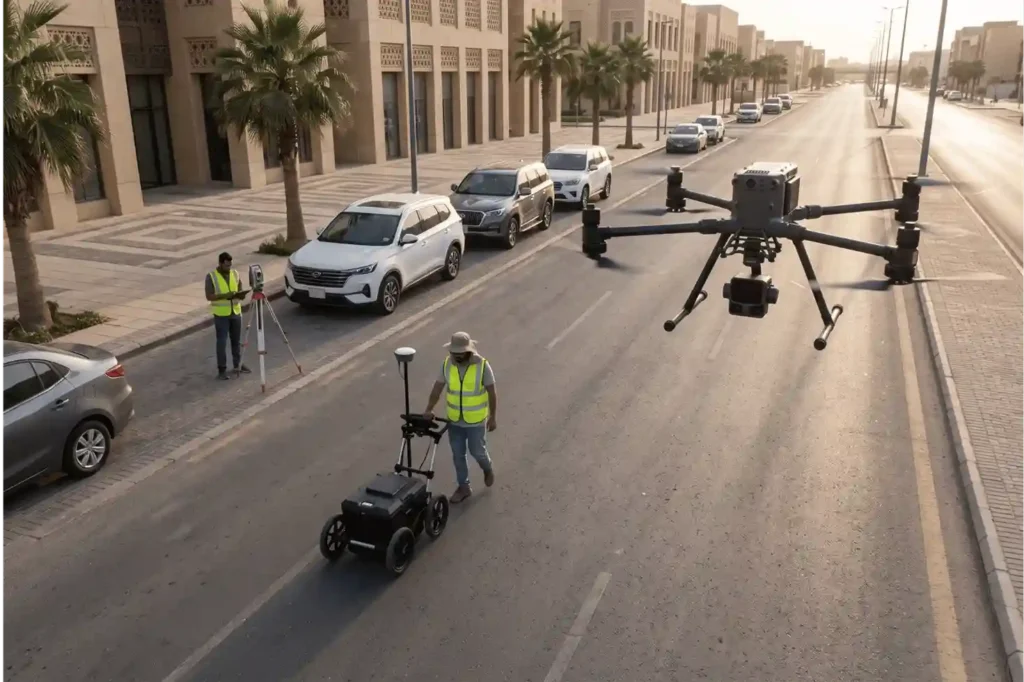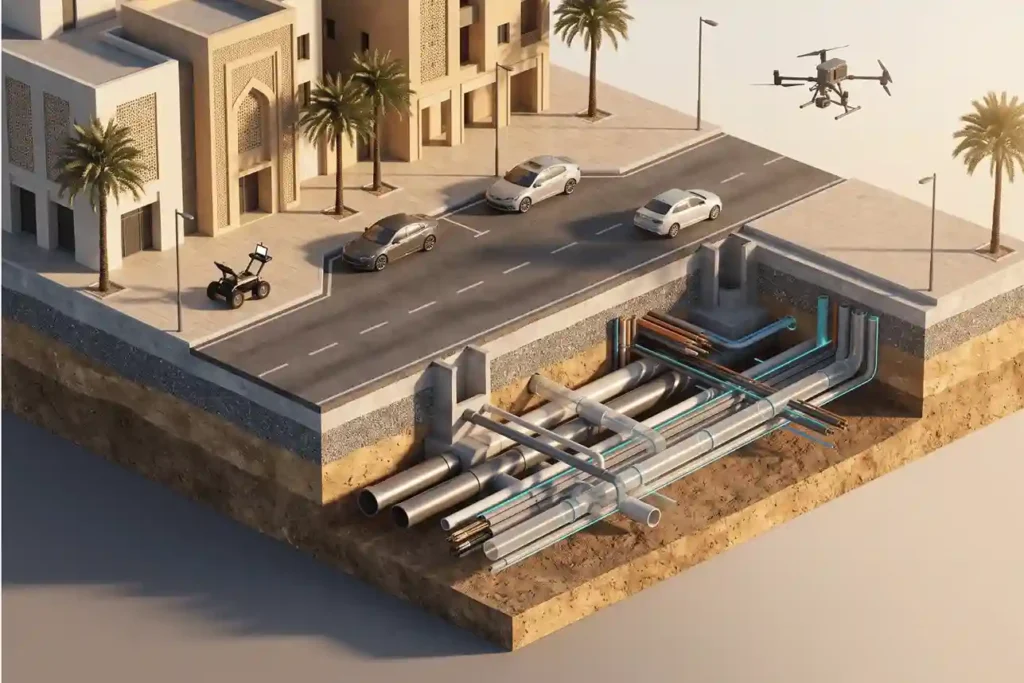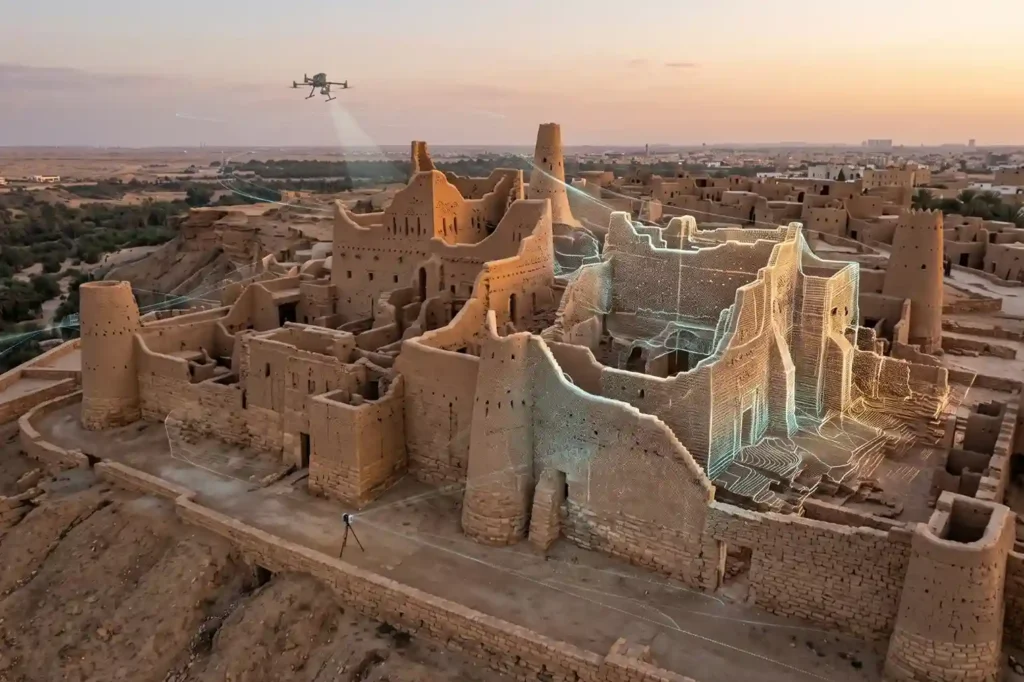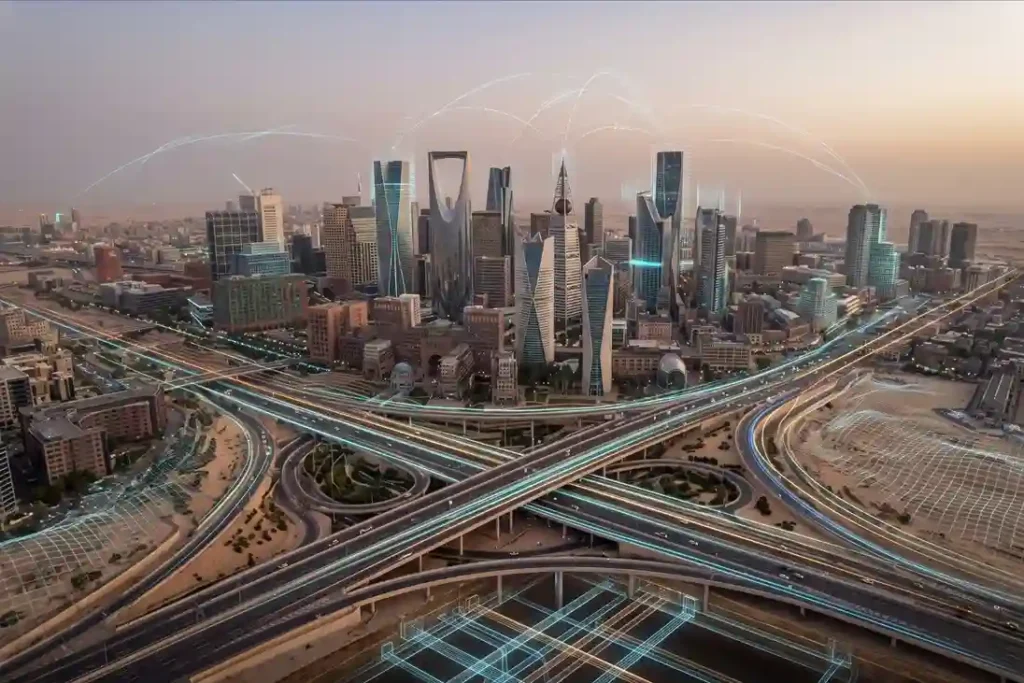
Owning A Drone vs Hiring a Vendor: Which One Do You Actually Need?

A professional drone on the tip of an iceberg above water, with large sections below water representing hidden costs.

Many business owners see the price tag of a high-end drone and think that is the only cost they need to worry about. But buying a professional drone is like looking at an iceberg. The purchase price is just the small part you see above the water. Beneath the surface is a massive collection of hidden costs, including training, insurance, maintenance, and software. In 2026, the question is not just whether you can afford the machine. The real question is whether you can afford the responsibility that comes with drone ownership. This article will help you look beneath the surface to see if buying your own fleet or hiring a third-party vendor is the right move for your project. The Reality of the In-House Model When you choose drone ownership, you are investing in a long-term asset. This gives you total control over when and where you fly, but it also means you are responsible for everything. Heavy Upfront Investment: You are paying for more than just the drone. You need specialized sensors like the FJD Trion V10i for 3D site modeling or portable drone detectors for security. The People Problem: You must hire or train pilots who understand how to capture “ground-truth” accuracy. This includes keeping up with certifications and safety training to protect your team. Maintenance and Software: Drones are high-wear machines that require constant care. You also need to pay for reliable software to process large amounts of data into final models or “smart” maps. The Math of Ownership: To find your real cost, you can use the Total Cost of Ownership formula: TCO = Purchase + (Maintenance + Training + Insurance) x Time The Freedom of the Vendor Model Hiring a third-party vendor changes the conversation from “buying a machine” to “buying a result.” For many companies, this is the most efficient way to avoid the “Golden Oops” of construction or security errors. Access to Elite Tech: A vendor always brings the latest equipment, such as multi-sensor aerial data or specialized TDOA drone detection systems. You get the best technology without the risk of your own hardware becoming outdated. No Maintenance Worries: If a drone crashes or a sensor fails, it is the vendor’s problem to fix. Your project stays on schedule because you are paying for the final data, not the equipment. Expertise on Demand: You get access to specialists who understand complex tasks like “Structure from Motion” or “Epipolar Geometry” to create perfect digital twins. Simplified Budgeting: Instead of complex depreciation and hidden fees, you have a clear per-project or per-day cost. Finding Your BEP The right choice depends on how often you need to fly. Frequency Matters: If your site requires a drone every single day for simple progress photos or basic site checks, drone ownership will usually save you money over several years. Complexity Matters: If you only need high-precision 3D models, underground utility mapping, or advanced signal detection once a month, hiring a vendor is the smarter financial choice. Stop guessing about your budget and start planning for precision. Contact us and analyze your project needs to determine if you should invest in your own fleet or partner with our expert vendors to secure your site. Based on the article provided, here are three visual suggestions designed to help readers understand the financial and operational trade-offs of drone ownership.

Drone Defense Overview: Exploring the Drone Detection Solution

A modern city skyline covered by a semi-transparent digital grid representing a TDOA drone detection network.

The sky is becoming a busy place as commercial drones are now used for everything from delivery to photography. While most are harmless, the proliferation of these machines creates new risks for critical infrastructure like power plants and large public events.  Traditional security cannot stop a threat that comes from above. This is why modern defense relies on drone detection through Radio Frequency (RF) sensing and TDOA technology to provide the first line of defense. To protect an entire city, you need a smart infrastructure that acts as an invisible safety net over the lower airspace. This infrastructure level solution is designed for 24/7 all weather monitoring, ensuring safety and order across large urban environments. The Networked Approach: Multiple smart sensors are spread across a specific area to form what is known as a cell unit. These units connect to each other to create a seamless sensing network that can cover a large city scale area without any gaps in protection. Data Fusion and Intelligence: Information from every sensor converges at the central management platform, where all data is merged into one clear picture. This allows the brain of the system to distinguish between cooperative friendly drones and uncooperative intruders through a smart whitelist and blacklist system. TDOA Passive Technology: The system uses a listen only method that covers an ultra wide frequency range from 100MHz to 6GHz. Because it is passive and does not transmit its own signals, it is highly covert and will not interfere with existing communications like cell towers or Wi-Fi. Autonomous Countermeasures: The system does not just watch, it can also act on its own. Based on a customized defense strategy, the brain can trigger the autonomous disposal of a drone intrusion the moment it is detected. Unlimited Scalability: One of the biggest advantages is how easily the system can grow. You can perform fast scaling up or scaling out by simply adding more sensors to increase the coverage area as the city or site expands. Swarm Tracking: Modern threats often involve multiple drones at once, and this system is specifically built to track and locate drone swarms simultaneously. This smart network ensures that even in a complex city environment, you have total control over what is flying in your sky. Beyond the sensors themselves, the intelligence of this infrastructure lies in its ability to stay ahead of evolving threats through constant updates. This ensures that your drone detection capabilities never become outdated as new drone models enter the market. An Ever-Growing Intelligence: The system features an updatable drone database that supports both standard commercial models and less common versions. This library allows the network to immediately recognize the digital signature of a new threat the moment it enters the monitored area. Total Frequency Awareness: By scanning a massive frequency range from 100MHz up to 6GHz, the system ensures that no unauthorized signal is missed. This wide coverage is a cornerstone of reliable drone detection because it monitors the common channels used by hobbyist drones as well as the unique frequencies used by custom or industrial machines. Real Time Remote Command: Security managers can perform real-time remote monitoring of the entire sensing network from a single control room. The management platform provides a live view of every device status and detection event, ensuring that the human operators always have the information they need to make quick decisions. Multi-Layer Defense Strategies: The brain of the system allows for the creation of customized defense strategies that fit the specific rules of your site. You can decide exactly how the system should react to different types of intrusions, allowing for a flexible response that ranges from simple alerts to active signal blocking. Historical Data and Analysis: The platform records and stores detection data to help security teams analyze patterns of unauthorized flights over time. This spatial record is vital for identifying high-risk times or recurring flight paths, which helps in refining your long-term security plan. By combining these advanced features, the infrastructure creates a proactive environment where drone detection is just the first step in a complete security cycle. Fixed Sensors To Guard Your Most Valuable Assets Certain locations, such as power plants, petrochemical facilities, government buildings, and airports, require a security presence that never sleeps. Round-the-Clock Monitoring: Fixed hardware like the FTD1 and FD1 is built to provide all-weather monitoring 24 hours a day, 7 days a week. Superior Accuracy: If your site needs even higher precision, the FTA1 system combines multiple tracking methods to pinpoint a drone’s location with extreme accuracy. Detection and Defense in One: To save time and space, units like the VDC2 Pro integrate both drone detection and precision signal blocking into a single piece of equipment. Identifying the Intruder: These permanent systems can read Remote ID data, which allows security to identify the specific serial number and ownership of the drone. Portable and Mobile Sensors To Protect Your Site On The Move  While permanent sites are important, many security needs are temporary or require guards to be mobile. This is where portable solutions provide the speed and flexibility needed for field operations. Rapid Deployment: Briefcase-style detectors like the PL1-B are designed for immediate setup, making them the perfect choice for VIP protection or major events like a World Expo. Pocket-Sized Protection: Individual officers can stay alert using smartphone-sized handhelds like the PD1, which provides professional detection in a compact form factor. Total Handheld Control: The PC2 Pro is an all-in-one tactical tool that handles detection, signal blocking, and even navigation redirection from the palm of your hand. Full Situational Awareness: Security personnel can monitor a handheld touch screen that displays the drone’s height, speed, and exact distance in real time. Finding the Source: Beyond just spotting the drone, these portable locators like the PL2 Pro help security teams track down the pilot holding the remote. To further enhance your security program, these tools are built to handle the most difficult field conditions while remaining easy for any officer to use. All

How Virtual Models Prevent Costly Building Mistakes Before It’s Built

A digital twin model of a modern building overlaid on an empty construction site.

Urban planning is, without a doubt, a beautiful prospect. There is a certain magic in envisioning a skyline defined by luxurious, modern architecture and vibrant communal spaces. But as any developer knows, bringing those sleek glass-and-steel visions to life is where the true challenge begins. Planning a development isn’t as simple as placing pawns on a checkerboard. It is a massive, complex transformation, turning raw, empty land into a high-functioning, developed area. In this high-stakes environment, you aren’t just moving pieces; you’re managing invisible underground utilities, structural integrity, and architectural precision. One wrong move doesn’t just lose you a match; it can cost millions in “fixed-in-the-field” rework. This is exactly why digital twin solutions, powered by BIM modeling, have become the essential compass for modern planners. By creating a high-precision, virtual replica of the project before the first brick is laid, developers can plan areas with a level of clarity that ensures the only “game-changing” aspect of the project is the finished result—not the costly mistakes found along the way. What is a “Smart” Virtual Model? Most people think a 3D model is just a pretty picture of a building. But at its core, our service Multi-Sensor Spatial Data within BIM Environments is about creating a “living” digital twin of your project. To build this, we use a “Multi-Sensor” approach: Aerial & Spatial Data: We use drones and high-speed laser scanners (LiDAR) to map the site and surrounding buildings with millimeter precision. Geophysical Data: We use specialized sensors to “see” underground, identifying old pipes, hidden voids, or soil issues that aren’t on any old maps. We then feed all this data into a BIM (Building Information Modeling) environment. In this smart map, a line isn’t just a line; it’s a “smart” object. A digital wall in our model knows exactly how much it weighs, what it’s made of, and how it interacts with the electrical wiring behind it. Pre-Construction Why do the world’s leading architects and developers rely on this service? Because it gives them three “superpowers” that traditional 2D drawings cannot provide: 1. Automated Clash Detection: This is the ultimate “mistake-finder.” Our software automatically scans the entire digital model and highlights “clashes”—for example, showing you exactly where an air conditioning duct is clashing with a fire sprinkler line. You solve the problem with a click of a mouse, rather than a jackhammer. 2. Underground Certainty: One of the biggest risks in any project is what you can’t see. By integrating geophysical data into the BIM model, we map the “invisible” world beneath the site. This prevents your excavation team from accidentally hitting a high-voltage cable or an ancient water main. 3. Stakeholder Clarity: It is much easier to get approval from investors or city planners when they can take a virtual “walk-through” of the finished project. Our models transform abstract data into a clear, comprehensive project visualization that everyone can understand. Build Once, Build Right The goal of a modern construction project is simple: maximum efficiency with zero surprises. By using our Data Processing and BIM Modeling services, you aren’t just buying a 3D drawing; you are buying an insurance policy against human error. In 2026, the question isn’t whether you can afford to build a virtual model. It’s whether you can afford the “Golden Oops” that happens if you don’t. Contact us and start to zoom into your project right from the start. Based on your article regarding BIM for Construction, here are three professional, jargon-free visual suggestions designed to highlight the value of virtual modeling and risk mitigation.

Safe Site Measurement: Visual RTK GNSS Measurement for Elevation Models and Surface Mapping

A surveyor safely measuring a steep quarry wall from a distance using the FJD Trion V10i.

In the high-stakes environments of 2026, topographic surveying has evolved. We have moved past simple coordinates and into the realm of complex Digital Elevation Models (DEM) and Digital Surface Models (DSM). However, a persistent challenge remains: the vertical barrier. Whether it is an unstable pit wall in a quarry or a jagged stockpile in a construction zone, traditional surveying has always required “boots-on-the-point,” putting personnel at significant risk. Furthermore, we must recognize that aerial data alone isn’t enough for operational purposes.  While drones provide a “big picture,” reliable software is needed to process large amounts of data from field acquisition to ensure ground-truth accuracy. This software must be compatible with your specific needs, including cloud and on-premises, real-time, and intelligent. Consequently, FJ Dynamics is equipping its equipment with reliable, integrated software to bridge the gap between field capture and the final 3D model. The Visual-Inertial-GNSS The V10i creates a “Digital Vector” from the receiver’s tip to a remote object. To do this accurately from 10 meters away, the system must solve a complex spatial equation in milliseconds. 1. Stereo Vision & Epipolar Geometry The V10i utilizes a Dual-Camera System (typically a 2MP and 5MP array) to perform what is known as Stereo Photogrammetry. The Process: As you move the rover or pan the camera, the software captures multiple frames. By identifying the same “feature points” in two different frames taken from slightly different angles, the system applies Epipolar Geometry to triangulate the exact 3D position of that pixel. Depth Perception: This mimics human binocular vision but with the added benefit of RTK-corrected coordinates at the “eye” (the camera lens), allowing for a measurement accuracy of 2 – 4 cm within an 8 meter radius. 2. The 4th Generation Calibration-Free IMU Visual measurement is useless if the rover doesn’t know its exact orientation (tilt, pitch, and roll) at the microsecond the image is captured. The Inertial Link: The 4th Gen Inertial Measurement Unit (IMU) inside the Trion series is immune to magnetic interference from heavy mining equipment. Tilt Compensation: It allows for a tilt angle of up to 60° while maintaining a measurement error of less than 2.5 cm. This means you can hold the rover at an awkward angle to see over a ledge, and the “Fusion” engine will still calculate the remote point’s elevation correctly relative to the global coordinate system. 3. 1408-Channel Signal Processing The “GNSS” part of the fusion provides the global anchor. In deep quarries where high walls block much of the sky, signal “masking” is a constant threat. Multi-Constellation Tracking: The V10i tracks 1408 channels across all major constellations, including GPS, GLONASS, Galileo, BeiDou, QZSS, and IRNSS. Fix Stability: The fusion engine uses kalman filtering, a sophisticated mathematical algorithm to combine the GNSS data with the IMU’s movement data. If the satellite signal is briefly blocked by a passing haul truck, the IMU “fills in the gaps,” maintaining a steady position so your visual measurement doesn’t jump or lose accuracy. The Calculation When you tap a point on the screen to measure a vertical face, the V10i calculates the coordinate P(x,y,z) using the following logic: Ptarget = PGNSS + RIMU • (Voffset + Dvisual) PGNSS: The absolute position of the antenna. RIMU: The rotation matrix (how the pole is tilted). Voffset: The known distance from the antenna to the camera lens. Dvisual: The calculated distance from the lens to the object based on stereo triangulation. Technical Note: Because the system performs this calculation in real-time, the surveyor sees a “Live Point” on the screen. If the point turns green, the fusion engine has achieved a “high-confidence” solution, and the point is ready to be saved into your Digital Surface Model (DSM). From Pixels to Models 1. High-Density Point Cloud Generation Traditional RTK surveying relies on “Sparse Sampling,” you capture a single point every few meters. The FJD Trion V10i uses “Dense Sampling.” As the dual-cameras sweep a surface, the fusion engine identifies thousands of “Keypoints” (distinct pixels) in every frame. Structure from Motion (SfM): The software tracks the movement of these pixels relative to the rover’s RTK-corrected position. By solving the Collinearity Equation, it projects these pixels into 3D space to create a Point Cloud. Data Density: While a traditional surveyor might take 50 points to map a stockpile, the V10i’s visual capture can generate 1,000+ points per square meter, capturing subtle ridges and depressions that a manual pole would miss. 2. Surface Modeling: DSM vs. DEM Once the Point Cloud is captured, the Trion Survey software categorizes the data into two distinct types of models: Digital Surface Model (DSM): This includes everything visible to the camera—the “skin” of the earth, including vegetation, machinery, and buildings. In a quarry, the DSM is used for immediate Volumetric Analysis to calculate exactly how much material is in a pile. Digital Elevation Model (DEM): To find the “Bare Earth,” the software applies filtering algorithms to strip away “noise” (like a parked bulldozer or a stray bush). The resulting DEM is essential for engineering haul roads or calculating the remaining life of a pit. 3. Volumetric Intelligence and Accuracy In mining, volume is money. The accuracy of your model depends on the Ground Sample Distance (GSD). Because the V10i allows you to get close to a vertical face safely, you achieve a much smaller GSD (more detail per pixel) than a high-altitude drone. Ecosystem Integration The model is only as good as its anchor. This is where the V10a and V1t complete the “Desire” for total site accuracy: Ground Control (V1t): The lightweight Trion V1t is used to set “Hard Benchmarks” around the site. These points act as the “truth” that the V10i’s visual models are snapped to, ensuring the entire pit map is oriented perfectly to the global grid. Model Verification (V10a): Once the 3D model is generated, the V10a’s Mixed Reality (MR) stakeout allows a manager to walk the site and see the intended model overlaid on the actual ground. If the current excavation (the “pixels”)

DJI Mavic 3: The Portable Work Drone

A professional drone operator in a high-vis vest and hard hat holding an unfolded DJI Mavic 3 Enterprise next to a 4x4 vehicle on a construction site, ready for immediate launch.

For years, professional drone operations were synonymous with large vans, heavy equipment cases, and multi-person crews. However, as we move through 2026, the industry has realized a vital truth: drones alone are no longer enough for operational purposes. While the aircraft gets you into the sky, reliable software is needed to process the large amounts of data acquired during field missions. Furthermore, to be truly effective, the software must be compatible with your specific needs, whether you require cloud-based collaboration, on-premises security, or real-time intelligence. Recognizing this shift, DJI is equipping its equipment with reliable software and high-performance hardware that fits into a single backpack. The result? The DJI Mavic 3 Enterprise Series, the drone that proved you don’t need size to have strength. The Compact-Ready Professional The most significant advantage of the Mavic 3 Enterprise (M3E) and Thermal (M3T) is their ability to deliver industrial-grade results without the industrial-grade footprint. Lightweight Mastery: Weighing between 915 g and 1050 g, these drones are roughly the weight of a standard water bottle, making them easy to carry to remote sites or high-altitude locations. The 60-Second Deployment: In emergency situations or busy construction sites, time is currency. The Mavic 3 can be unfolded and in the air in under a minute, allowing for immediate “eyes on target”. 45-Minute Endurance: Despite its small frame, it boasts a 45-minute flight time, allowing a single pilot to cover up to 2 km2 in a single mission. Small Body, Massive Intelligence Don’t let the compact size fool you; this series is packed with the same high-end sensors previously found only on much larger aircraft. The Mapping Specialist (M3E): Equipped with a 20MP Wide camera and a mechanical shutter, it eliminates motion blur during high-speed mapping flights, ensuring centimeter-level accuracy for surveyors and engineers. The Thermal Expert (M3T): Features a 640 x 512 thermal sensor, making it the ultimate tool for night inspections and search and rescue missions where identifying heat signatures is critical. Safety in Tight Spaces: With omnidirectional obstacle sensing, the drone “sees” in every direction simultaneously, allowing it to navigate safely near buildings, power lines, and trees. Smart Integration: Using the DJI Pilot 2 interface, the drone connects seamlessly to FlightHub 2, providing real-time data sync to command centers anywhere in the world. The One-Person Advantage In 2026, efficiency is the key to scaling any business. The Mavic 3 Enterprise series allows a single operator to perform tasks that once required a full team. Lower Overhead: No more dedicated transport trucks or massive battery charging stations. Greater Access: Reach rooftops, internal warehouse structures, or remote forest perimeters that larger drones simply cannot access. Professional ROI: By combining a portable airframe with the power of DJI Terra and FlightHub 2, small teams can generate the same high-fidelity 3D models and thermal reports as global corporations. Scale Your Business Fast The future of professional drone work is lean, fast, and data-heavy. The DJI Mavic 3 Enterprise Series represents the pinnacle of this movement, offering a “flying lab” that fits in the palm of your hand. Embrace the gear and work smarter. Contact us to see what DJI Mavic 3, a portable professional drone can do for your workflow. Here are three simple, high-impact visual suggestions for your article on the DJI Mavic 3 Enterprise Series, strictly adhering to the “no side-by-side” constraint.

The Complete DJI Enterprise Software Guide: From Data to Intel

A DJI Enterprise drone connected via a digital network to a FlightHub 2 AIO server and a 3D digital twin on a tablet.

Drones alone are no longer enough for operational purposes. While a high-performance aircraft is the “muscle” of the operation, it is merely a vehicle for sensors. To truly unlock value, reliable software is needed to process large amounts of data acquired during field missions. The complexity of modern infrastructure means that “one size fits all” no longer exists; the software must be compatible with your specific needs, whether that requires the agility of the cloud, the “fortress” security of an on-premises server, real-time awareness, or intelligent automation. Understanding this shift, DJI is equipping its equipment with a reliable, integrated software ecosystem designed to bridge the gap between a flight and a finished report. The Management Pillar: Command, Control, and Sovereignty In the professional drone landscape of 2026, management is no longer just about tracking flight paths; it is about exercising absolute authority over data and real-time operations. DJI’s management pillar is defined by two distinct architectures that cater to different organizational security requirements: FlightHub 2 (Public Cloud) for agile, multi-site coordination, and FlightHub 2 On-Premises for missions requiring an “air-gapped” fortress of data sovereignty. 1. The AIO (All-in-One) Hardware  The DJI FlightHub 2 AIO is the cornerstone of localized drone management. It is a 3.01 kg portable server specifically engineered to run the full On-Premises software stack without an internet connection. Edge Computing Power: The unit is powered by an Intel® Core™ Ultra 7 Processor 265 and 64 GB of DDR5 RAM, allowing it to handle up to 20 simultaneous devices (drones and docks) with a peak resource utilization of approximately 80%. GPU-Accelerated Intelligence: An integrated NVIDIA RTX™ 2000 Ada graphics card drives the localized DJI Terra modeling engine, enabling the AIO to process $500$ drone images into a detailed 3D model in just five minutes. Data Redundancy: Storage is secured by three 2 TB NVMe SSDs. While one is reserved for the system, the other two operate in a RAID 1 mirrored configuration, ensuring that a hardware drive failure does not result in the loss of critical mission data. 2. Technical Command: Virtual Cockpit and Automation The software architecture transitions drone operation from a field-level task to a centralized command center experience. Virtual Cockpit: This interface allows remote operators to pilot drones using a mouse and keyboard. Features like FlyTo automation calculate safe, efficient routes with a single click, while intelligent object tracking uses on-device AI to detect and monitor vehicles or vessels automatically. Independent Frontend Components: FlightHub 2 On-Premises is modular, offering three independent frontend components, such as Flight Routes Editor, Virtual Cockpit, and Project/Map. These can be integrated directly into an organization’s existing software stack, significantly reducing the development workload for custom platforms. 3. Sovereignty and System Integration Sovereignty is achieved through total isolation of the drone’s data cycle from the public internet. Air-Gapped Deployment: Organizations can deploy the platform on physical machines within a Local Area Network (LAN) or private cloud servers, ensuring that photos, videos, telemetry, and flight logs never leave the internal firewall. MQTT Bridge and OpenAPI: To support high-level industrial integration, the system includes an MQTT Bridge for bridging and forwarding messages to SCADA or other enterprise systems. The RESTful OpenAPI allows developers to call core platform capabilities directly, enabling seamless integration with existing IT workflows. Secure Authentication: The platform supports OAuth 2.0 and Single Sign-On (SSO), allowing for unified authentication and granular user permission management within a corporate identity system. 4. Connectivity Reliability For missions in signal-deprived or restricted areas, the management pillar utilizes hardened communication links. 4G Enhanced Transmission: When combined with a DJI Cellular Dongle 2 and a dedicated private 4G APN card, the system maintains high-definition video transmission and coordination even when the standard SDR signal is obstructed by terrain or structures. Manual Mastery and Mission Automation In the field, the software is the primary interface between the human operator and the aircraft’s hardware. DJI’s “Field Pillar” is divided between DJI Pilot 2 (the DJI Enterprise app), which excels at high-stakes manual mastery, and DJI GS Pro, designed for rigorous mission automation. 1. DJI Pilot 2: Real-Time Tactical Awareness DJI Pilot 2 is the default flight control application for modern enterprise drones, serving as the pilot’s cockpit for situational awareness. Augmented Reality (AR) Overlay: Pilot 2 utilizes AR projection to display Home Points, PinPoints, and mission Waypoints directly within the camera view. This allows the pilot to maintain high situational awareness without constantly switching to a map view. Advanced Payload Control: It provides deep integration for hybrid sensors, including Link Zoom, which allows for simultaneous zooming with both thermal and visual sensors. Pilots can also activate Discrete Mode for sensitive night operations, turning off all aircraft lights with a single tap. Tactical AI Features: The app supports Smart Track, which uses on-device AI to automatically follow moving subjects like vehicles or vessels, significantly reducing the pilot’s cognitive load during complex missions. Pre-Flight Integrity: Every mission begins with a comprehensive pre-flight checklist that integrates aircraft status, sensor health, and localized environmental parameters to ensure a safe takeoff. 2. DJI GS Pro: Professional Mission Architecture While Pilot 2 is built for the pilot, DJI GS Pro (Ground Station Pro) is built for the mission architect. This iPad-based application is specialized for repeatable, automated workflows that require millimeter precision. Complex Waypoint Missions: GS Pro supports up to 99 waypoints per mission group. Each waypoint can be programmed with up to 15 consecutive actions, such as precise gimbal pitching, aircraft rotation, and timed photo capture, ensuring every data point is captured exactly as planned. 3D Map POI (Circle and Vertical): Specialized modes allow for high-fidelity data collection of tall structures. Circle Mode automates a spiral flight path around a building, while Vertical Mode executes precise “up-and-down” paths to gather data for vertical reconstructions, such as bridge pylons or skyscrapers. GIS Data Integration: Operators can import KML, SHP, KMZ, and ZIP files directly into GS Pro. This allows construction and survey teams to overlay project boundaries or specific geometries onto the map to

Drone Battery Storage & Safety: The Essential Guide

A secure, specialized metal case holding DJI drone batteries in custom foam in a clean workshop.

In recent years, lithium-ion battery incidents have surged globally, with reports showing a 17% increase in related fires due to mishandling during storage and charging. A single lithium battery failure can trigger “thermal runaway,” a catastrophic chain reaction where temperatures spike from 100°C to over 1,000°C in seconds. Alarmingly, over 50% of these fires occur when devices are not even in use. Lithium batteries are powerful but volatile; if handled incorrectly, they create severe fire and injury risks. For an operator, an overlooked battery in a hot vehicle or a fully charged cell left in a drawer isn’t just a maintenance error; it’s a potential disaster waiting to happen. The Intelligence of the Battery Management System (BMS) Modern drone batteries, specifically those from DJI, are far more than simple “power bricks.” They are equipped with an internal Battery Management System (BMS) that serves as the brain of the power cell. Auto-Discharge Logic: DJI batteries are programmed to protect themselves. If left inactive for 5–10 days, they will automatically begin to discharge to a safer storage level of approximately 60%. The Thermal Sweet Spot: High heat is the leading cause of battery swelling and internal failure. To maintain the integrity of the chemical layers, batteries must be stored in a controlled environment between 15°C-25°C. Safe “State of Charge” (SoC): Storing a battery at 100% or 0% is the fastest way to kill its lifespan. Professional standards require storage at 40-60% charge to minimize stress on the cells. Maximum Reliability and Fleet Longevity Every professional operator desires a fleet that is ready at a moment’s notice. Correct battery care directly translates into Equipment Reliability, extending the life of your batteries and reducing unexpected downtime during critical missions. Calibration for Accuracy: By calibrating your batteries every 3 months (or ~20 cycles), you ensure that the “Return-to-Home” (RTH) calculations in your app are accurate. This prevents in-flight power loss or aircraft failure due to false voltage readings. Warranty & Compliance: Following these strict manufacturer procedures is often a requirement to maintain your DJI warranty, comply with aviation safety guidance, and protect your insurance coverage. Safety of Infrastructure: Using fire-resistant LiPo bags or metal cases protects your personnel, aircraft, facilities, and vehicles from the intense heat of a lithium fire, which is notoriously difficult to extinguish once it begins. Your Professional Battery Safety Checklist To ensure your operations remain safe and compliant, implement these procedures immediately: Immediate Storage Prep: Verify batteries are at 40-60% charge before putting them away. Power off and remove batteries from the aircraft; never store them inside the drone. Place them in a fire-resistant container in a dry, ventilated area. Long-Term Maintenance (Every 3 Months): Perform a Calibration Cycle: Charge to 100%, discharge to 10-15%, let it cool, then recharge to 100%. For long-term storage, fully charge once every 3–6 months, then discharge back to 50-60% to maintain chemical activity. Grounding Procedures: Immediately retire any battery showing signs of swelling, overheating during use, rapid voltage drops, or error messages in the DJI app. Never attempt to repair a damaged battery; isolate it and dispose of it through approved recycling channels. Read the full guide here

How DJI FlyCart 30 Delivers in Difficult Terrain and High Altitudes

Cinematic wide shot of DJI FlyCart 30 drone carrying cargo over a steep mountain ridge toward a remote construction site.

In 2026, drone delivery has transitioned from an emerging trend into a formidable operational challenge. As global industries push for total automation, the real test lies in the “Last Mile”—the final, most difficult stretch of the supply chain. While the world demands faster connectivity, remote and mountainous terrains continue to pose a multi-million dollar bottleneck that traditional logistics simply cannot solve. ​There is an increasing number of critical occasions where rapid delivery is the only viable path forward. Whether it is transporting a specialized industrial spare part to prevent a costly plant shutdown, delivering life-saving healthcare and drugs to isolated clinics, or rushing emergency packs to disaster-stricken areas, the window for success is often measured in minutes. ​These high-stakes scenarios demand more than just transport; they require fast response times and agile operations that can bypass jagged peaks and impassable roads. This is where the DJI FlyCart 30 plays a significant and transformative role. By combining heavy-lift power with the maneuverability of a specialized UAV, it turns a logistical nightmare into a streamlined, high-speed aerial corridor, ensuring that critical supplies reach their destination exactly when they are needed most. The Engineering of High-Altitude Heavy Lifting The FlyCart 30 is a masterpiece of industrial redundancy and high-torque aerial engineering. It is designed to maintain a 95 kg Maximum Takeoff Weight (MTOW) at sea level while retaining the agility needed to navigate tight mountain corridors. 1. The Coaxial Propulsion Advantage Unlike standard quadcopters, the FlyCart 30 utilizes a 4-axis, 8-propeller coaxial design. Thrust Density: By stacking two motors on each arm, DJI increases the total thrust without significantly expanding the drone’s footprint. The 54-inch carbon fiber composite propellers are driven by motors with a 100×33 mm stator size, capable of generating up to 4,000 W of peak power per rotor. Active Redundancy: If a single motor or propeller fails during a heavy-lift mission, the flight controller immediately redistributes torque to the remaining seven units. This “emergency landing mode” allows the drone to remain stable and land safely even with a 30 kg-40 kg payload attached. Heat Dissipation: To prevent motor burnout during long climbs, the motor housings are aerodynamically optimized for passive cooling, ensuring consistent performance during the 18-minute full-load flight window. 2. Mastering Atmospheric Density and Altitude At 6,000 meters, the air is roughly 50% less dense than at sea level. The FlyCart 30 overcomes this through “oversized” aerodynamics: Pitch and Torque: The flight controller uses a specialized high-altitude firmware profile that adjusts the RPM and pitch response of the blades to maintain lift in thin air. Payload Scaling: While it can fly to 6,000 m without a load, the safe operating ceiling for a full 30 kg payload is 3,000 m. This reflects the physical reality of battery discharge rates and motor strain at extreme altitudes. 3. Intelligent Winch Dynamics and Swing Control The Winch System Kit is more than just a rope; it is a sensor-integrated delivery tool. Swing Control Algorithm: When carrying a slung load, the drone’s IMU (Inertial Measurement Unit) detects the pendulum frequency of the cargo. The FlyCart 30 then performs subtle, counter-active “attitude adjustments” micro-tilting the aircraft to dampen the swing and keep the center of gravity stable. Automatic Touchdown Release: The winch clump features a pressure sensor. Once it detects that the cargo has made contact with the ground and the cable tension has dropped, it automatically triggers the release mechanism. Cable Cut Protection: In the event of an emergency (e.g., the cable snagging on a cliff edge), the pilot can trigger an emergency cable cut, jettisoning the line to save the aircraft. 4. Power Integrity: The DB2000 Intelligent Battery The heartbeat of the system is the DB2000 Intelligent Battery 38,000 mAh, which is designed for industrial abuse. Self-Heating Technology: Lithium batteries lose efficiency in the cold. To operate at 20°C, the DB2000 uses internal heating elements to bring the cells to an optimal operating temperature before takeoff. Dual-Battery Redundancy: In dual-battery mode, the system draws power in parallel. If one battery experiences a cell failure or voltage drop, the other can provide enough current for an emergency return-to-home. Hot-Swapping: To minimize downtime between delivery “loops,” the batteries can be swapped while the drone’s internal systems remain powered, allowing for continuous logistical cycles. To provide a high-level technical breakdown, the “unwavering reliability” of the DJI FlyCart 30 is not just a marketing claim—it is an engineering requirement achieved through multi-layered sensor fusion, hardened electrical architectures, and fail-safe mechanical systems. Unwavering Reliability in Harsh Climates In mountainous or industrial environments, reliability is defined by a drone’s ability to maintain “situational integrity” when external conditions (visibility, temperature, and connectivity) deteriorate. 1. Multi-Directional “All-Weather” Sensing The FlyCart 30 moves beyond traditional visual-only obstacle avoidance by integrating Front and Rear Active Phased Array Radars (Models RD241608RF/RB). Active Phased Array Technology: Unlike standard sensors, these radars use electronic beam steering to scan the environment thousands of times per second. Because radar uses radio waves rather than light, it can “see” through fog, dust, and heavy rain where the Binocular Vision System (FOV: 90° horizontal, 106° vertical) might be blinded. Horizontal and Vertical Precision: The radar provides a 360° detection range of 1.5 m- 50 meters and an altitude detection range up to 200 meters. This allows the drone to perform “Terrain Follow” flights, automatically adjusting its altitude to the steep, jagged contours of a mountain face. 2. Hardened Ingress Protection (IP55) The IP55 rating is a critical technical benchmark for industrial machinery. Dust Protection (5): The first ‘5’ indicates that while the system is not 100% dust-tight, ingress of dust is not enough to interfere with the operation of the electronics. This is vital for takeoffs in dry, rocky mountain basins. Water Protection (5): The second ‘5’ means the aircraft is protected against low-pressure water jets from any angle. In practice, this allows the FlyCart 30 to continue a delivery mission during a sudden torrential downpour or heavy sleet that would ground an IP44-rated consumer drone. 3. The

How to Spot Unknown Drones In Your Facilities in Real-Time

A digital security shield overlaying an oil refinery, illustrating a 6km drone detection range.

For modern oil and gas refineries, the threat from unauthorized drones is no longer theoretical. Whether it is industrial espionage, illegal photography, or potential physical interference, an unknown UAV in your airspace is a major security breach. However, refineries face a delicate challenge: many traditional drone defense systems use high-power radio signals that can interfere with sensitive plant equipment and Industrial Control Systems (ICS). To solve this, Terra Drone Arabia introduces the Terjin TDOA FTD1, a “Silent Guard” that identifies and tracks drones without emitting any radio noise into your facility. The Safety of “Passive” Protection The TDOA FTD1 is fundamentally different from traditional “active” sensors. It is a Passive RF Sensing device. Think of it as a security guard who only listens, rather than shouting signals across your plant. Zero Signal Interference: Because the FTD1 only listens to radio signals, it is $100\%$ safe for environments with sensitive electronics, such as refineries, gas processing plants, and control centers. Listening to the Entire Spectrum: The device scans from $100\text{ MHz}$ to $6\text{ GHz}$, capturing the radio signals drones use for control and live video feeds. Invisible Security: Since the system does not transmit any signals, it is nearly impossible for an intruder to detect that they are being tracked. Precise Tracking from Miles Away In the Oil & Gas industry, early warning is the difference between a minor incident and a total facility shutdown. The TDOA FTD1 provides the high-precision data your security team needs: 6km Early Warning: The system can detect drones up to $2\text{–}6\text{ km}$ away, allowing you to notice a threat long before it reaches your perimeter. Finding the Exact Location: One sensor tells you a drone is near; multiple networked sensors use TDOA (Time Difference of Arrival) technology to calculate the drone’s exact 3D position on a map. Fast and Reliable: Drone information is updated in less than one second, and the system is so accurate that it generates less than one false alert per day on average. Smart Airspace Management: Use the Whitelist Function to tell the system which drones are yours. The FTD1 will ignore your authorized inspection drones while immediately alerting you to unknown intruders. Secure Your Facility Without Compromise The TDOA FTD1 is designed for easy, all-in-one installation on existing plant structures. With its ability to track over 10 drones at once and an updatable database that recognizes the latest drone models, it is the most reliable way to protect your infrastructure in an increasingly complex world. Don’t let your airspace be a blind spot. Contact us for a FREE technical walkthrough for the Terjin TDOA FTD1.

How Drones are Keep Your Petrochemical Inspections On Track Without Risking Your Humans

A split-screen showing a drone inspecting a petrochemical flare stack and its corresponding 3D digital twin model.

In the petrochemical industry, traditional inspections are synonymous with high risk. For decades, checking a 50-meter flare stack or a massive crude oil storage tank meant sending humans into “Death Zones”—environments defined by hazardous atmospheres, confined spaces, and extreme heights. Despite strict ISO 45001 safety standards, manual inspections still rely on weeks of scaffolding and risky rope access. But what if you could inspect these critical assets without a single worker ever leaving the ground? The Technical Architecture of Robotic Inspection The transition from manual to robotic inspection is driven by the integration of specialized payloads that can “see” through darkness, heat, and solid metal. These systems are designed to operate where traditional GPS and human visibility fail. 1. Ultrasonic Thickness (UT) Drones: Precision Contact Testing Unlike standard photogrammetry, Terra UT drones perform active “contact” testing. This is a complex aerial maneuver that requires a high-degree of flight control stability. Probe Integration: The drone is equipped with an ultrasonic transducer and a couplant dispenser. To take a reading, the drone must fly into a vertical or overhead surface and apply consistent pressure to ensure the probe makes a clean acoustic connection. Material Analysis: By sending high-frequency sound waves through the metal, the system measures the time it takes for the echo to return from the “back wall” of the material. This allows the drone to calculate the exact wall thickness to sub-millimeter accuracy, identifying internal corrosion or erosion that is invisible to the naked eye. Surface Preparation: These units often feature integrated cleaning tools to remove rust or scaling before the probe makes contact, ensuring “clean” data even on aged assets. 2. Caged Drones (Terra Xross 1): Navigating GPS-Denied Environments Standard drones rely on GPS for stability, which is unavailable inside steel tanks, boilers, or pressure vessels. The Terra Xross 1 uses a “hardware-first” safety approach. Decoupled Flight Cage: The drone is housed within a carbon-fiber or protective alloy cage. This cage is often decoupled from the flight controller via a gimbal-like system, allowing the outer shell to roll along walls or bump into obstacles without transferring the kinetic energy to the propellers. SLAM and LiDAR Odometry: To maintain position without GPS, these drones use Simultaneous Localization and Mapping (SLAM) or LiDAR-based odometry. They “ping” the interior walls of the vessel thousands of times per second to build a local map and maintain a steady hover. Oblique Lighting Arrays: Shadows are a primary obstacle in dark tanks. These drones carry 10,000+ lumen LED arrays capable of providing shadowless, oblique lighting to highlight cracks, pitting, and weld-seam abnormalities. 3. Multi-Spectral Intelligence: Thermal and RGB Fusion For external assets like flare stacks, drones utilize multi-spectral sensors to detect failures while the plant is online. Radiometric Thermal Imaging: Beyond just “heat maps,” radiometric sensors capture the specific temperature of every pixel in the frame. This allows inspectors to detect “cold spots” in flares (indicating unburned gas release) or “hot spots” in refractory lining (indicating internal insulation failure). Sub-Millimeter RGB Resolution: Using high-magnification zoom lenses (up to 30x optical), drones can capture high-resolution images of tiny hairline cracks or missing bolts from a safe “stand-off” distance of 10-20 meters, keeping the drone away from dangerous heat plumes. The Architecture of Data-Driven Efficiency The “95% faster” metric is not just about flight speed; it is about the elimination of the logistical tail associated with traditional inspections. 1. Logistical Compression and Rapid Deployment Traditional inspections of high-altitude or confined assets require extensive preparation. Scaffolding Elimination: Manual inspection of a flare stack or storage tank can require weeks of scaffolding erection and dismantling. Drones can be deployed and complete a full multi-spectral scan in a single afternoon, effectively removing 90-95% of the traditional timeline. Offline Time Minimization: Many drone inspections, particularly thermal flare surveys, can be performed while the asset is live and operational, preventing the massive revenue loss associated with unscheduled plant shutdowns. 2. 100% Traceability via Reality Capture Traceability in drone inspection means that every data point—whether a photo, a thermal reading, or an ultrasonic measurement—is digitally “anchored” to a specific coordinate in 3D space. Photogrammetry and Point Clouds: By capturing thousands of overlapping high-resolution images, software uses “Structure from Motion” (SfM) algorithms to generate a 3D Point Cloud. This cloud consists of millions of georeferenced points, creating a millimeter-accurate 3D model of the asset. Geospatial Anchoring: Every defect identified is assigned a unique GPS or local coordinate. This allows maintenance teams to navigate directly to a specific bolt or weld seam, eliminating the “search time” common with paper-based inspection reports. The Digital Twin and Predictive Analytics The ultimate goal of traceability is the creation of a Digital Twin—a living, virtual replica of the physical plant that evolves over time. 1. Calculating Remaining Useful Life (RUL) Digital twins allow for Temporal Analysis, or “4D” monitoring. Corrosion Rate Modeling: By comparing Ultrasonic Thickness (UT) data from a 2024 drone flight with a 2026 flight, the system automatically calculates the exact corrosion rate in mm/year. Predictive Maintenance: Using this rate, engineers can calculate the Remaining Useful Life (RUL) of a pipe or vessel. Instead of replacing parts on a fixed schedule, maintenance is performed only when the data indicates the material thickness is approaching its safety limit. 2. ISO and Regulatory Compliance Traceability ensures that the facility remains compliant with global standards like API 510/570 (Pressure Vessel and Piping Inspection). Digital Audit Trail: Every inspection flight produces a comprehensive digital record that cannot be altered, providing a “single source of truth” for internal auditors and government regulators. Standardized Reporting: Automated software converts raw drone data into standardized PDF or web-based reports, ensuring that data is presented consistently across different plant units or global locations. Secure Your Facility’s Future Traditional inspection methods are becoming a liability in an era of digital transformation. By embracing drone-based civil inspections, petrochemical facilities can align with their goals for technological advancement and workplace safety. Is your facility ready to cut high-altitude and confined space risks? Join the ranks of industry leaders