Cloud-First Mapping: Accelerating Construction Timelines with ArcGIS Online and ArcGIS Enterprise
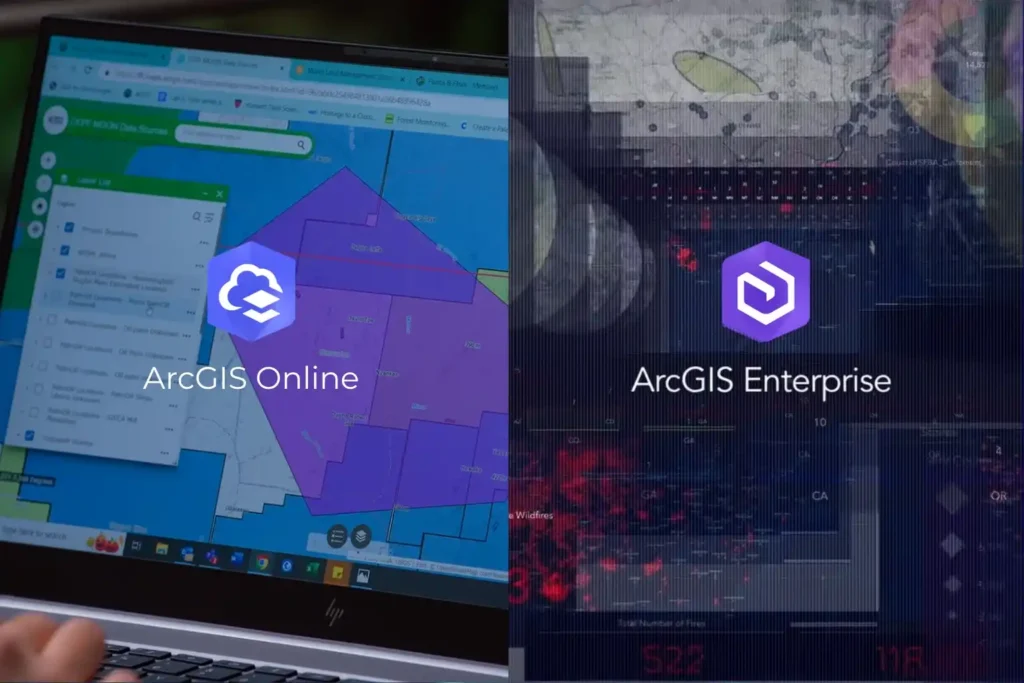
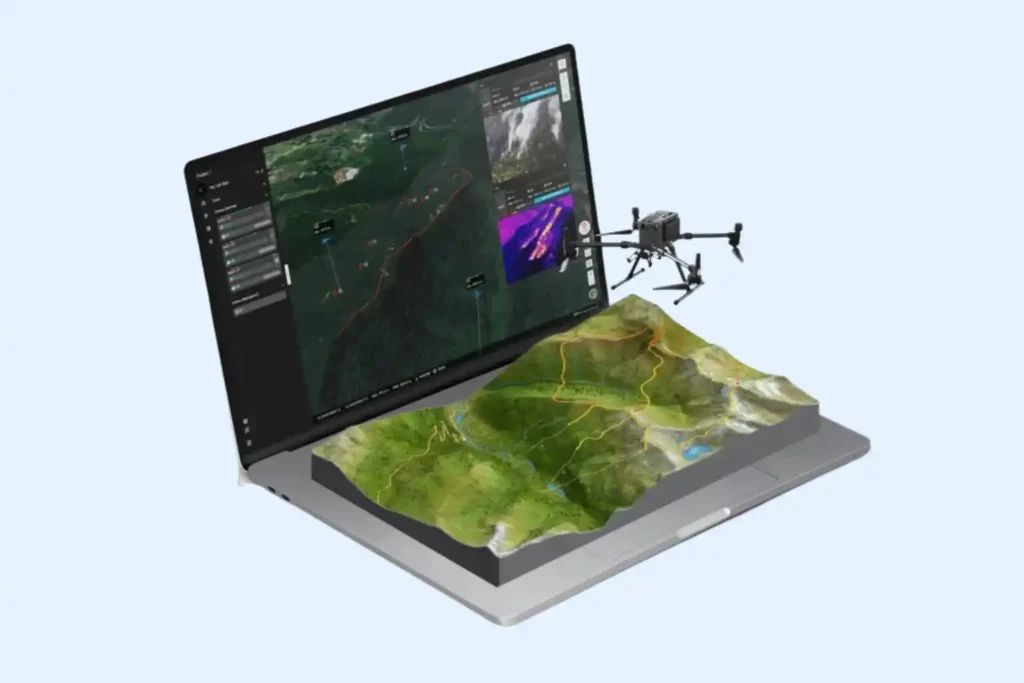
Comparison of ArcGIS Online cloud GIS vs ArcGIS Enterprise on-premises GIS.

Every drone mission, whether it is an inspection of a solar farm in NEOM or a volumetric survey in the Empty Quarter ends with a massive influx of data. Thousands of images, high-density point clouds, and thermal layers require a “home.” Without a robust platform to organize and visualize this information, your drone program is just a collection of hard drives. In the world of professional GIS, the choice of a home usually comes down to two paths: ArcGIS Online and ArcGIS Enterprise. Both platforms are industry-leading, but they offer fundamentally different approaches to how you manage, secure, and share your spatial intelligence. Choosing the wrong one can lead to operational bottlenecks or security risks. ArcGIS Online vs ArcGIS Enterprise Technically, both platforms allow you to create maps, analyze data, and share insights. However, the “where” and “how” differ significantly. ArcGIS Online: ArcGIS Online is a cloud-based Software-as-a-Service (SaaS) platform. Esri hosts the software, manages the updates, and handles the infrastructure. Zero Infrastructure: You don’t need servers or a specialized IT team to launch. You simply log in via a browser. Rapid Scalability: If you suddenly add 50 new field users, the cloud scales instantly to accommodate them. Mobile Synergy: It is perfectly optimized for field apps like ArcGIS Field Maps, allowing drone pilots to upload data directly to a shared cloud map. ArcGIS Enterprise: ArcGIS Enterprise is the full-featured GIS system designed to run on your infrastructure whether that is on-premises servers or your private cloud (like AWS or Azure). Total Data Sovereignty: You control exactly where your data sits. This is vital for industries with strict national security or privacy regulations. Advanced Analytics: Enterprise includes powerful components like the ArcGIS Image Server, which handles the massive raster processing required for large-scale drone orthomosaics. The Four Components: It consists of a Web Adaptor, a Portal, a Server, and a Data Store, giving your IT department granular control over every connection and permission. Choosing the Right Stack for Industrial Excellence The decision is rarely about which software is “better,” but rather which one fits your industry’s regulatory landscape. In Saudi Arabia, where giga-projects and the energy sector are governed by strict data residency laws, ArcGIS Enterprise is often the gold standard. It allows organizations to keep sensitive infrastructure data behind their own firewalls while still providing a collaborative “Portal” for engineers to access drone-captured Digital Twins. Conversely, for rapid urban development and environmental monitoring, ArcGIS Online offers a lower barrier to entry. It allows project managers to share interactive maps with stakeholders globally without the complexity of managing server hardware. Build Your Geospatial Future The future of industrial intelligence is not just about flying drones; it is about building the infrastructure that lives on the ground. Whether you need the agile, cloud-native power of ArcGIS Online or the secure, robust environment of ArcGIS Enterprise, the right architecture is essential for long-term success. As a strategic geospatial partner, we specialize in helping organizations choose and implement the right Esri stack. We bridge the gap between drone data acquisition and long-term GIS management. Let us help you architect a GIS solution that turns your drone data into a national asset.

Saving $1 Million Worth of Downtime with Drone-Based NDT

Drone-based non-destructive testing solution inspecting a vertical stack in an oil facility.

Drone-based non-destructive testing solutions (NDT) are redefining how critical infrastructure is inspected across high-risk, asset-intensive industries. Whether in oil & gas, petrochemical processing, power generation, or heavy manufacturing, the need for accurate, timely, and safe inspection of complex structures has never been more pressing. Non-Destructive Testing (NDT) refers to a range of inspection techniques used to evaluate the condition of materials, components, or entire systems without causing damage or interrupting operations. Traditional NDT methods, such as ultrasonic testing, visual inspection, magnetic particle testing, or radiography have been industry staples for decades. However, they often require production shutdowns, extensive manual access setups like scaffolding or rope access, and, in many cases, expose technicians to confined spaces, heights, or hazardous environments. This operational friction becomes especially problematic when inspections must be frequent, time-sensitive, or performed across wide geographic areas, such as pipeline corridors, offshore facilities, high-voltage substations, or elevated flare stacks. Moreover, the global push toward predictive maintenance, digital twin modeling, and ESG compliance is facing pressure on industries to modernize how inspections are conducted and reported. Drone-based non-destructive testing solutions introduce a paradigm shift. These systems, equipped with high-resolution RGB cameras, thermal imagers, ultrasonic sensors, LiDAR payloads, and real-time data links, can access challenging or dangerous environments without interrupting ongoing operations. By flying above, around, or inside critical assets, drones offer a safer, faster, and more scalable way to detect structural anomalies, surface corrosion, material thinning, or thermal inefficiencies. In industrial ecosystems where every hour of downtime can cost hundreds of thousands of dollars, and where safety risks must be proactively managed, drone-based inspection methods are no longer experimental; it’s mission-critical technologies. These systems support smarter decision-making, enhance asset visibility, and enable a move away from reactive “run-to-fail” maintenance models toward condition-based monitoring and predictive diagnostics. Terra Drone Arabia, a regional leader in drone-enabled inspection and geospatial intelligence, brings this capability to life through a suite of drone platforms and payload integrations tailored for industrial NDT use cases. Whether it’s ultrasonic thickness measurement of refinery tanks, thermal analysis of electrical components, or LiDAR scans of hard-to-access infrastructure, drone-based non-destructive testing solutions now empowers industries to inspect with confidence, without compromise. The Cost of Downtime in Industrial Operations A recent “Value of Reliability” survey reveals that more than two-thirds of industrial businesses face unplanned outages at least once a month, each costing an average of nearly $125,000 per hour. Surprisingly, despite these high stakes, 21% of the surveyed companies still operate under a run-to-fail maintenance approach. This reactive approach may appear cost-effective on the surface by avoiding upfront maintenance costs or extended inspection procedures, but it exposes operations to exponentially higher risks. Downtime disrupts production schedules, leads to missed SLAs, and can even result in cascading failures across interconnected assets. In high-throughput sectors like oil & gas, refining, or power generation, the true cost of downtime extends beyond direct financial loss. It includes: Lost production output For a refinery producing 250,000 barrels per day, even a few hours offline could equate to millions in lost revenue and delayed distribution contracts. Asset degradation and damage escalation Without early detection, issues like internal corrosion, fatigue cracking, or thermal stress can intensify, leading to unplanned shutdowns or even catastrophic failure. Safety and environmental risks Critical infrastructure failures, especially in high-pressure vessels, pipelines, or flare stacks, can cause HSE incidents, regulatory violations, and environmental damage. Supply chain disruption Many industrial operations operate within tightly linked ecosystems. Equipment failure at one facility can trigger upstream or downstream impacts across multiple sites. The shift toward predictive maintenance is not just a technological evolution, it’s a strategic imperative. Predictive models rely on continuous data from inspection systems and sensor networks to forecast equipment health and flag deviations early. However, these models are only as reliable as the quality and frequency of the data they receive. That’s where drone-based non-destructive testing (NDT) adds measurable value. By enabling more frequent, high-resolution inspections without interrupting operations, drones ensure that predictive models are continuously fed with accurate field data. This enhances forecasting accuracy, enables smarter resource allocation, and reduces the risk of surprise failures. Moreover, drone-based inspections significantly lower the need for temporary infrastructure such as scaffolding, rope access, or specialized work permits. This results in faster turnaround times, reduced labor hours, and improved personnel safety, without compromising inspection quality. As industries across MENA and globally move into the modern Industry, reducing unplanned downtime is no longer a reactive tactic. It is a benchmark of digital maturity and operational excellence. Advantages of Drone-Based NDT Over Traditional Methods Traditional non-destructive testing (NDT) methods—while proven—often come with significant operational challenges, especially in industrial environments where scale, complexity, and safety are paramount. Inspections typically require partial or full equipment shutdowns, manual access solutions such as scaffolding or rope systems, and significant human presence in hazardous or confined environments. These limitations not only increase inspection time and cost but also elevate risk and restrict the frequency of assessments. Drone-based non-destructive testing solutions, on the other hand, offer a modern, flexible alternative that aligns with real-time operational needs and Industry standards. Below is a breakdown of the key advantages of drone-enabled NDT compared to traditional inspection practices. Operational Continuity Many traditional NDT methods necessitate shutting down operations, draining tanks, or isolating systems to allow safe access for inspectors. This process not only halts productivity but also introduces complex permitting, manpower scheduling, and safety planning requirements. Drone-based NDT enables real-time inspections without disrupting ongoing operations. Whether it’s inspecting flare stacks during combustion, capturing tank roof conditions while in service, or surveying active substations, drones can perform thorough assessments without affecting asset availability. This supports continuous production and minimizes financial losses tied to downtime. For example, a refinery flare tip inspection that would traditionally require shutdown, scaffolding, and days of preparation can now be completed in under an hour using a drone with high-resolution zoom optics and thermal overlays. Enhanced Safety Traditional manual NDT inspections often place technicians in hazardous positions—on high structures, inside confined vessels, or near live

Safeguarding the Environment: Drone Monitoring for Industrial Sites and Pipelines

Drone inspecting flare stack at oil refinery

Drone monitoring for industrial applications is emerging as a game-changer, particularly in oil & gas, where environmental compliance has become a top operational priority. With the global spotlight intensifying on methane reduction, ESG mandates, and sustainability goals, traditional inspection methods are no longer enough. Industrial operators face a mounting challenge: how to ensure accurate, consistent, and scalable environmental oversight while maintaining efficiency. This is where drone-based environmental monitoring steps in, offering a smarter, faster, and safer solution. And in the Middle East, Terra Drone Arabia is helping lead the way. The Environmental Risks of Industrial Sites and Pipelines Industrial operations — particularly in sectors like oil & gas, petrochemicals, power generation, and mining — are not just large in scale but also carry a significant environmental footprint. These sites operate in dynamic, often sensitive ecosystems, where even minor oversights can escalate into major environmental and regulatory crises. One of the most persistent challenges is the invisible nature of many industrial risks. Unlike equipment breakdowns that halt operations visibly, environmental risks tend to build up quietly, as gradual emissions, slow leaks, or long-term ecological degradation, only becoming apparent once they’ve caused measurable harm or triggered non-compliance. Let’s break down the key environmental threats associated with industrial sites and linear infrastructure like pipelines: Undetected Gas Leaks One of the most critical and urgent issues in oil & gas operations is fugitive methane emissions — invisible, odorless, but far more potent than CO₂ as a greenhouse gas. These emissions often originate from: Valve and flange leaks Incomplete combustion from flaring Aging infrastructure with poor seals or weld fatigue Compressor stations, separators, and storage tanks Without proactive monitoring, these leaks persist unnoticed, contributing to climate change, violating OGMP 2.0 targets, and damaging company ESG scores. Moreover, methane leaks are not just environmental threats — in enclosed or populated areas, they become explosive safety hazards. Air Quality Degradation Industrial activities, especially in refining and power generation, release a wide range of pollutants: NOx and SO₂ from combustion Volatile Organic Compounds (VOCs) from chemical processes Particulate Matter (PM2.5, PM10) from flaring, excavation, and dust Carbon monoxide and heavy metals in enclosed or high-density operations These emissions can degrade air quality both on-site and in nearby communities. In some regions, poor air quality has led to worker health issues, community pushback, and even government-imposed shutdowns until corrective measures are implemented. This is particularly relevant in countries pursuing Vision 2030 goals, where the balance between industrial expansion and environmental protection is under strict scrutiny. Inaccessible or High-Risk Monitoring Zones Many high-risk environmental zones, such as: Elevated flare stacks Remote desert pipelines Confined tank rooftops Coastal terminal perimeters Hazardous chemical storage zones These zones are physically difficult or unsafe for human inspectors to reach frequently. These inaccessible zones often become blind spots in environmental management plans. For example, a hairline crack in a remote pipeline might leak undetected for weeks in the absence of aerial or automated surveillance, potentially contaminating soil, groundwater, or coastal ecosystems. Similarly, flaring emissions that fail to meet combustion efficiency standards may not be discovered until after the surrounding air quality deteriorates. Long-Term Environmental Impact Without Real-Time Feedback Most industrial sites still rely on periodic environmental reports or stationary sensors. While these methods provide valuable data, they fall short in providing: Spatial awareness of impact zones High-frequency or on-demand measurement Early warnings for transient pollution events (e.g., flaring spikes, overflows) Without continuous or wide-area environmental intelligence, companies risk falling out of sync with regulators, especially as global environmental compliance frameworks become more real-time and data-driven. Reputational and Financial Risk Beyond compliance fines and cleanup costs, environmental incidents now carry long-term reputational damage, especially in ESG-sensitive markets and with investors. Companies that fail to detect and mitigate environmental risks face: Public backlash on social media Increased insurance premiums Loss of social license to operate Delays in permits or expansions Difficulty securing ESG-focused investment Simply put, environmental risk is now business risk, and companies that treat it as such are moving toward smarter monitoring strategies, including drone-enabled solutions. Traditional methods like periodic ground inspections, static sensors, or post-incident audits are less sufficient for meeting modern expectations. Industrial operators must evolve toward agile, high-resolution, and scalable environmental oversight. This is where drone-based monitoring becomes a strategic asset — not just for detection, but for visibility, control, and proactive environmental stewardship. Why Drones? Key Advantages Over Traditional Monitoring For decades, environmental monitoring in industrial sectors like oil & gas, petrochemicals, and energy relied heavily on manual inspections, fixed sensors, or satellite data. While these methods have served their purpose, they come with serious limitations, ranging from blind spots in remote areas to delayed reporting and safety hazards for field teams. As environmental expectations grow, driven by regulatory frameworks like OGMP 2.0, ESG scoring, and Vision 2030, operators are realizing that traditional approaches can no longer meet modern demands. Drones, on the other hand, offer fast, accurate, and scalable aerial tools that are redefining the environmental compliance landscape. Here’s how drones outperform conventional monitoring solutions across key dimensions: Speed and Coverage Traditional inspections often require scheduling, travel, permits, safety prep, and ground crew mobilization, which can delay urgent decisions and reduce monitoring frequency. Drones eliminate much of this complexity. Rapid Deployment: Drones can be launched in minutes, even in hard-to-reach or remote locations. Wide-Area Coverage: In a single flight, a drone can scan kilometers of pipeline, tank farms, flare stacks, or perimeter zones — something ground crews would take days to achieve. Time-Sensitive Insight: In case of leaks, fires, or suspected environmental anomalies, drones provide real-time situational awareness without waiting for reports or sensor flags. For industries operating in desert pipelines, offshore terminals, or complex plant layouts, speed isn’t just convenience — it’s risk mitigation. Accuracy and Precision With high-resolution optical, thermal, and multispectral sensors, drones provide granular environmental insights from gas concentration heatmaps to NDVI indices. Safety and Risk Reduction Environmental monitoring often places inspectors in hazardous, high-risk environments, such as: Elevated flare stacks Chemical storage zones Gas-rich

Advance Your Horizons: A Guide to Drone Career Path in 2025

Industrial drone pilot preparing for site inspection

The drone career path is no longer an emerging concept, it’s a well-defined route to high-value roles across industries that rely on precision, efficiency, and innovation. From flare stack inspections in oil & gas to aerial mapping in urban planning, drones have become a central part of modern operations. As we step into 2025, UAV professionals are becoming mission-critical to digital transformation efforts, particularly in regions like Saudi Arabia and the wider MENA area. Structured growth and proper certification aren’t just recommended — they are the foundation of long-term success in this field. The Starting Point: Entry-Level Drone Roles The first step into a UAV career often begins with support roles emphasizing learning by doing. Entry-level operators might assist with visual drone inspections of industrial assets, such as tanks, towers, or pipelines, or manage checklists during missions. These early positions are perfect for building technical awareness and field discipline. Foundational training in photogrammetry and GIS platforms like DJI Terra or ArcGIS Field Maps is commonly introduced at this stage. Additionally, formal certifications such as GACAR Part 107 (in Saudi Arabia) or equivalent national licenses ensure operators understand aviation safety, airspace rules, and mission planning, all essential to industrial compliance. Building Skills Through Certification and Field Experience Once the basics are in place, aspiring drone professionals should actively seek hands-on flight hours. The goal here is to become fluent with different payloads: thermal cameras, multispectral sensors, LiDAR scanners, and high-zoom RGB imaging systems. Industrial use cases, especially in oil & gas, power generation, and infrastructure — demand comfort with automated mission planning, waypoint routing, and live data interpretation. This is also the right time to dive into manufacturer training (like DJI Enterprise programs) or platforms such as Pix4D, FlightHub 2, and Terra Mapper to understand post-processing and mission management tools. In short, growing from operator to asset requires more than flying — it requires confidence in equipment, mission logic, and post-flight deliverables. Specializing in Industry Needs To stand out, professionals should tailor their skills to sector demands. For example, the oil & gas industry often requires familiarity with ultrasonic testing (UT) via drones, or non-destructive testing (NDT) using robotic systems like Voliro T. In agriculture, it’s all about multispectral mapping, NDVI analysis, and precision spraying logic. Each sector comes with its own vocabulary, safety culture, and data expectations. That’s why mid-level drone professionals must invest in contextual expertise: Utilities & power: risk-aware inspections, thermal fault detection Construction: BIM integration, volumetric analysis Renewable energy: panel array surveys, defect localization Urban planning: zoning data overlays, digital twin creation Software proficiencies become more important here too, with CAD, LiDAR data tools, and GIS integration forming the backbone of deliverables. Advancing to Mid-Level Roles With experience and specialization, many UAV professionals move into roles like Lead Operator or Mission Planner. These individuals oversee site planning, lead field teams, and ensure compliance with safety and flight protocols. They also contribute heavily to operational documentation — flight logs, asset reports, and pre/post-inspection forms. At this level, mentoring junior pilots and helping onboard new tech platforms is often part of the role. Professionals who excel here are the ones who balance technical confidence with operational discipline. People who don’t just fly well, but also communicate, document, and manage well. Reaching Leadership: Operations Manager or Technical Lead At the top of the drone career path are roles that go far beyond flight. UAV Operations Managers or Technical Leads manage entire drone programs, overseeing fleets, scheduling missions, setting internal SOPs, and liaising with regulators or enterprise clients. They often work closely with cross-functional teams: AI & data science units (for predictive analytics, anomaly detection) GIS departments (for model integration and spatial workflows) Compliance and safety teams (for audits, risk assessments, and reporting) Leaders in this space often participate in R&D discussions, vet new hardware, and pilot innovation projects, such as integrating digital twins, real-time mapping, or cloud-based remote inspections into day-to-day operations. This is where drone professionals evolve into decision-makers and strategists, shaping the future of industrial UAV adoption. Conclusion In 2025 and beyond, the drone career path is no longer limited to enthusiasts or specialists. It’s a legitimate, scalable career with entry points, vertical mobility, and global demand. The MENA region, especially Saudi Arabia under Vision 2030, is creating enormous opportunities for certified UAV professionals who combine technical excellence with industry understanding. Whether starting as a visual inspector or leading a national drone program, the career path is wide open. For those willing to invest in certification, specialization, and continuous learning, the drone industry isn’t just taking off. It’s landing big careers.

5 Reasons To Adopt Drones For Industrial Safety in 2025

Industrial drone inspecting a refinery flare stack.

Risk and safety management in industry isn’t optional, it’s operationally critical. That’s why drones (as part of UAVs) are gaining global traction in sectors like oil and gas, utilities, infrastructure, and mining. Drones for industrial safety are no longer just a nice-to-have; they’re essential instruments for mitigating risk, accelerating inspections, and collecting high-accuracy data in environments that endanger human workers. As companies increasingly prioritize worker safety and regulatory compliance, drone technology offers a practical, measurable advantage. Below are five compelling reasons to consider drone-based safety inspections in 2025 and beyond. Reducing Human Exposure to High-Risk Environments In traditional inspections, human personnel are often required to enter hazardous zones—climbing flare stacks, descending into tanks, or working near live electrical lines. These tasks are inherently dangerous, even when all safety protocols are followed. Drones eliminate the need for direct human involvement in these conditions. Operators can conduct remote inspections from a safe distance while drones capture real-time visuals, thermal signatures, or 3D scans. UAVs are especially valuable in confined spaces, elevated structures, or chemically volatile environments, helping teams comply with health and safety standards while significantly reducing the chance of injury or fatality. Accelerating Inspection Timelines Without Compromising Safety Time is often a hidden cost in industrial safety management. Conventional inspection setups—scaffolding, rope access, confined entry procedures—can take hours or days before the actual inspection even begins. By contrast, drones can be deployed within minutes. For example, a flare tip inspection that traditionally requires a shutdown and extensive rigging can now be completed within a few hours using a UAV equipped with a zoom camera or thermal sensor. This rapid execution is particularly valuable in operations where downtime equates to major financial losses. Capturing Accurate Data for Safer Decisions Beyond faster access, drones also deliver superior inspection data. Modern industrial drones are equipped with advanced sensors: HD optical cameras, thermal imagers, multispectral sensors, and even LiDAR for precise spatial mapping. These tools allow operators to detect early signs of corrosion, overheating, structural deformation, or mechanical faults. Having access to detailed, objective data supports proactive safety decisions, enabling preventive maintenance before minor issues escalate into operational threats. UAV inspections also provide auditable digital records that support compliance reporting and long-term risk analysis. Minimizing Liability and Supporting Regulatory Compliance Globally, regulatory agencies such as the FAA (USA), EASA (Europe), and GACA (Saudi Arabia) are tightening workplace safety and UAV operation rules. Companies that integrate drones into safety workflows not only reduce exposure to human risk, they also show due diligence, improving their position during regulatory audits or insurance assessments. By reducing the frequency and severity of workplace hazards, drone programs can help lower liability exposure, reduce workers’ compensation claims, and even decrease insurance premiums over time. Aligning with Sustainability and ESG Objectives Drones support safer industrial operations with a fraction of the environmental footprint compared to traditional methods. Helicopter flyovers, ground-based inspection teams, and heavy equipment mobilization consume fuel, create emissions, and often disturb natural surroundings. UAVs are compact, electric-powered, and precise. Their use helps companies align with Environmental, Social, and Governance (ESG) priorities, especially those focused on occupational safety and carbon reduction. As industries integrate digital transformation and sustainable operations, drone inspections are becoming a natural fit for corporate responsibility strategies. Conclusion As the industrial world faces growing scrutiny around safety, compliance, and sustainability, the case for drones for industrial safety has never been stronger. From reducing human risk and speeding up inspections to generating smarter data and supporting ESG goals, drones are reshaping how we protect people and assets. In 2025, adopting drone technology isn’t just about innovation—it’s about building safer, smarter, and more resilient operations.

Oil and Gas Drones: Transforming the Industry with Advanced Solutions

Drone inspecting a pipeline in the oil and gas sector.

Oil and gas drones are transforming the energy industry by enhancing efficiency, safety, and sustainability across various operations. From inspecting pipelines to monitoring emissions, drones have become indispensable tools that address the unique challenges of this complex sector. As companies strive for innovation, these unmanned aerial systems (UAS) are redefining traditional practices, offering faster, safer, and more cost-effective solutions. The evolution of drone technology has unlocked new possibilities, enabling the oil and gas industry to embrace modern approaches that ensure both operational excellence and environmental responsibility. How Oil and Gas Drones are Redefining Operations The use of drones in the oil and gas sector dates back to 2006, with early adopters like BP leading the way. Initially, these drones were employed for basic tasks such as visual inspections, topographical surveys, and security patrols. Over time, their applications have grown more sophisticated, encompassing everything from gas leak detection to offshore logistics. Established Applications: Laying the Foundation Drones have proven invaluable in traditional oil and gas operations. Visual inspections, for example, involve assessing pipelines, rigs, and storage tanks for signs of wear and tear. Unlike conventional methods, drones can navigate hard-to-reach areas without requiring scaffolding or risking worker safety. Topographical surveys have also benefited significantly from drone technology. By using high-resolution cameras and LiDAR systems, drones create detailed maps of potential exploration sites, enabling more informed decisions during the planning phase. Additionally, drones enhance security by patrolling facilities and monitoring for unauthorized access. Their ability to cover vast areas quickly makes them indispensable for maintaining safety in remote and hazardous locations. Emerging Trends in Drone Applications As the industry evolves, so does the scope of drone technology. Emerging trends showcase the potential for drones to go beyond traditional uses and address more complex challenges. Gas Leak Detection: Drones equipped with advanced sensors can detect gas leaks in real time. This not only improves safety but also minimizes environmental damage. For instance, methane sensors onboard drones can identify even minor leaks, helping operators address issues before they escalate. Emission Monitoring: Environmental regulations are becoming stricter, and drones are stepping in to help companies comply. By measuring emissions, drones provide actionable data that enables companies to reduce their carbon footprint and demonstrate commitment to sustainability. Emergency Response: During emergencies such as fires or oil spills, drones offer real-time situational awareness. By providing live video feeds and thermal imaging, they help responders assess the situation and make informed decisions, all while minimizing risks to personnel. Non-Destructive Testing (NDT): Drones now support non-visual inspections, including ultrasonic testing and thermal imaging. These methods evaluate structural integrity without causing damage, ensuring that critical infrastructure remains safe and functional. Offshore Package Delivery: The logistics of transporting supplies to offshore platforms have traditionally been complex and costly. Drones simplify this process by delivering equipment and essential items quickly and efficiently, reducing dependence on helicopters or boats. Saudi Arabia: Pioneering Drone Adoption in Oil & Gas Saudi Arabia has long stood as a global leader in the oil and gas industry, not just in production but also in adopting cutting-edge technologies to ensure operational excellence. The integration of drones into this sector aligns seamlessly with the Kingdom’s vision of innovation, safety, and sustainability. By leveraging drone technology, Saudi Arabia is setting benchmarks for modern oil and gas operations, pushing boundaries in efficiency and environmental responsibility. At the heart of Saudi Arabia’s technological transformation is Vision 2030, the nation’s ambitious roadmap to diversify its economy and foster sustainable growth. A significant component of this vision is modernizing the oil and gas sector by adopting advanced technologies like drones. These unmanned aerial systems (UAS) are instrumental in achieving critical goals, such as minimizing environmental impact, optimizing resource utilization, and reducing operational risks. For instance, Saudi Arabia’s vast pipeline networks and sprawling oilfields present logistical challenges that drones are uniquely equipped to address. By conducting real-time inspections and collecting precise data, drones allow operators to monitor and manage infrastructure with unprecedented accuracy. As a result, this enhances productivity while reinforcing the nation’s commitment to sustainability by proactively identifying issues like leaks or inefficiencies. Furthermore, drones are revolutionizing safety practices in Saudi Arabia, addressing the inherently high-risk nature of the oil and gas industry. Operations often involve hazardous environments such as extreme temperatures, confined spaces, and remote locations. Here, drones serve as critical tools for minimizing human exposure to danger. Equipped with sensors, thermal imaging cameras, and LiDAR technology, they assess structural integrity, detect gas leaks, and monitor emissions without exposing workers to unnecessary risks. This shift is especially impactful in offshore operations. Saudi Arabia’s offshore rigs and platforms, which require constant surveillance, previously relied on resource-intensive manned inspections. However, drones now provide real-time monitoring, allowing operators to address issues proactively and significantly reduce the likelihood of accidents. In addition to improving safety, Saudi Arabia leverages drones to support its environmental stewardship goals, especially as global regulations around sustainability become more stringent. Drones enable more effective environmental monitoring by using multispectral and hyperspectral imaging to analyze vegetation health, soil conditions, and water contamination in and around oilfields. This detailed data helps operators take prompt corrective actions, ensuring operations remain compliant with environmental standards. Moreover, drones facilitate real-time emission monitoring, a crucial step in reducing greenhouse gas emissions and meeting global climate targets. By accurately measuring emissions from facilities, Saudi Arabia not only complies with international environmental protocols but also strengthens its position as a leader in sustainable energy practices. Beyond operational improvements, Saudi Arabia’s approach to drone adoption is deeply intertwined with its localization efforts under Vision 2030. The Kingdom actively collaborates with technology providers to foster domestic expertise, ensuring long-term benefits for its economy. Training programs, joint ventures, and partnerships with companies like Terra Drone Arabia equip Saudi professionals with the knowledge and skills needed to operate and develop tailored drone solutions for the oil and gas sector. This localization strategy reduces reliance on foreign expertise while creating jobs and fostering innovation within the Kingdom. As a result, Saudi Arabia is developing its

Drones for NDT in Oil & Gas and Petrochemical Industries

how drones are used to perform NDT inspection in oil & gas and petrochemical

Elevating Inspection Standards: Drones for NDT in Oil & Gas and Petrochemical The adoption of drones for NDT (Non-Destructive Testing) inspections has unlocked unprecedented possibilities for the oil & gas and petrochemical industries. Not only has it improved the safety of personnel, but it has also significantly boosted efficiency and cost-effectiveness.   A New Era of Inspection: Why Use UAV for NDT? When utilizing this technology for inspection, several benefits come to light. Drones offer greater accessibility, are able to operate in hazardous or difficult-to-reach areas, and minimize the need for human involvement in potentially dangerous situations. Moreover, they significantly speed up the inspection process, leading to considerable cost and time savings. Also Read: Changing the Game: Using Drones for Stockpile Calculation in Coal Mining The Mechanism: How Does Unmanned Aircraft for NDT Work? Drones used for NDT inspections are equipped with an array of sensors and imaging technologies, enabling them to effectively assess the integrity of structures. They capture high-resolution imagery and data, which is then analyzed to identify potential defects or areas of concern. Read More: Terra Drone invests in RoNik to offer advanced nondestructive testing and inspections   Practical Applications: Drones for NDT in Action The oil & gas and petrochemical industries are known for their complex and vast infrastructures. Drones have proven to be an invaluable tool for inspecting such facilities, drastically reducing the time, costs, and risks traditionally associated with NDT inspections. Read More: Sky-high Solutions: 5 Benefits of Using Drones in Petrochemicals Industry The Future: Next Steps for Drones and NDT As technology continues to advance, so too does the potential for drones in NDT inspections. The integration of AI and machine learning could further enhance data analysis, while the development of specialized sensors may increase the range of defects detectable by drones. Read More: Nondestructive Testing (NDT) Trends The Impact: UAV for NDT Transforming Industries In conclusion, this sophisticated technology for NDT inspections are reshaping traditional inspection methods in the oil & gas and petrochemical industries. With their ability to improve safety, efficiency, and cost-effectiveness, drones have cemented their place as a crucial instrument in the future of these industries.

Drones in Petrochemicals Industry and 5 Benefits of Using Them

Elevating Petrochemical Operations: The Role of Drones in the Industry The use of a drones in petrochemicals industry is quickly becoming a standard practice. Drone technology is providing numerous benefits, from safety improvements to data-driven decision-making. Here are the top five benefits of using drones in the petrochemical industry.   1. Enhanced Safety with Drones Safety is a paramount concern in the petrochemical industry. Drones, with their ability to safely inspect hard-to-reach and potentially hazardous areas, significantly reduce worker exposure to risks, resulting in safer working environments. Also See:  Elevated Inspections: Harnessing Drone for Inspection of Flares 2. Improved Operational Efficiency Drones can perform inspections and data collection tasks more quickly and accurately than traditional methods. They reduce downtime, resulting in improved operational efficiency. Read Also: Drones are making refineries and petrochemical plants safer, more efficient 3. Reduced Operational Costs By decreasing the need for manual inspections and reducing equipment downtime, drones lead to significant cost savings. These savings can be redirected to other critical operational areas. Read More: Cutting Costs and Increasing Productivity: The Financial Advantages of Drones in Oil & Gas Operations 4. High-Quality, Real-Time Data Equipped with advanced sensors and cameras, drones can collect high-quality, real-time data. This data enables better decision-making and predictive maintenance, contributing to more reliable operations. See More: Environmental Monitoring & Petrochemical Inspection Drones Delivered 5. Environmental Monitoring and Compliance Drones can monitor emissions, detect leaks, and assist in environmental impact assessments, ensuring regulatory compliance and minimizing environmental impact. In conclusion, the application of drones in petrochemicals industry offers significant benefits. As drone technology continues to advance, its role in enhancing safety, efficiency, and sustainability in the petrochemical industry is set to grow even further.

Safety from the Sky: Using Drone for Confined Space

Remote operation of drones allows for accurate and comprehensive confined space inspections without risking worker safety

Reducing Hazards with Drones: A Closer Look at Confined Space Inspections The use of a drone for confined space inspections is a powerful strategy to enhance safety and efficiency in industrial settings. By minimizing the need for workers to enter potentially hazardous confined spaces, drones are significantly reducing risks and improving operational efficiency. Let’s explore how drones are transforming confined space inspections. How Drones are Employed in Confined Space Inspections Confined spaces present a host of safety challenges, from limited mobility to hazardous substances. Drones, equipped with cameras and sensors, provide a safer alternative. They can enter and navigate confined spaces, capturing high-resolution images and collecting valuable data, while keeping workers out of harm’s way. Also Read:  Airborne Vigilance: Using Drone for Safety Violation Detection in Plants The Benefits of Drone-assisted Confined Space Inspections The utilization of drones in confined space inspections brings numerous benefits. Primarily, they dramatically reduce worker exposure to potential hazards. Drones also provide more thorough and efficient inspections, as they can access areas that may be difficult or dangerous for humans to reach. Read More: Terra Inspectioneering’s UT drones to aid VTTI The Future of Drone Usage in Confined Space Inspections As drone technology continues to advance, their impact on confined space inspections is set to increase. Future developments may see drones equipped with more advanced sensors and AI capabilities, offering even more comprehensive inspections. Consequently, drones are set to become an even more valuable tool in confined space safety management. In conclusion, the use of drones in confined space inspections is a revolutionary approach to maintaining workplace safety and efficiency. As technology continues to progress, the role of drones in this field is set to become even more significant. See More: Brazil’s first unmanned FPSO tank inspection conducted by Terra Drone

en_USEnglish
Powered by TranslatePress