

As Saudi Arabia accelerates toward Vision 2030, the Kingdom’s energy sector is undergoing a profound metamorphosis. Leaders like Saudi Aramco and SABIC are moving beyond traditional maintenance toward a future defined by digital twins and unstaffed facilities. However, the bridge between a virtual model and a physical refinery is data—specifically, high-fidelity, real-time data collected from the most hazardous corners of the plant.
The challenge is significant: maintaining asset integrity across massive infrastructures like the Shaybah oil field or the Jazan refinery means contending with one of the most punishing climates on Earth. In this context, the Deep Robotics X30 has emerged not just as a tool, but as the “missing link” in the autonomous energy chain, an industrial-grade quadruped built to thrive where both humans and traditional electronics fail.
II. Engineering for the Extremes: Heat, Dust, and Humidity
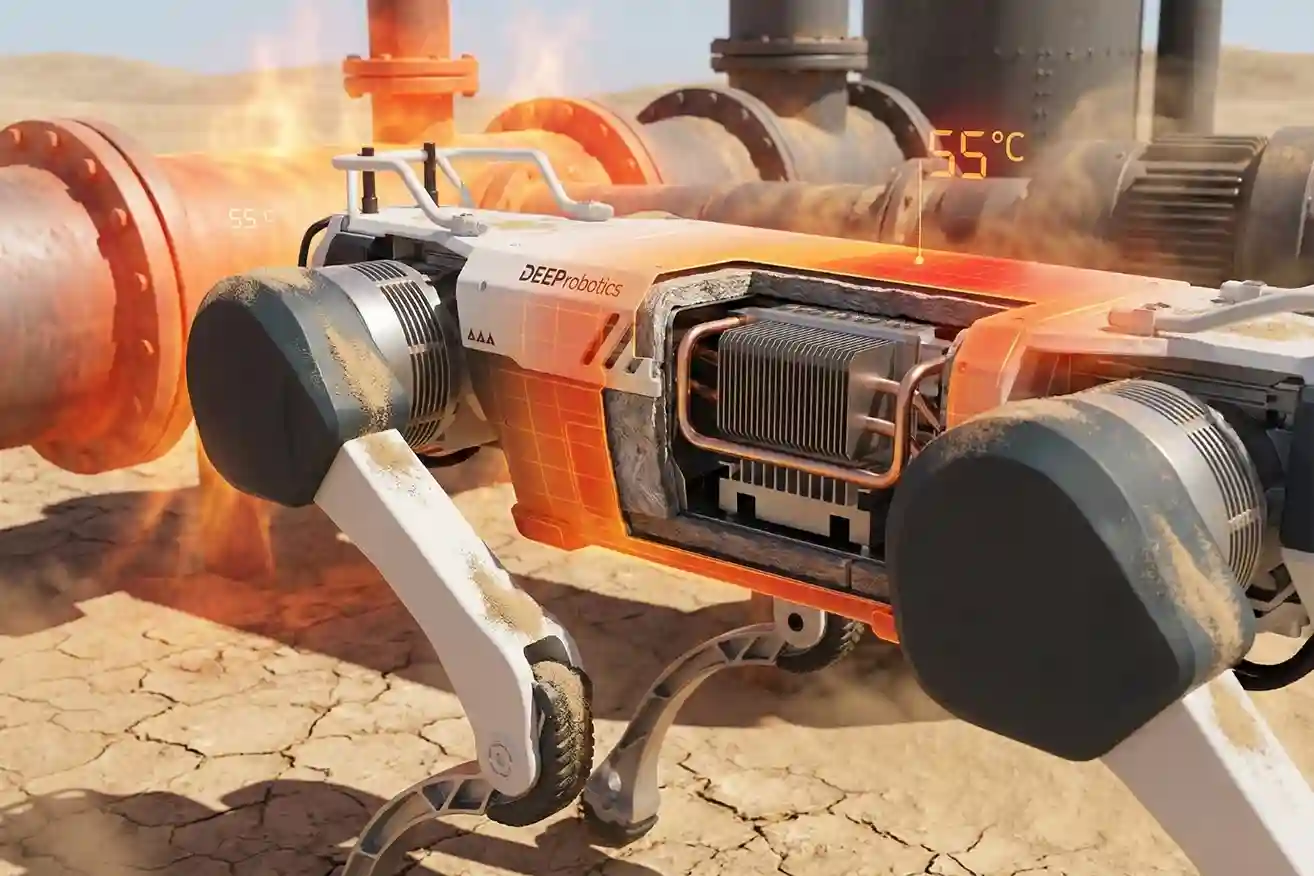
In the Saudi Arabian desert, “industrial grade” takes on a higher standard. Equipment must survive 50°C+ ambient temperatures, fine abrasive silicon dust, and high coastal salinity.
2.1 Thermal Endurance: Conquering the Empty Quarter
While many robotics platforms throttle their processors or suffer battery failure above 40°C, the X30 is engineered with a wide operating window of -20°C to 55°C.
- Active Thermal Management: The X30 utilizes a specialized internal heat-dissipation architecture. During peak summer patrols in the Rub’ al Khali, the robot manages the internal temperature of its high-torque actuators and onboard compute modules, preventing the “sensor drift” common in lesser models.
- Continuous Operation: This thermal resilience allows for 24/7 autonomous rounds, ensuring that the high noon sun does not halt the flow of critical inspection data.
2.2 IP67 Sealing: A Shield Against Sand and Sea
Dust ingress is the “silent killer” of robotics in the Gulf. The X30’s IP67 rating provides two vital layers of protection for Saudi operators:
- Sandstorm Resilience: The chassis is completely dust-tight. Fine particulates that would typically jam mechanical joints or clog cooling fans are kept at bay by high-compression industrial seals.
- Coastal Corrosion Protection: For facilities like Ras Tanura, the IP67 sealing prevents humid, salty air from reaching sensitive internal circuit boards, significantly extending the Mean Time Between Failures (MTBF) compared to IP54-rated competitors.
III. The X30 Technical Stack: Precision in the Desert
The X30 does not just move; it perceives. Its technical stack is optimized for the specific visual and environmental “noise” of an oil and gas facility.
3.1 Fusion Perception vs. Sand Haze
In the event of a “Shamal” (sandstorm) or thick haze, standard RGB cameras become useless. The X30 utilizes Fusion Perception, merging 3D LiDAR point clouds with thermal imaging.
- LiDAR SLAM: By emitting its own laser pulses (200,000 pts/s), the X30 creates an “occupancy grid” of its surroundings that is immune to visibility issues.
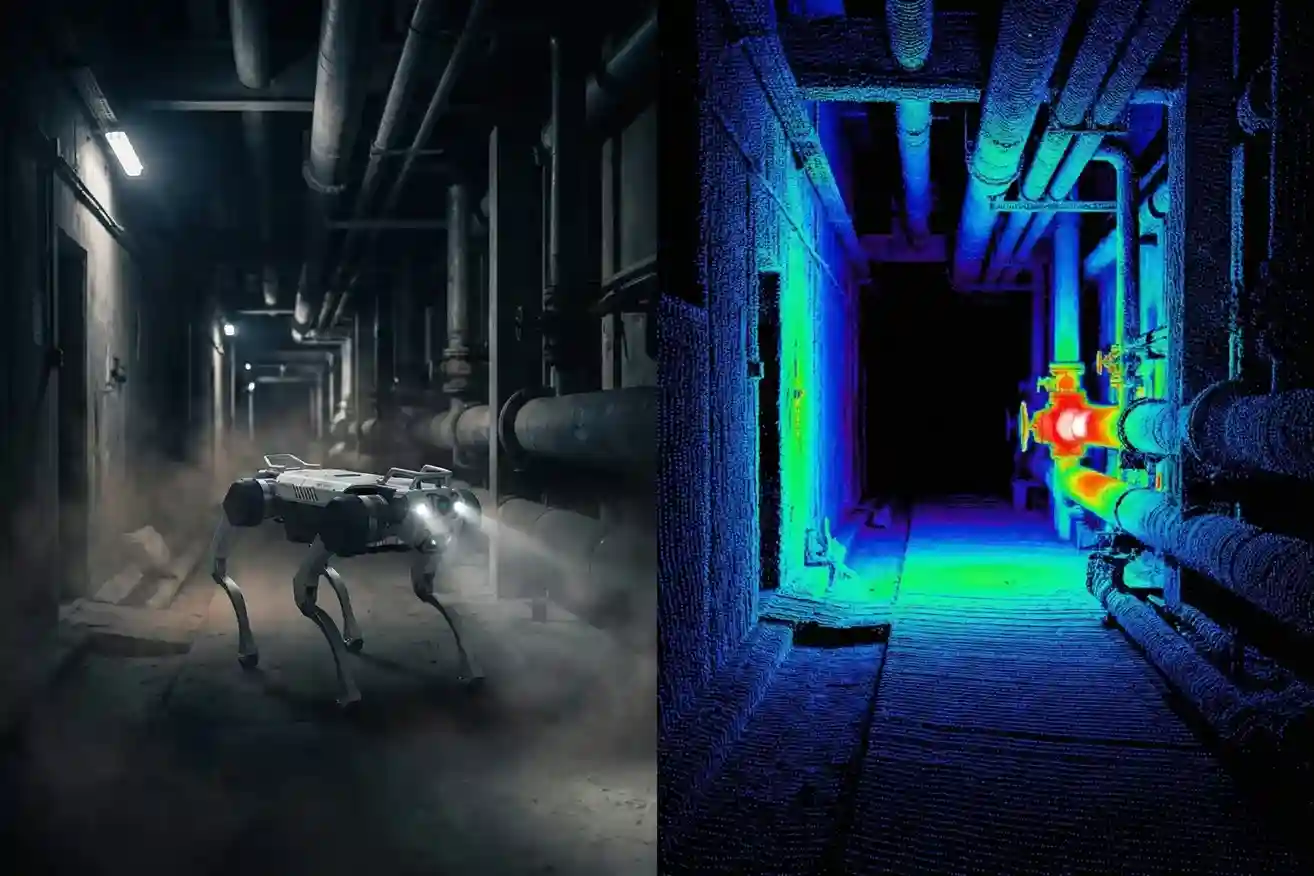
- Strike Through Darkness: This same technology allows for flawless navigation in unlit cable tunnels or during nighttime security patrols, providing a consistent 360° situational awareness.
3.2 Autonomous Integrity Monitoring
The X30’s payload flexibility allows it to serve as a mobile diagnostic lab.
- Thermal Leak Detection: Using bi-spectrum cameras, the X30 identifies “thermal anomalies,” invisible gas leaks or overheating bearings. Long before they escalate into a shutdown.
- Acoustic Fingerprinting: Outfitted with an acoustic imager, the X30 can “hear” the high-frequency hiss of a pressure leak or the rhythmic grinding of a failing pump, mapping the sound source in 3D space.
- Analog-to-Digital Transformation: With its 32x optical zoom, the X30 can read analog pressure gauges in remote substations, instantly digitizing the data and uploading it to the facility’s SAP or digital twin platform.
IV. Strategic ROI: Safety and Cost in the Kingdom
The deployment of the X30 in Saudi Arabia is driven by two primary KPIs: Safety and Operational Efficiency.
4.1 Reducing Human Risk
By assigning “Dull, Dirty, and Dangerous” (3D) tasks to the X30, operators eliminate the need for human personnel to perform manual rounds in extreme heat or near high-pressure vessels. This aligns with the Kingdom’s goal of achieving zero-incident work environments.
4.2 Predictive Maintenance and “Hot-Swap” Efficiency
Unplanned downtime in the energy sector can cost upwards of $1 million per day. The X30’s ability to perform higher-frequency rounds means that early-stage corrosion or minor leaks are identified weeks earlier than manual inspections.
- Hot-Swappable Batteries: To ensure no gap in data, the X30’s battery can be swapped in seconds without powering down, maintaining the robot’s “state” and keeping the mission on schedule.
The Future of the Energy Landscape
The Deep Robotics X30 is more than a flagship product; it is a foundational technology for the next generation of Saudi industrial excellence. By mastering the physical extremes of the desert and the digital complexities of the modern refinery, the X30 is enabling a safer, more efficient, and fully digitized energy future for the Kingdom.
As Saudi Arabia continues to lead the global energy transition, the X30 will be at the forefront, guarding the assets that power the world.

 English