A public healthcare client needed a faster way to move blood bags and medical samples between hospitals, blood banks and field medical sites during a major mass-gathering event. With huge crowds on the ground, roads were expected to be jammed or closed for days.
Terra Drone Arabia designed and ran a medical drone delivery network to solve this. The network linked 9 medical sites in two clusters and was ready to fly in about three weeks, from first site survey to first operating day.
The Challenge
During large events, medical teams face more patients in a short time, and many of them need blood or urgent lab tests. Blood bags have to reach the right site quickly, and samples have to reach the lab without delay. On jammed roads, ambulances and supply vans can take far longer than planned.
The project team had to deal with several problems at once:
- Traffic. Roads between medical sites were expected to be crowded or closed for long periods.
- Cold chain. Blood must stay at the right temperature from pickup to delivery, even in extreme summer heat.
- Heat. High temperatures could also overheat drones and slow down field teams.
- Busy airspace. Drone flights had to fit safely around other aircraft and restricted areas.
- Permits. Flight approvals had to be secured from several authorities in a short time.
- A fixed deadline. The event date could not move, so the network had to be ready on day one.
The Solution
The drones
The main delivery drone was the Rigitech Eiger, a VTOL fixed-wing drone. It takes off and lands vertically like a helicopter, then flies like a plane for speed and range. It can carry up to 3 kg, fly up to 80 km with a full load, and stay in the air for up to 46 minutes at maximum payload. It is built for BVLOS (beyond visual line of sight) flights and has:
- Vision-based precision landing for small or tight landing spots
- Detect-and-avoid systems (ADS-B In, FLARM and Remote ID) to stay aware of other aircraft
- A ballistic parachute for emergencies
- Dual 4G links to stay connected to the control room
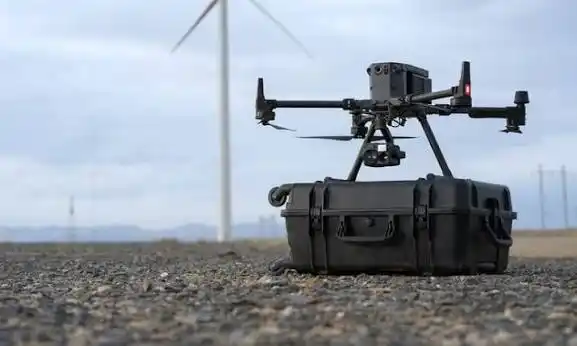
A DJI Matrice 350 RTK multirotor drone supported the operation on shorter line-of-sight routes, with a DJI RC Plus remote controller and a DJI BS65 battery station to keep batteries charged. The plan made sure two drones were always available during operating hours.
The software and control room
Flights were managed from a remote control room. RigiCloud planned routes, set geofences around each route, and tracked the Eiger in real time. DJI FlightHub monitored the multirotor flights. A separate dispatching platform handled delivery requests, scheduling and flight status. Edge nodes and backup SIM cards kept the radio and mobile links stable.
How one delivery works
- A medical site sends a delivery request to the dispatcher.
- The pilot sets the route and delivery time and tells the helpers at both sites to stand by.
- The helper at the origin loads the blood into the payload box and confirms it is ready.
- The pilot launches the flight and monitors it until landing.
- The helper at the destination hands the blood to the medical team and confirms receipt.
- The dispatcher closes the request.
Keeping blood safe in transit
Blood travelled in an insulated container with ice packs, kept out of direct sunlight. A temperature monitoring system let the team check the inside of the container during every delivery.
Safety and backup plans
All flights followed routes approved by the authorities, with no-fly zones clearly marked. The team issued NOTAMs and stayed in close contact with air traffic control. Emergency landing areas were set in advance. The team also prepared a full risk assessment (HIRADC), an emergency response plan, normal and abnormal procedures, and a business continuity plan. Drones were kept under shade and cooled when needed to prevent overheating.
Each site had a trained helper on two shifts, supported by licensed drone pilots and an operation manager.
What the Project Delivered
- A working medical drone delivery network in about three weeks, covering 9 medical sites in two clusters.
- A route above the traffic. Blood bags and samples moved by air, so road congestion no longer decided how fast they arrived.
- Two drones ready at all times, with a plan for what to do if one was not available.
- A controlled cold chain, with temperature monitoring on every delivery.
- A safe, approved operation, built on authority approvals, air traffic coordination and a full set of risk and emergency plans.
- A model that can grow. The same setup can add more routes, sites and types of medical supplies in future events.
Conclusion
When crowds fill the roads, medical supplies still need to arrive on time. This project showed that medical drone delivery can be planned, approved and running within weeks, even in heat, busy airspace and heavy traffic. With the right drones, software, trained people and safety plans, blood bags and samples can move between medical sites by air instead of waiting on the road.
Planning medical logistics for a large event or a hard-to-reach area? Contact us to discuss a medical drone delivery network for your sites.

 English