Overview
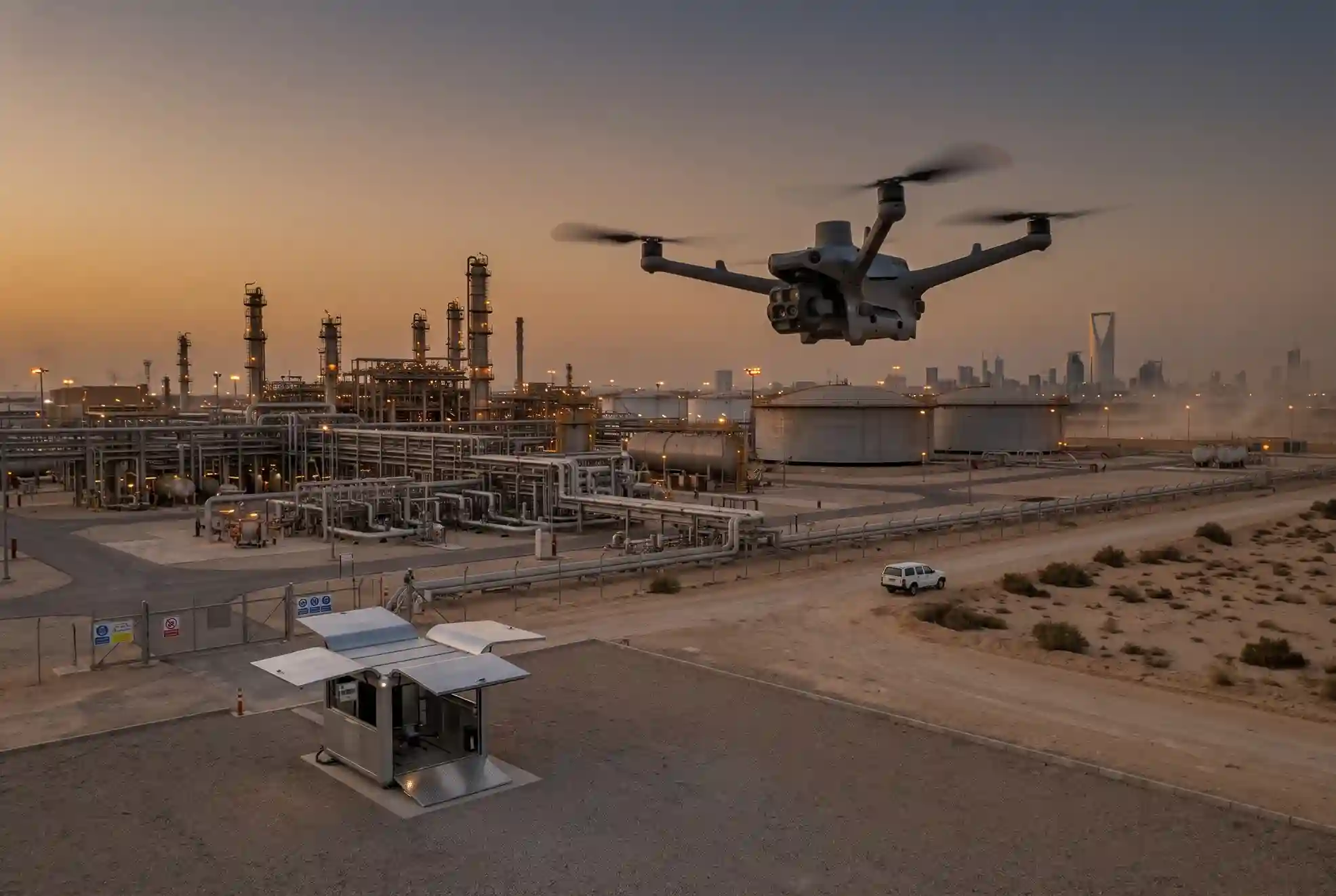
In late 2025, Terra Drone Arabia ran a field test of an autonomous drone inspection setup at a live oil and gas facility. The aim was simple: show that a drone can take off from a dock, fly a planned route, capture images and send them to a software platform without a pilot controlling every step.
The Challenge
Manual inspections of tanks, pipes and elevated assets are slow, and they can put people at risk. Large facilities also need frequent checks. An autonomous drone that waits in a dock on site could handle routine patrols. For that to work, the drone also needs a platform that plans tasks, tracks flights and stores results.
What We Tested
The test followed five steps:
- Enter the inspection task
- Assign it to a dock
- Fly the route
- Upload the data
- Find defects in the images
Equipment
| Device | Role |
|---|---|
| قاعدة DJI 3 | Launches, lands and charges the drone. Rated IP56, works from -30 to 50 °C, and charges from 15% to 95% in about 27 minutes |
| DJI Matrice 4TD | Inspection drone with visual and thermal cameras and about 54 minutes of flight time |
| DJI RC Plus 2 Enterprise and DJI Pilot 2 | Used to plan the flight routes |
| DJI D-RTK 3 Relay | Fixed relay beside the dock |
| Third-party inspection platform | Sends tasks to the dock and stores images |
How the Test Ran
Setup took longer than the flights. On the second day, the drone would not connect to the platform because new drone firmware did not match the platform’s software kit. The platform team fixed it overnight.
The flights worked. The first autonomous flight lasted three minutes and checked take-off, altitude control and return to home. The next mission flew six waypoints in about six minutes with a stable link, even without the relay. Images uploaded automatically after landing. The team ran more flights to collect images for AI training, then held a live demo for client and partner representatives.
What We Found
Hardware: The dock and drone were stable throughout. Autonomous take-off, flight, landing and charging all worked, with precise waypoint tracking.
Software: The platform could run routes planned in DJI Pilot 2 and store the images. It could not plan or edit routes, change the flight once it started, show live video or switch to thermal in flight. Automatic defect detection and reports were not working, so engineers marked defects by hand. The AI needs thousands of site images to train, and sensitive facility images could not be shared.
Client representatives liked the hardware. They said the platform was too basic for industrial inspection.
Lessons for Operators
- Test hardware and software separately. A strong dock doesn’t make up for a limited platform.
- Plan site readiness early: gate access, power, escort and flight permission.
- Check firmware and software compatibility before every test.
- Ask how AI will be trained when site images can’t leave the facility.
What’s Next
The client asked for a follow-up demo led by Terra Drone. It will use the same dock and drone with DJI FlightHub 2 for fleet control, live view and data management.
Project Snapshot
- Year: 2025
- Sector: النفط والغاز
- تطبيق الفحص الصناعي
- Solution Type: حلول الطائرات بدون طيار
- Type of work: Field test (proof of concept)
- Devices: DJI Dock 3, DJI Matrice 4TD
Planning a drone-in-a-box program for your site? لنتحدث about testing it first before you commit.

 العربية