Transforming Infrastructure into Interactive Reality
Water Transmission & Technologies Co.
BENEFITS & SLA
Non-contact, multi-modal drone and ROV inspections backed by GACA-certified pilots, ISO-aligned procedures, and SLA-driven reporting, purpose-built for Saudi Arabia’s most demanding industrial assets.
Sub-millimeter visual and radiometric thermal imagery to detect corrosion, micro-cracks, hotspots, and coating defects invisible to manual inspection.
Reach flare tips, chimneys, stacks, tanks, pressure vessels, dam walls, and subsea pipelines, without rope access, scaffolding, or confined-space entry.
Initial inspection summary within 48–72 hours; full report with annotated defect logs and 3D mapping within 3–5 business days.
Live (online) inspection on running assets without operational shutdown, or planned offline inspection during turnaround for deep-dive defect analysis.
Eliminate scaffolding, rope access teams, shutdown coordination, and extended manpower, cutting total inspection cost by up to 70%.
Inspection deliverables formatted for Risk-Based Inspection (RBI), CMMS platforms (SAP PM, Maximo), and asset integrity management workflows.
CHALLENGES
Manual inspection methods expose teams to risk, slow operations, and miss critical defects across vertical, confined, and underwater assets.
Manual inspections miss micro-defects and rarely produce repeatable, uniform measurements across a full asset surface.
Many traditional inspections require partial or full shutdowns of operations, halting production and eroding revenue.
Tanks, chimneys, flare tips, stacks, pressure vessels, and offshore platforms are dangerous or impossible to reach manually.
Working at height, in confined spaces, or hazardous zones exposes inspection teams to falls, asphyxiation, and chemical contact.
Active hydrocarbon, toxic gas, high-temperature, and explosive zones make manned inspection slow, expensive, and unsafe.
Scaffolding, rope access, shutdown coordination, and lengthy manual reporting inflate budgets and delay maintenance decisions.
TECHNIQUES & METHODS
Non-contact, multi-modal drone and ROV inspections backed by GACA-certified pilots, ISO-aligned procedures, and SLA-driven reporting, purpose-built for Saudi Arabia’s most demanding industrial assets.

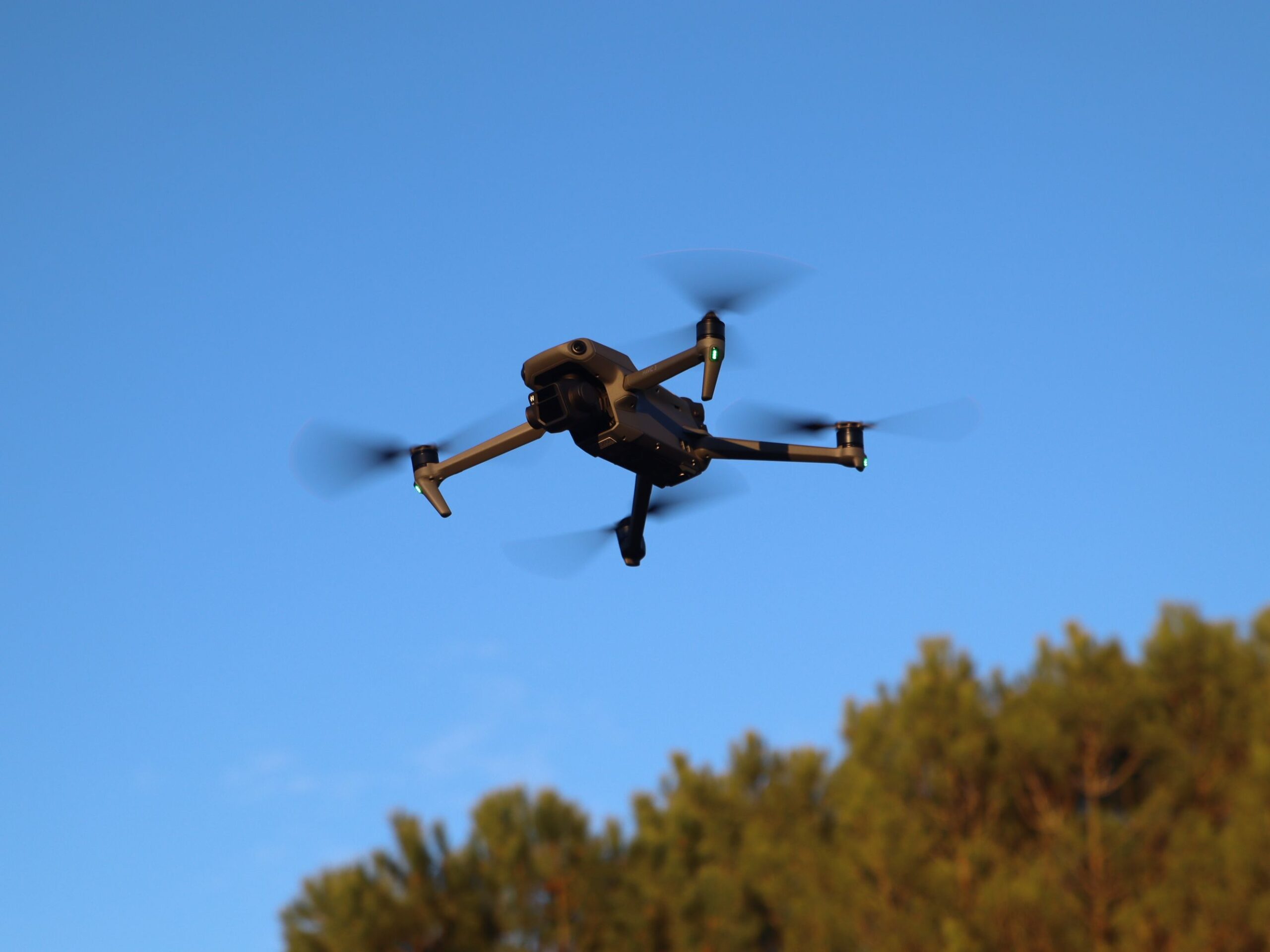
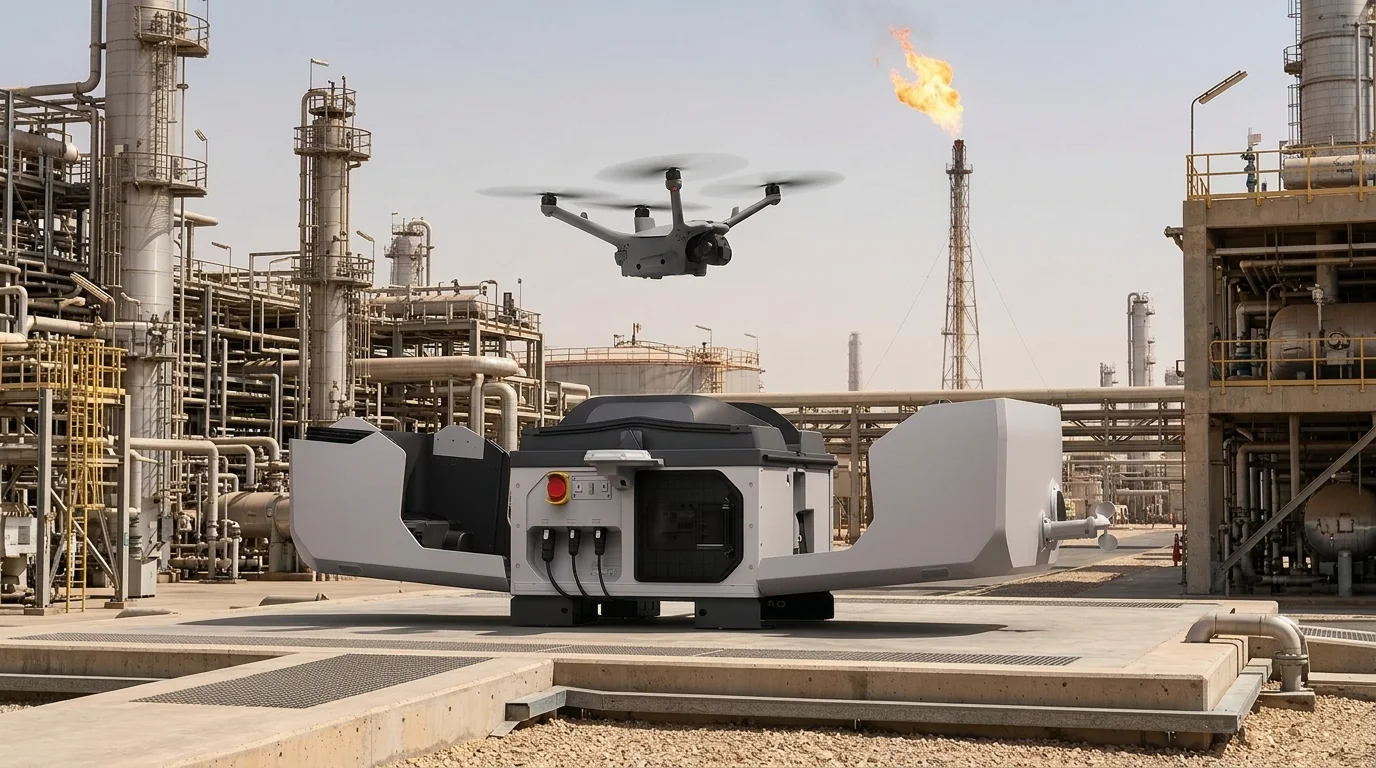
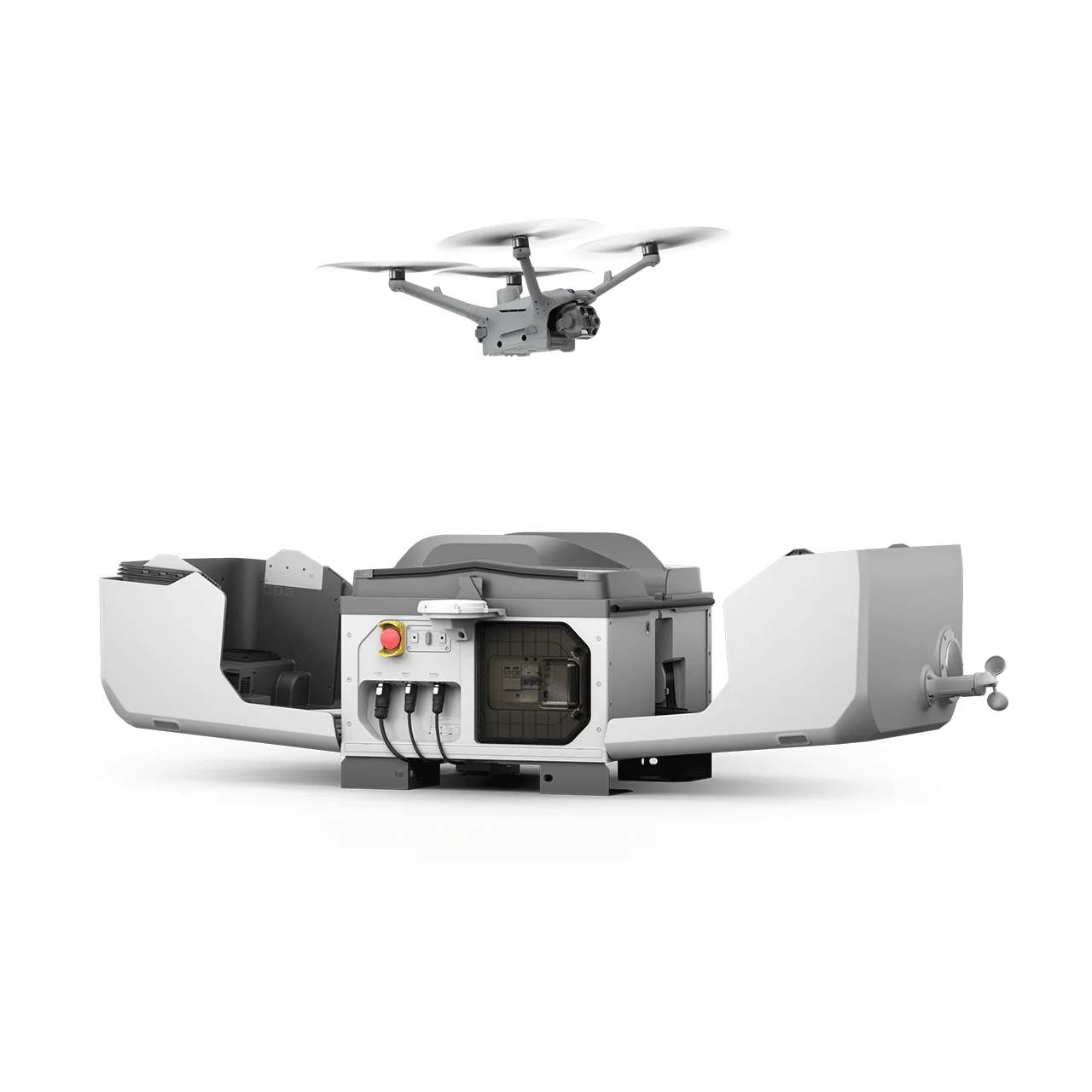
A fixed docking station launches, charges, and retrieves the drone on a schedule, giving refineries and tank farms repeat perimeter surveillance and thermal screening from a safe distance. It supports drone inspection services by flagging anomalies around stacks, pipe corridors, and oil storage tanks for closer follow-up, not replacing detailed internal or NDT work.

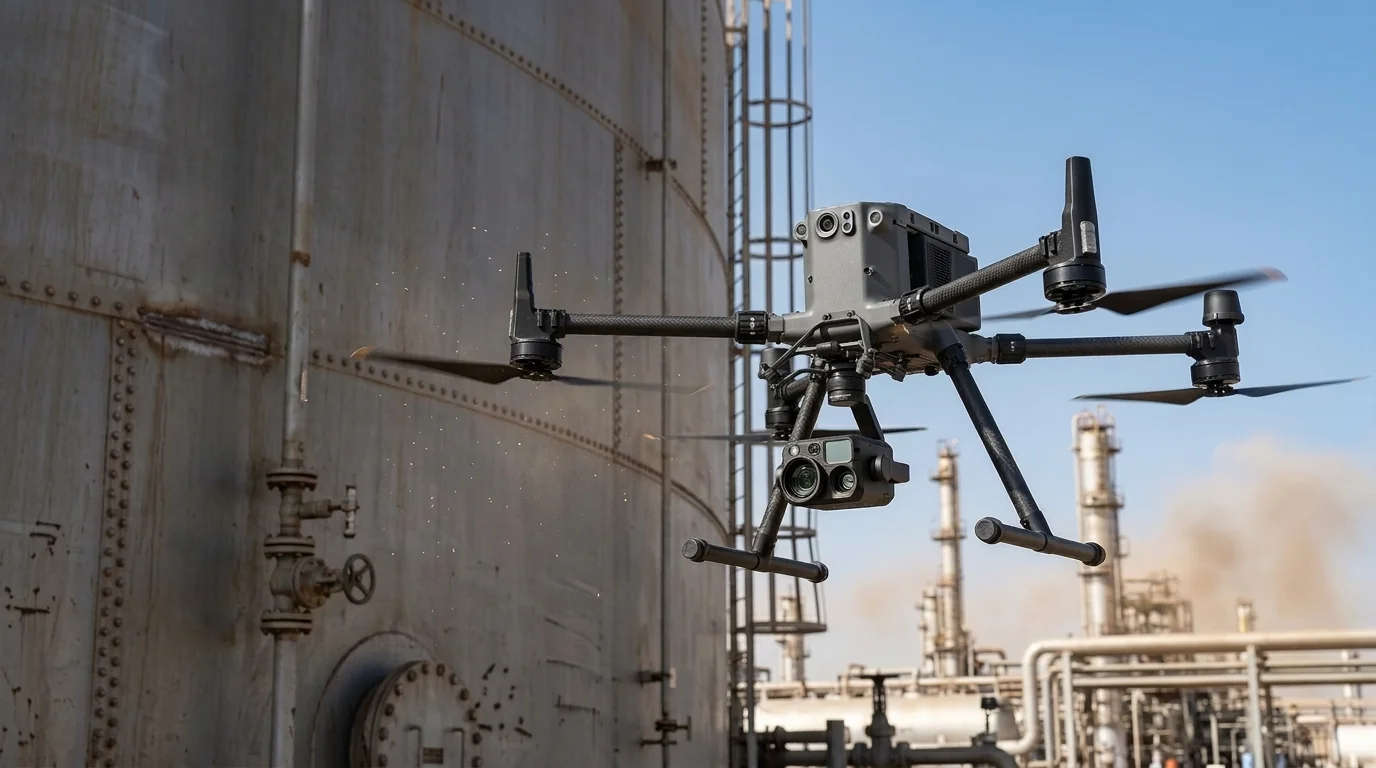
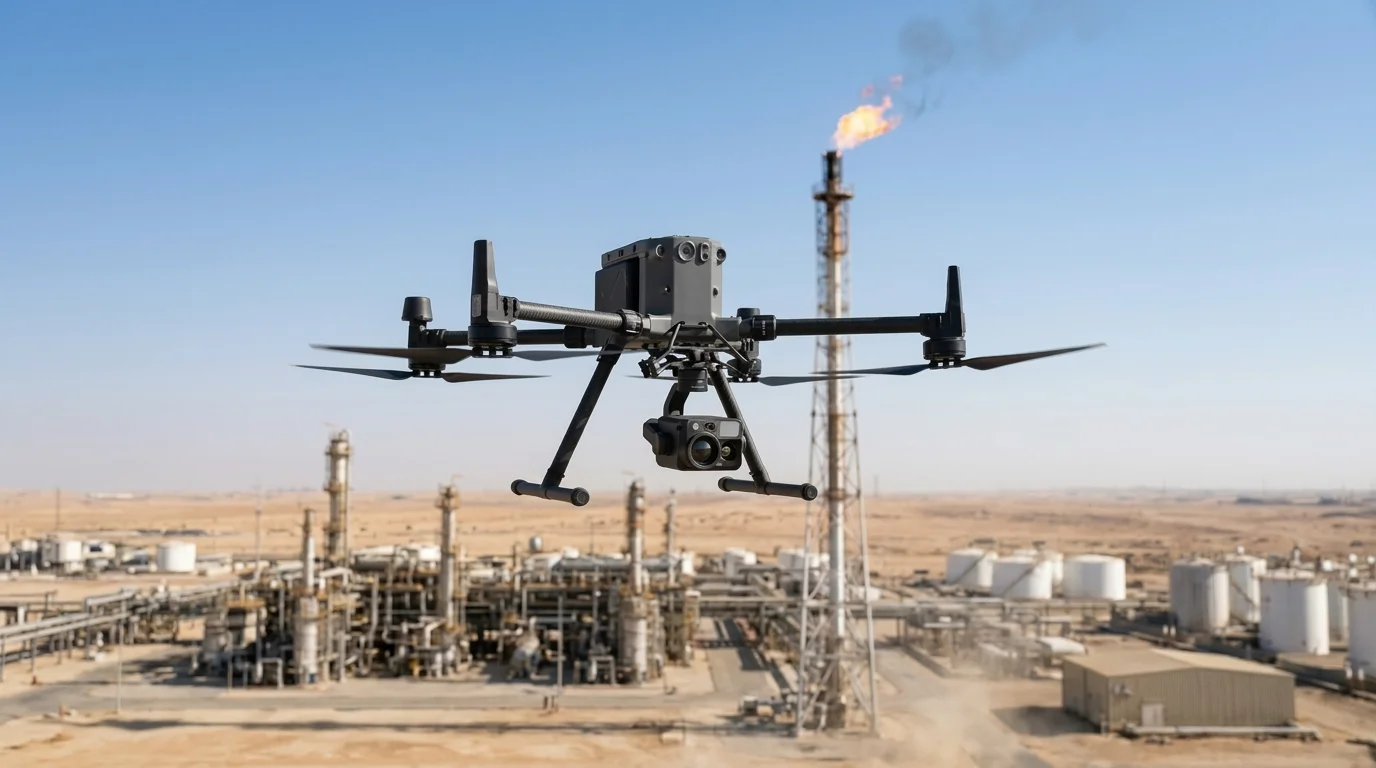
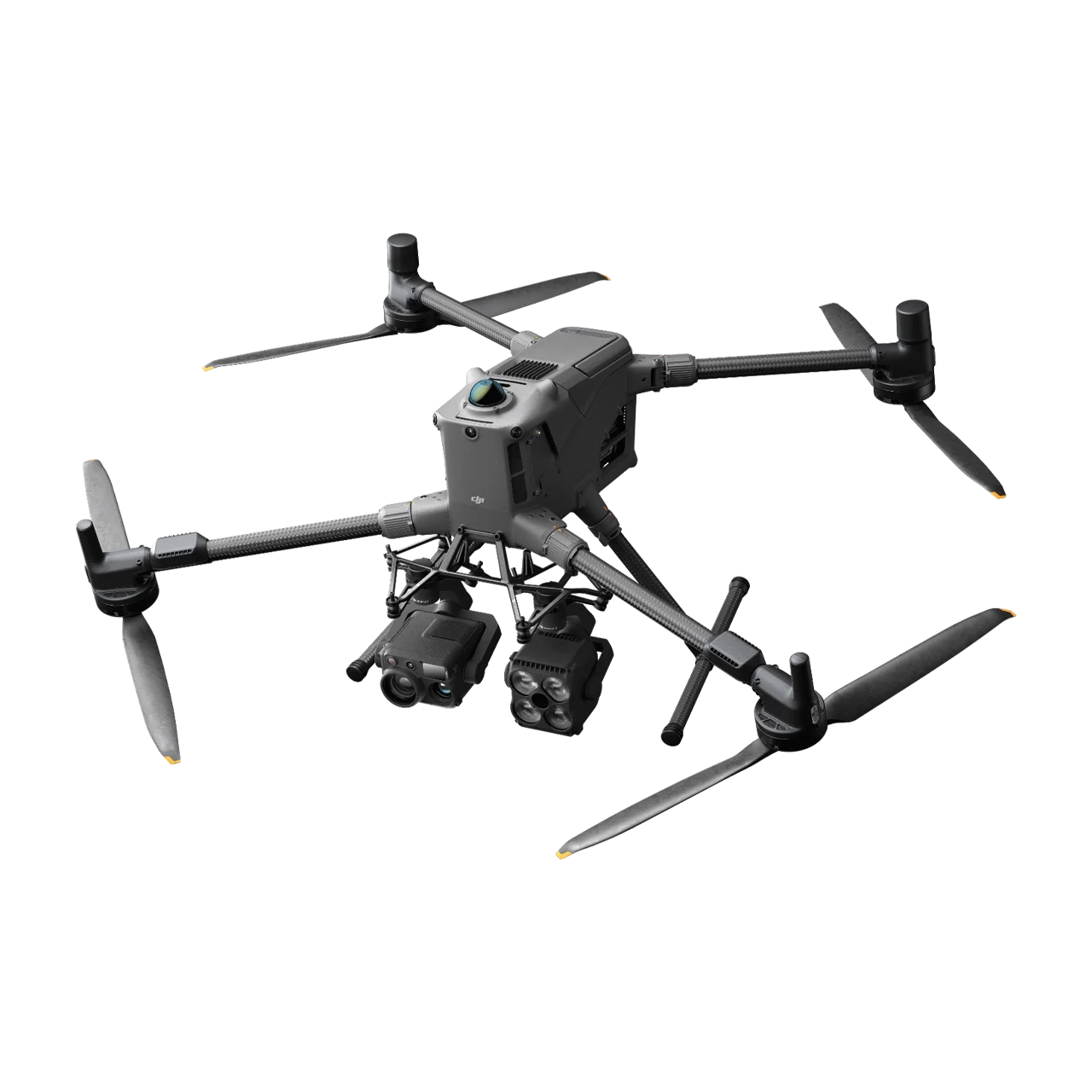
Long-range zoom optics and a radiometric thermal sensor help inspectors review external stack condition, chimney surfaces, and insulation hotspots while the asset stays online. Flare stack drone inspection can reduce scaffolding, shutdown time, and at-height exposure when close-contact testing is not required.

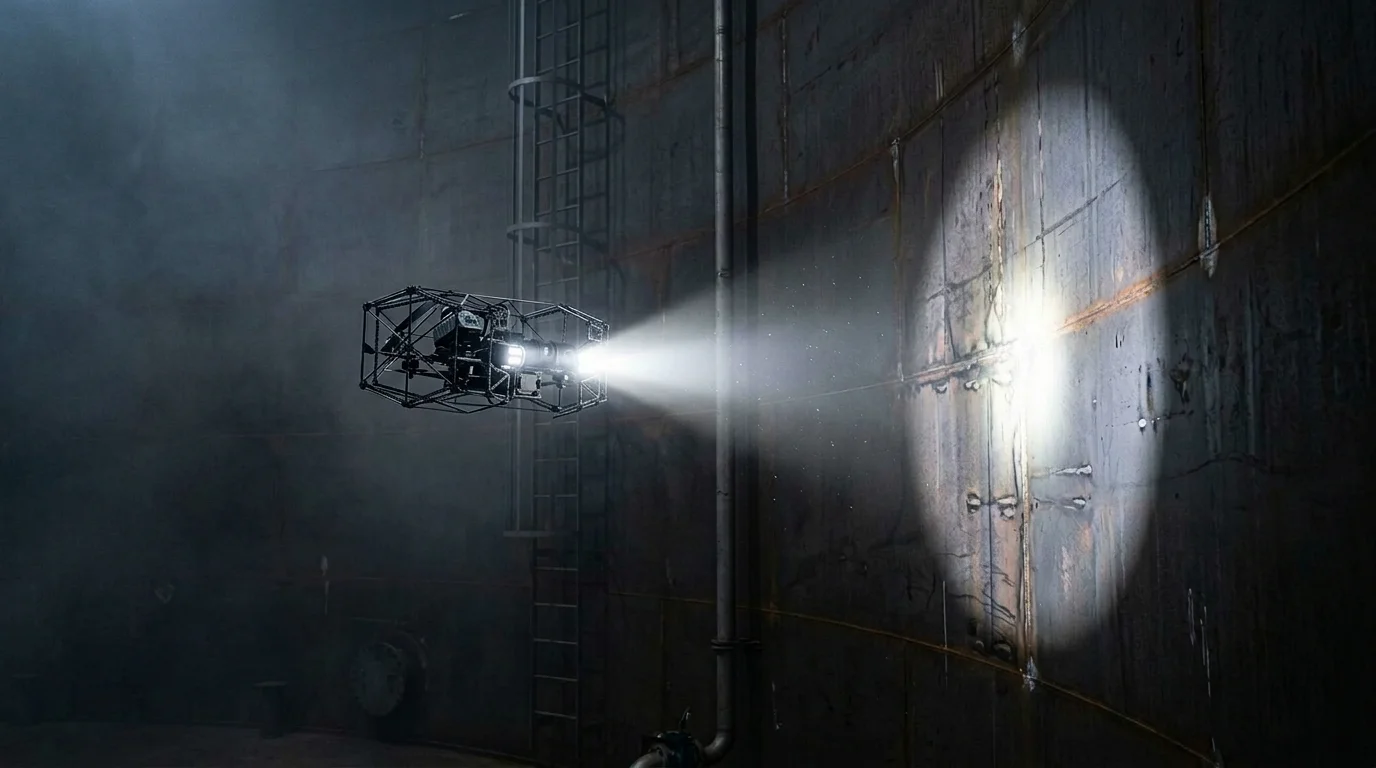
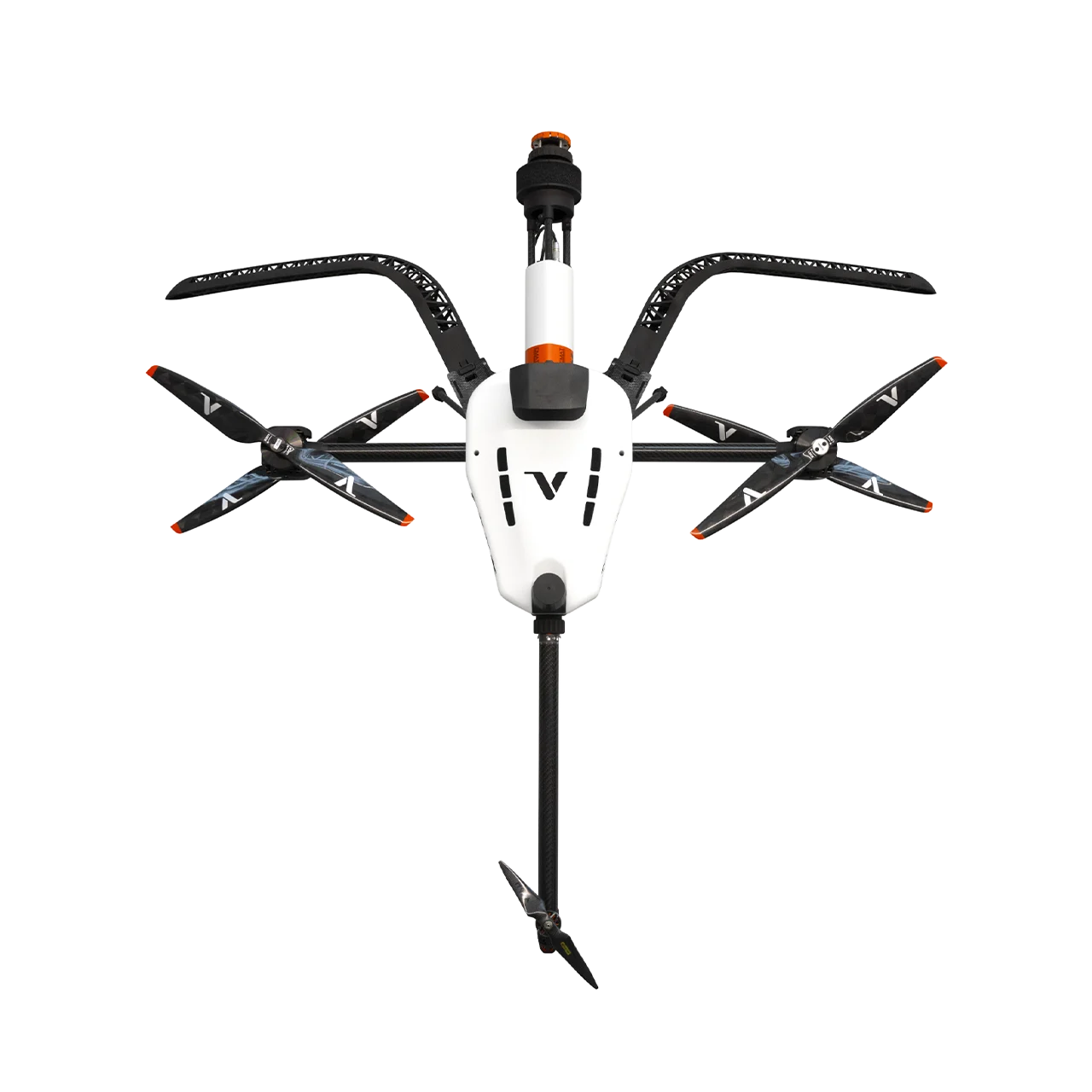
A collision-tolerant caged drone flies inside storage tanks, columns, and pressure vessels to capture weld seams, shell condition, and coating issues before people are sent inside. Confined space drone inspection reduces manned entry and helps plan any follow-up work that still requires hands-on access.

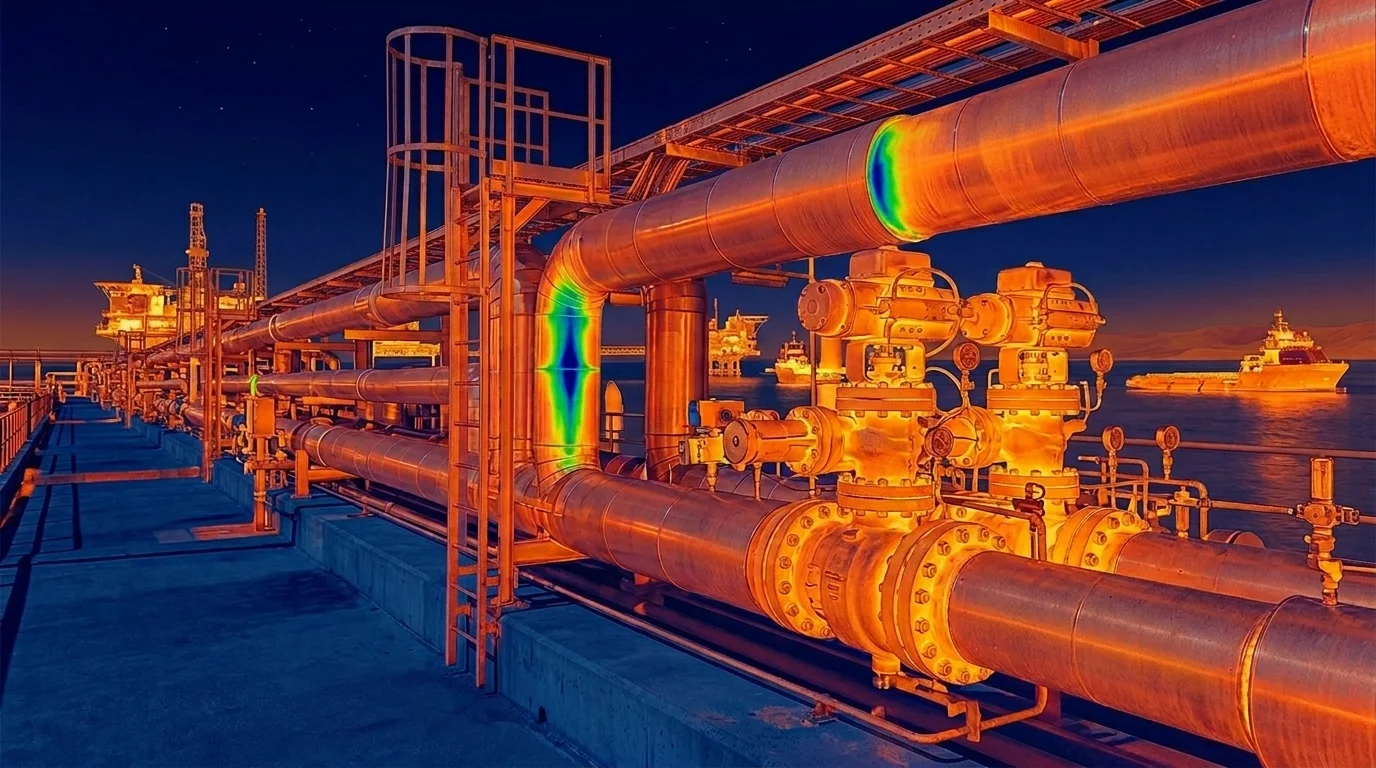
A radiometric thermal camera traces heat patterns across insulated pipework and process equipment, highlighting areas where moisture, insulation failure, or corrosion under insulation (CUI) may need closer verification. Oil & gas thermal drone inspection is best used as a screening layer that prioritizes follow-up NDT and maintenance checks.

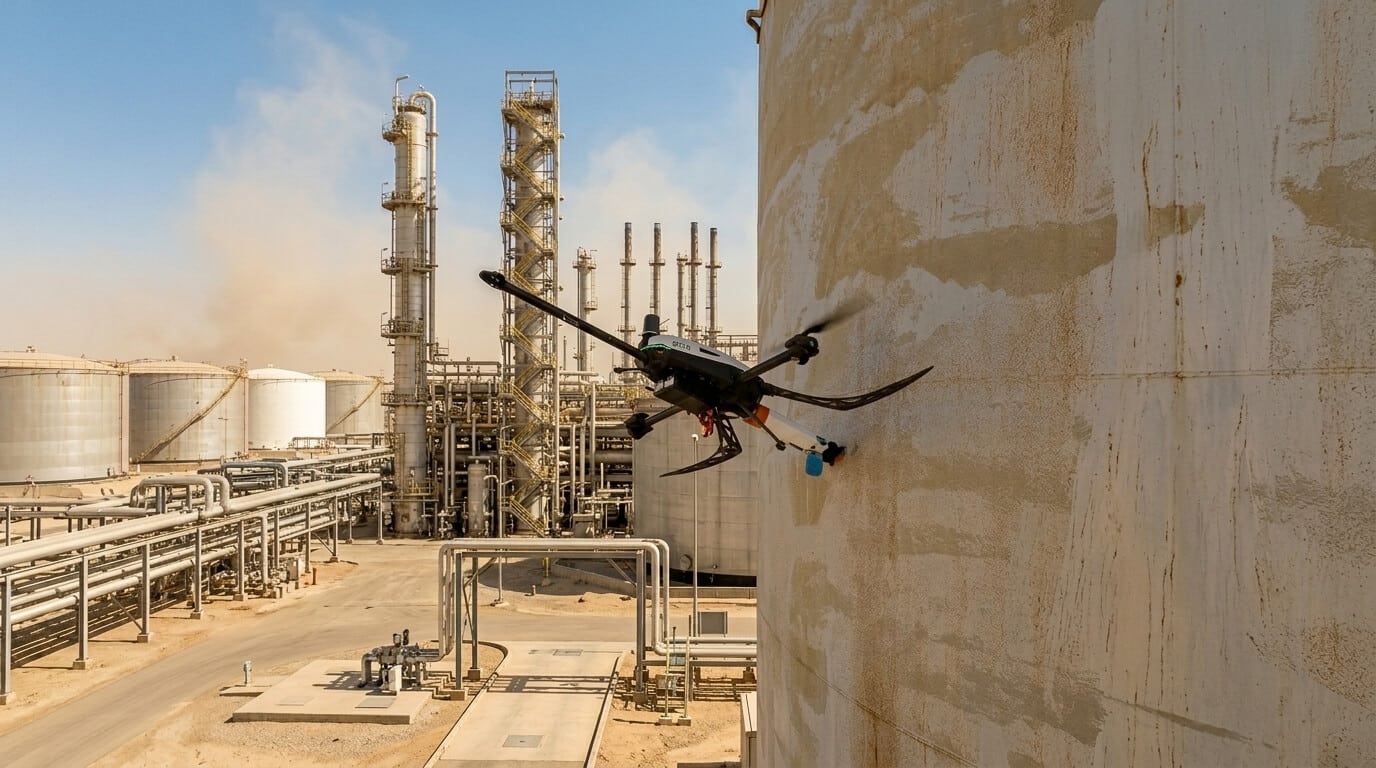
A contact-capable drone presses an ultrasonic, EMAT, or DFT probe directly to vertical steel and returns thickness or coating values at defined test points. This NDT drone inspection workflow feeds RBI programs and wall-loss trending while reducing rope access on suitable tank shells, stacks, and process columns.

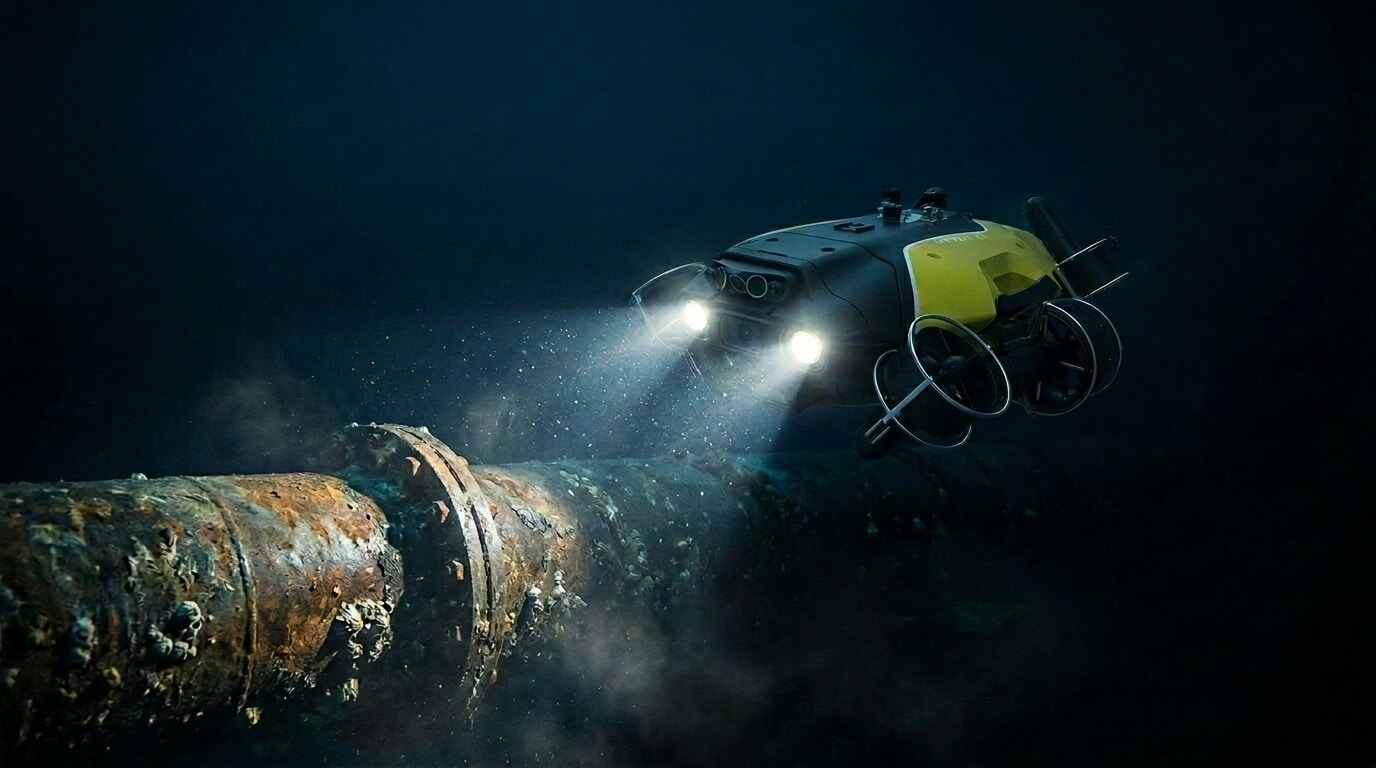
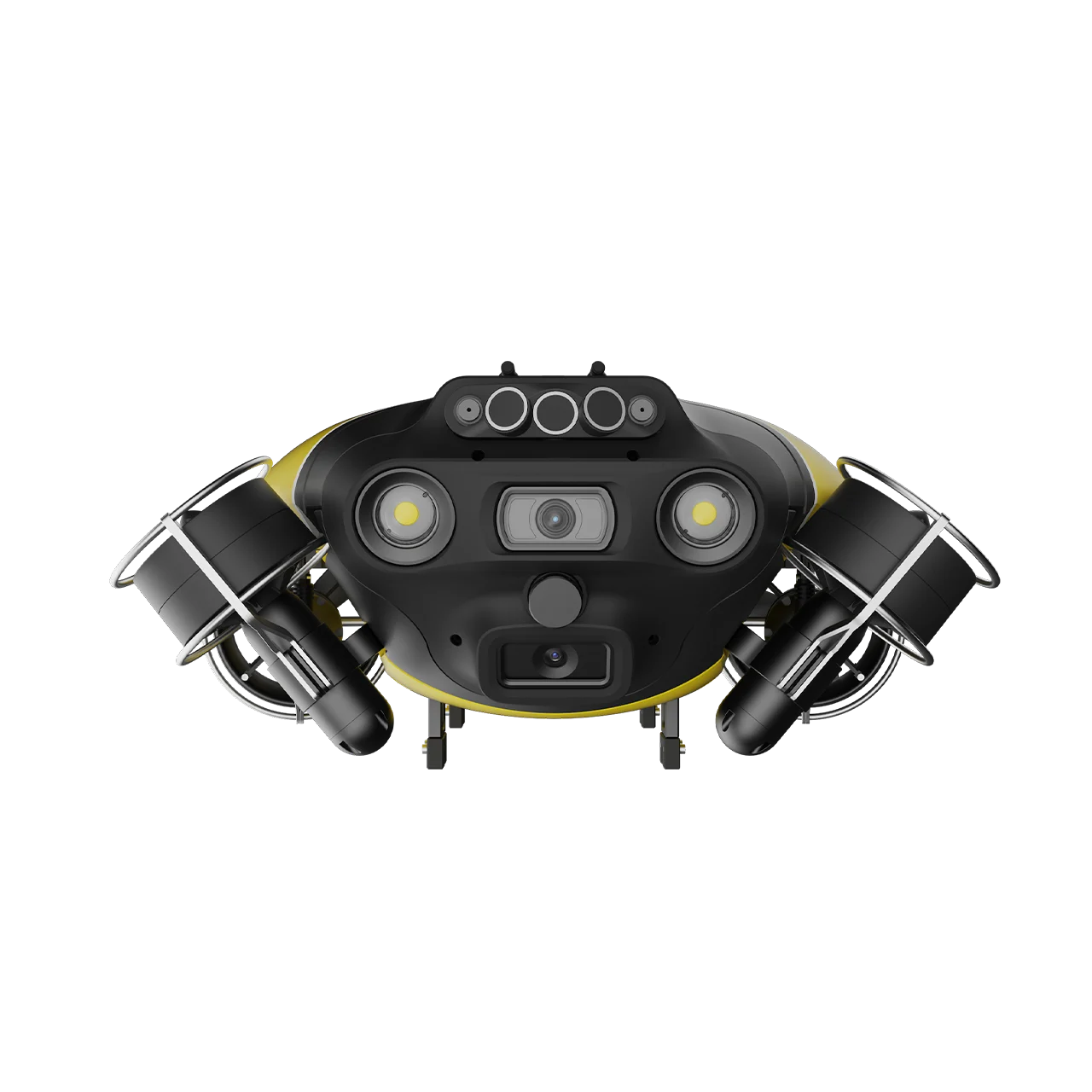
A tethered ROV covers the work below the waterline: subsea pipeline corridors, hull plating, dock piles, and submerged transitions that aerial surveys cannot reach. Underwater ROV inspection adds close visual evidence below water and can be reported alongside topside drone findings when both are in scope.

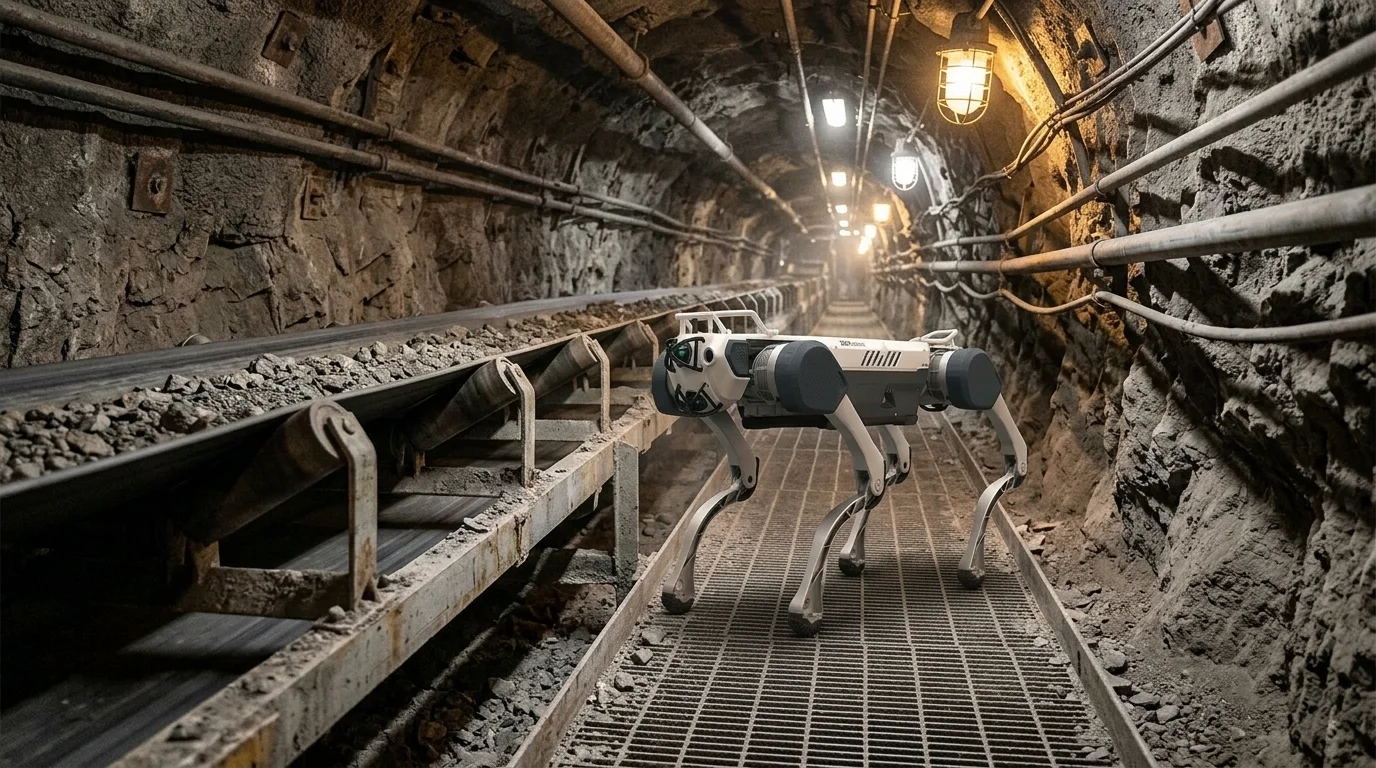
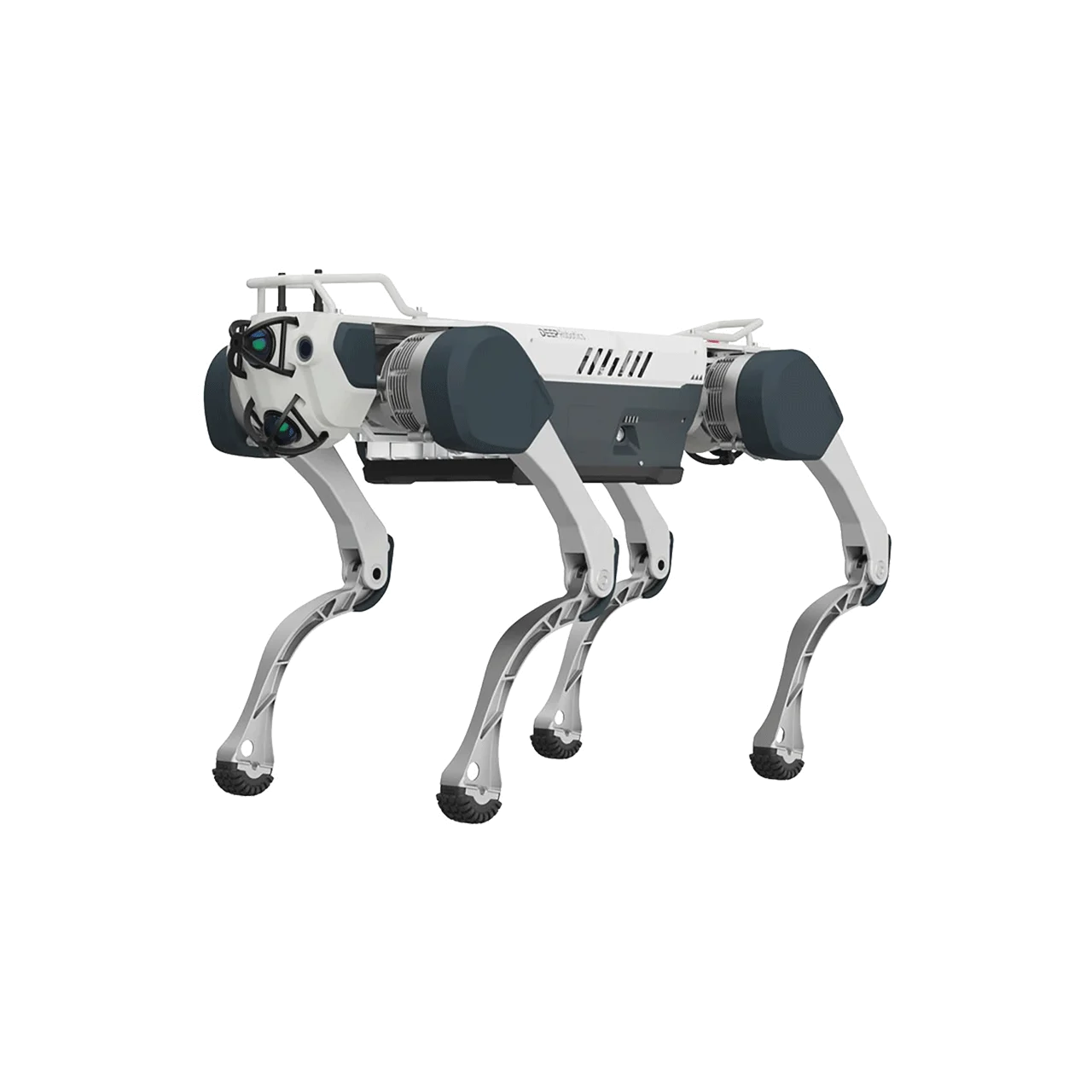
A four-legged industrial robot walks gravel, stairs, and wet metal grating to run repeatable visual and thermal patrols when equipped with the right sensors. The quadruped robot for inspection fits mining plants, conveyor galleries, and dense process facilities where ground access matters more than altitude.
DELIVERABLES
Structured, audit-ready inspection outputs aligned with international standards and your asset integrity workflows.
INDUSTRIES & PLATFORMS


24/7 autonomous patrol, flare tip inspection, and gas leak detection across refineries and processing plants.
Contact UT, EMAT, and DFT thickness measurement on tank shells, pipelines, and pressure vessels for RBI programs.
Ground robotic patrol of crushers, conveyors, and shafts with thermal screening in hazardous and dust-heavy environments.
ROV-based subsea pipeline, hull, and dock structure inspection for ports, offshore platforms, and submerged assets.
Actual Case Study
Water Transmission & Technologies Co.
Agriculture
Real Estate Company in Middle East
Renewable Energy Company in Saudi Arabia
Engineering Company in Saudi Arabia
Frequently Asked Questions
Let's Plan Your Next Inspection