
The publication of GACAR Part 107 Version 5 represents a watershed moment for the Kingdom’s aviation sector. This update signifies a transition from a reactive, case-by-case regulatory model to a sophisticated, risk-based regulatory framework. By aligning Saudi Arabia’s General Authority of Civil Aviation (GACA) protocols with international best practices most notably the European Union Aviation Safety Agency (EASA) standards. V5 provides the legal certainty required for massive industrial investment.
I. The Core Regulatory Architecture: Risk-Based Categorization
The most fundamental change in GACA 107 V5 is the formalization of UAS operations into two primary categories based on the risk they pose to third parties on the ground and other aircraft in the sky: the open category and the specific category.
- The Open Category (Low Risk): This category is reserved for basic, low-risk operations. It does not require a prior “Operational Authorization” from GACA, provided the pilot adheres to strict standard operating limitations.
- Subcategory A1 (Fly Over People): Restricted to ultra-light drones typically < 250 g. Pilots must avoid flying over “assemblies of people”.
- Subcategory A2 (Fly Near People): For drones up to 2 kg or 4 kg (depending on class markings). Requires a high level of pilot competency and a safe distance of at least 30 meters from uninvolved persons.
- Subcategory A3 (Fly Far from People): For larger drones up to 25 kg. Operations must be conducted at least 150 meters away from residential, commercial, or industrial areas.
- The Specific Category (Moderate Risk): This is the domain of industrial and commercial drone services. Any operation that falls outside the Open Category, such as flying a 10 kg drone over a populated site or flying beyond visual line of sight (BVLOS) requires a formal Authorization.
II. The Technical Mechanics of Standard Scenarios (STS)
V5 introduces the GACA standard scenarios (STS), which serve as “pre-defined risk assessments.” Instead of an operator spending months conducting a SORA (Specific Operations Risk Assessment), they can now declare compliance with a specific STS template.
- GACA STS-V1 (VLOS Populated): This scenario allows for Visual Line of Sight (VLOS) operations at a maximum height of 120 meters (400 ft) over a controlled ground area in populated environments.
- Technical Drone Requirements: Drones must bear a specific class identification label (C5 or equivalent). This requires a Flight Termination System (FTS), a redundant kill-switch independent of the primary flight controller, and a low-speed mode to mitigate kinetic impact risk.
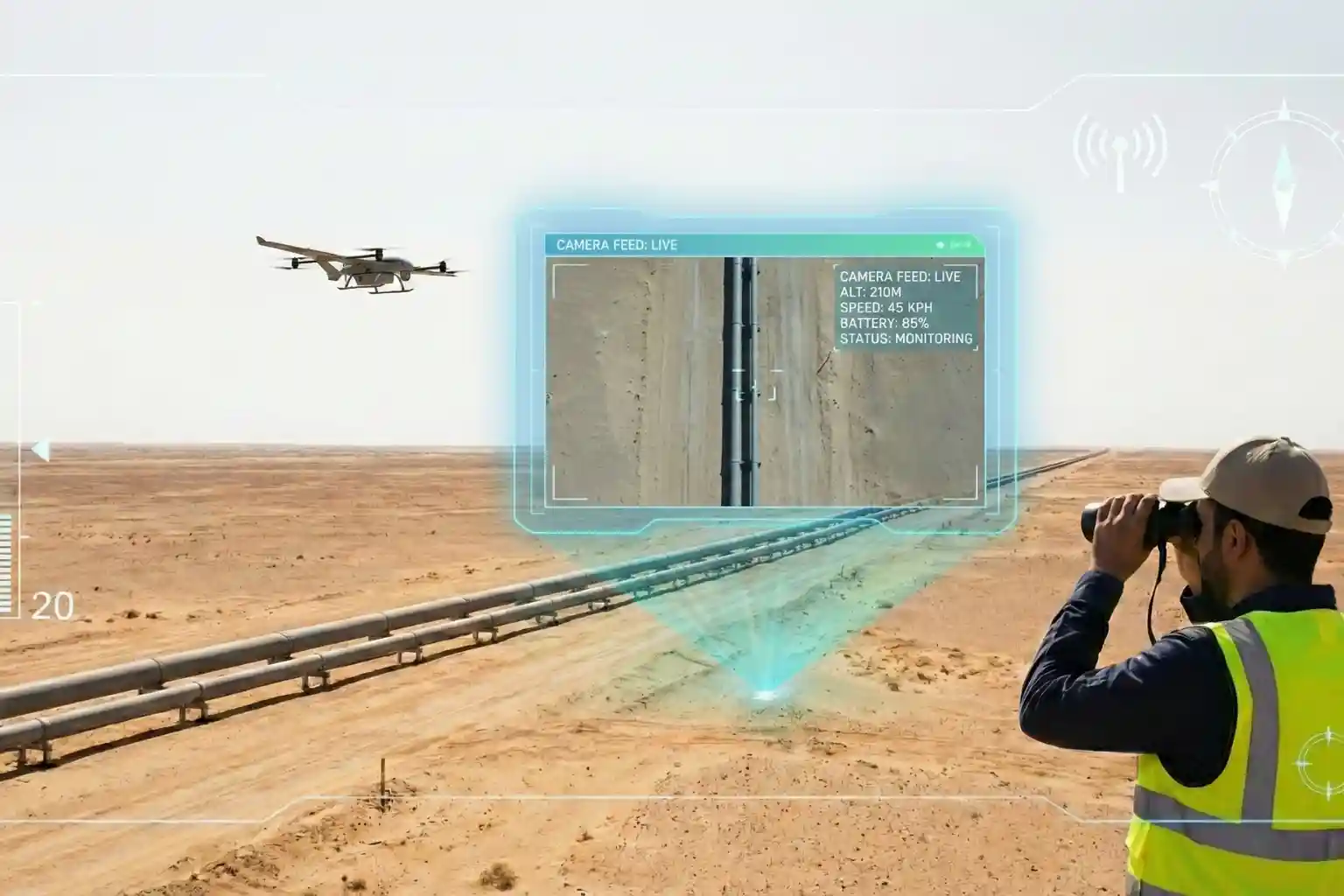
- GACA STS-B1 (BVLOS Sparsely Populated): This scenario enables Beyond Visual Line of Sight (BVLOS) operations, a game-changer for long-range asset monitoring. The drone can fly up to 1 km (or 2 km with visual observers) from the pilot.
- Technical Drone Requirements: Typically requires a C6 class drone. These aircraft must include Direct Remote Identification (Remote ID), which broadcasts the drone’s position, altitude, and serial number in real-time to law enforcement and airspace managers.
III. Institutional Requirements: The Three Pillars of Compliance
To operate legally under GACA 107 V5, a commercial entity must establish a triad of technical documentation and organizational controls.
- The Operations Manual (OM): This is the organization’s “geospatial bible.” It must detail the organizational structure, pilot training records, maintenance schedules, and technical specifications for every drone in the fleet.
- Safety Management System (SMS): GACA now requires a proactive approach to safety. Organizations must implement a system for identifying hazards, analyzing risks, and reporting “near-misses” or incidents back to the GACA UAS department within 72 hours.
- Emergency Response Plan (ERP): An ERP must be established and “drilled” regularly. It outlines the technical steps to be taken in the event of a link loss (C2 link failure), fly-away, or airspace incursion by a manned aircraft.
IV. Remote Pilot Competency and Certification
V5 elevates the status of the “Remote Pilot” to that of a certified aviation professional. The certification process is now modular:
- Fundamental Training: All commercial pilots must pass a GACA-approved theoretical exam covering airspace classification, aviation weather, and radio communication.
- STS-Specific Accreditation: For advanced missions, pilots must undergo Practical Skill Training and Assessment. This involves demonstrating proficiency in abnormal and emergency maneuvers, such as landing safely after a motor failure conducted by a GACA-recognized training entity.
V. Fleet Readiness and Technical Sovereignty
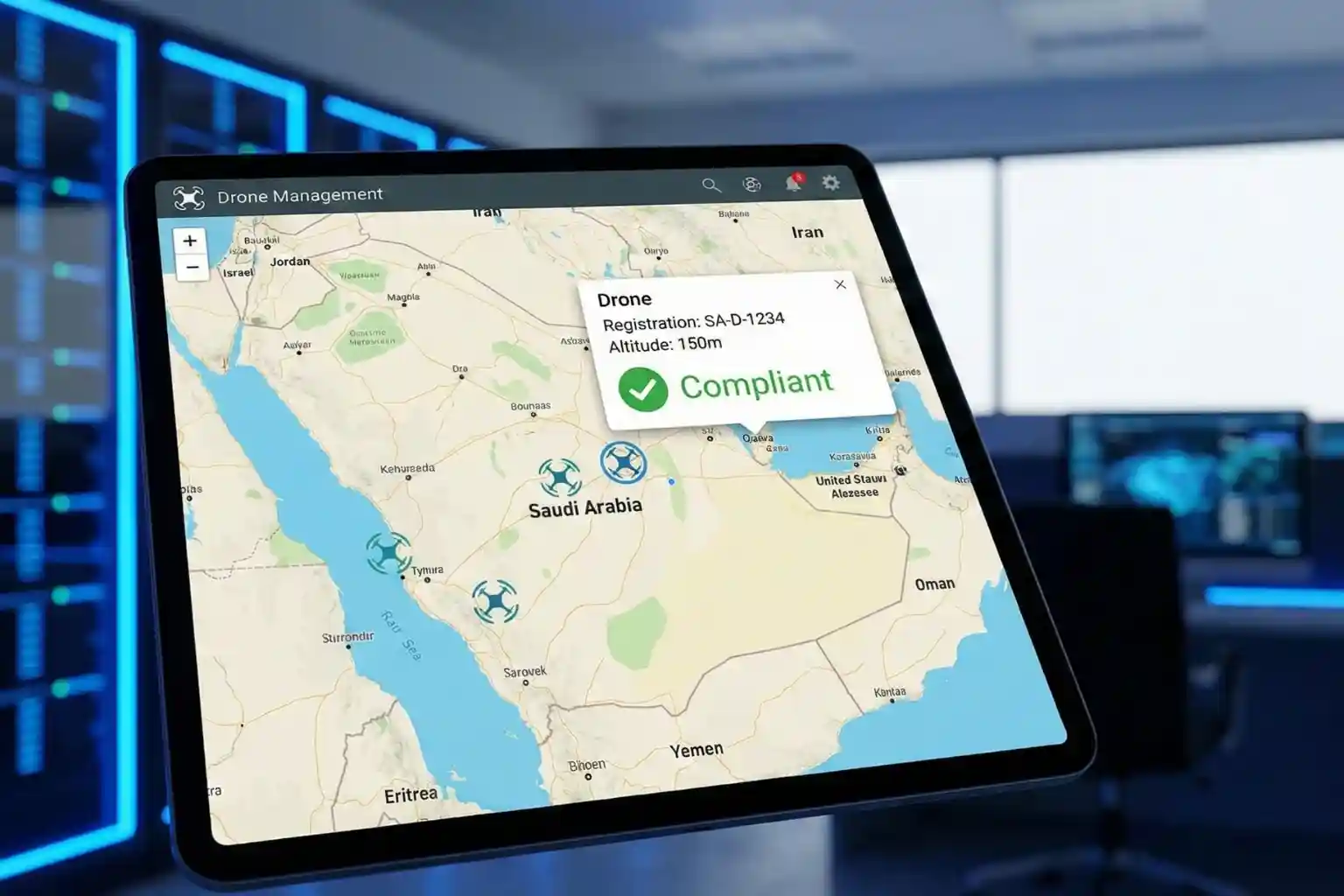
Finally, GACA 107 V5 mandates that every UAS used for commercial purposes in the Kingdom be registered and technologically compliant.
- Digital Registration: Each aircraft must be registered via the GACA portal, receiving a unique nationality and registration mark that must be physically displayed on the airframe.
- Remote ID Implementation: By the 2026 deadline, all drones operating in the Specific Category must be equipped with remote ID hardware. This creates a “digital license plate” for every drone, ensuring accountability and facilitating the future of a high-traffic low-altitude economy.
The transition from Version 4 to GACAR Part 107 Version 5 introduces a structured methodology for operational authorization through Standard Scenarios (STS). These scenarios are technically defined “safety envelopes” that allow operators to bypass the complex Specific Operations Risk Assessment (SORA) process by adhering to a set of pre-verified technical and operational mitigations. For industrial players, this means the difference between a three-month approval cycle and a near-instantaneous operational declaration.
Understanding the Standard Scenarios (STS)
I. GACA STS-01: Precision VLOS in Populated Zones
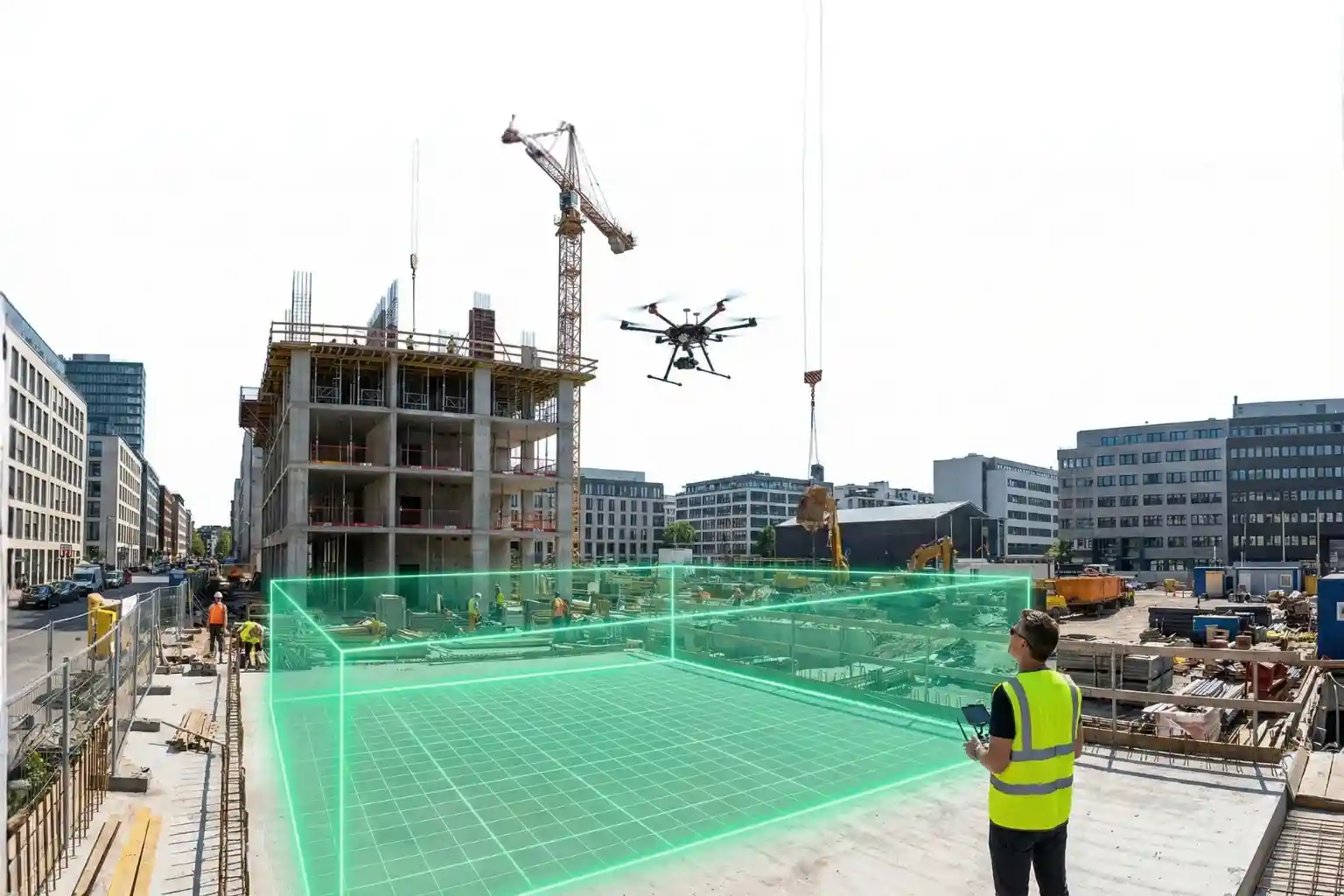
GACA STS-01 is the primary regulatory pathway for urban and high-density industrial work. It allows for operations within Visual Line of Sight (VLOS) at altitudes up to 120 meters (400 ft) over controlled ground areas.
Technical Hardware Requirements (C5 Class Equivalence): To be compliant with STS-01, a UAS must meet rigorous hardware safety standards:
- Flight Termination System (FTS): The aircraft must be equipped with a redundant, independent “kill-switch.” This system must be capable of terminating flight either by cutting power to the motors or deploying a parachute even if the primary flight controller or C2 (Command and Control) link fails.
- Low-Speed Mode: When operating in proximity to people (within the controlled area), the drone must have a selectable low-speed mode that limits the maximum horizontal velocity (typically to 5 m/s) to minimize kinetic energy in the event of an impact.
- Impact Energy Mitigation: If the aircraft is over a certain weight threshold, it often requires a parachute recovery system that triggers automatically upon the detection of a “critical flight state” (e.g., an unrecoverable tumble or motor loss).
II. GACA STS-02: Scaling Industrial BVLOS
For long-linear assets like the Kingdom’s extensive pipeline networks or high-voltage power lines, GACA STS-02 enables Beyond Visual Line of Sight (BVLOS) missions in sparsely populated areas.
Technical Hardware Requirements (C6 Class Equivalence): Because the pilot is no longer physically watching the aircraft, the drone must “see” and “be seen” digitally:
- Direct Remote Identification (Remote ID): This is the “digital license plate.” Starting in January 2026, all drones in this category must broadcast their unique GACA registration number, real-time GPS position, altitude, ground speed, and the pilot’s location via a Wi-Fi or Bluetooth signal.
- Geo-Awareness and Geo-Fencing: The UAS must be equipped with a geo-awareness function that alerts the pilot if the drone approaches a prohibited zone (such as a restricted military area or an airport buffer). Furthermore, a geo-fencing system must be active, which automatically prevents the drone from exiting the pre-defined “flight geography”.
- Autonomous Contingency Procedures: The flight control system must have pre-programmed, “if-then” logic. For example, if the C2 link is lost for more than 30 seconds, the drone must automatically transition to a “Return to Home” (RTH) sequence or execute a controlled emergency landing at a pre-designated site.
III. The “Controlled Ground Area” Metric
A technical nuance of both STS-01 and STS-02 is the Controlled Ground Area. This is not just the area directly under the drone, but a mathematically calculated zone that includes:
- Flight Geography: The area where the drone is intended to fly.
- Contingency Area: A small buffer zone where the drone can recover from an error.
- Ground Risk Buffer: A technical safety margin calculated based on the drone’s speed, altitude, and weight. For an STS-01 mission at 120m, this buffer can be significant, ensuring that even in a worst-case “glide” scenario, the aircraft remains within a zone where only authorized, informed personnel are present.
IV. Standardized Operational Manuals (OM)
Under V5, the “Manual” is no longer a generic document. It must be a living technical record. It includes the Emergency Response Plan (ERP), which must detail exactly how the crew will coordinate with local Air Traffic Control (ATC) or emergency services if the drone enters a state of “uncontrolled flight”.
Efficiency Through Compliance
The introduction of GACA 107 V5 is far more than a regulatory update; it is an economic catalyst. In the industrial world, the time-to-market and operational downtime are the most significant variables affecting ROI. By shifting from a case-by-case approval system to the Standard Scenarios (STS) framework, GACA has essentially “pre-solved” the most complex math of drone operations, the Specific Operations Risk Assessment (SORA).
I. De-risking the Skies: The SORA-to-STS Transition
Before V5, any industrial operation required a bespoke SORA. This 10-step methodology, pioneered by JARUS and adopted globally, requires operators to calculate the Intrinsic Ground Risk Class (iGRC) and the Air Risk Class (ARC) to determine a Specific Assurance and Integrity Level (SAIL). A Roman numeral from I to VI that dictates the complexity of the safety measures required.
- The SORA Bottleneck: A SAIL IV operation (high risk) requires a massive volume of evidence, including 24 Operational Safety Objectives (OSOs), each with a “High” level of robustness. This includes independent design verification by an aviation authority, which can take months to complete.
- The STS Efficiency: Under V5, GACA has pre-verified the SAIL and OSOs for STS-01 and STS-02. By declaring compliance with an STS, an operator is essentially stating: “I am operating in a pre-verified safety bubble where GACA has already deemed the SAIL to be manageable.” This allows organizations to skip the complex iGRC/ARC calculations, reducing the regulatory lead time from months to just days.
II. The Economics of Precision: Insurance and ROI
Compliance under GACA 107 V5 directly impacts the bottom line through two primary channels: insurance premiums and operational uptime.
- Standardized Insurance Frameworks: Historically, insuring a drone operation was difficult because underwriters lacked a standardized risk model. With the Saudi Central Bank (SAMA) now approving specialized drone insurance products, insurers are using GACA V5 compliance as the baseline for “insurability.” Operators who fly under the STS framework are viewed as lower-risk entities, leading to significantly lower premiums compared to those attempting complex, non-standardized missions.
- Minimizing Site Downtime: In sectors like Oil & Gas, shutting down a flare stack for a manual inspection can cost upwards of $100,000 per day in lost production. GACA V5-compliant drones, equipped with the mandated Flight Termination Systems (FTS) and Low-speed modes, can often perform these inspections while the asset is “live.” The safety mitigations required by V5 provide the site managers with the confidence to allow drones near critical infrastructure without a full shutdown.
III. The Strategic Advantage of Remote ID and Geo-Awareness
The V5 mandate for Direct Remote Identification (Remote ID) and Geo-Awareness by 2026 is a cornerstone of the future “Low-Altitude Economy.”
- Traceability and Accountability: Remote ID acts as a digital license plate, broadcasting the drone’s ID and pilot location via Bluetooth or Wi-Fi. For large-scale projects like NEOM or Red Sea Global, where multiple contractors may be flying drones simultaneously, Remote ID allows for central site security to monitor every aircraft in the sky, preventing collisions and unauthorized incursions.
- Automated Geo-Fencing: GACA V5-compliant drones must be capable of ingesting official UAS Geographical Zone data. This means the drone itself is aware of restricted airspace around airports, military zones, or sensitive infrastructure. If a pilot inadvertently attempts to fly into a restricted zone, the system provides a “geo-fence” hard stop, preventing a regulatory violation before it occurs.
IV. Integrating with the “Digital Thread”
Finally, compliance ensures that the data captured is legally and technically robust for use in Digital Twins and Building Information Modeling (BIM).
- Certified Data Integrity: For a drone-captured 3D model to be used as a legal record in construction or for insurance claims, the metadata must be beyond reproach. GACA V5’s focus on pilot certification and maintenance logs ensures that the “Digital Thread,” the chain of custody for the data is unbroken and verifiable.
- Vision 2030 Alignment: By adopting these standards, Saudi Arabia is positioning itself as a global leader in Advanced Air Mobility (AAM). Compliance today isn’t just about following rules; it’s about ensuring your organization is compatible with the multi-billion dollar drone corridors being built across the Kingdom.
Navigating the V5 Transition
The roadmap is ready. Don’t let your operations stall due to regulatory uncertainty. We have made the transition simple: everything you need to know about the technical requirements, pilot certifications, and standard scenarios is detailed in the official guide.
Download the full regulatory breakdown to ensure your fleet, manuals, and flight crews are 100% compliant with the latest GACA standards.
 English
  العربية