
In recent years, lithium-ion battery incidents have surged globally, with reports showing a 17% increase in related fires due to mishandling during storage and charging. A single lithium battery failure can trigger “thermal runaway,” a catastrophic chain reaction where temperatures spike from 100°C to over 1,000°C in seconds.
Alarmingly, over 50% of these fires occur when devices are not even in use. Lithium batteries are powerful but volatile; if handled incorrectly, they create severe fire and injury risks. For an operator, an overlooked battery in a hot vehicle or a fully charged cell left in a drawer isn’t just a maintenance error; it’s a potential disaster waiting to happen.
The Intelligence of the Battery Management System (BMS)
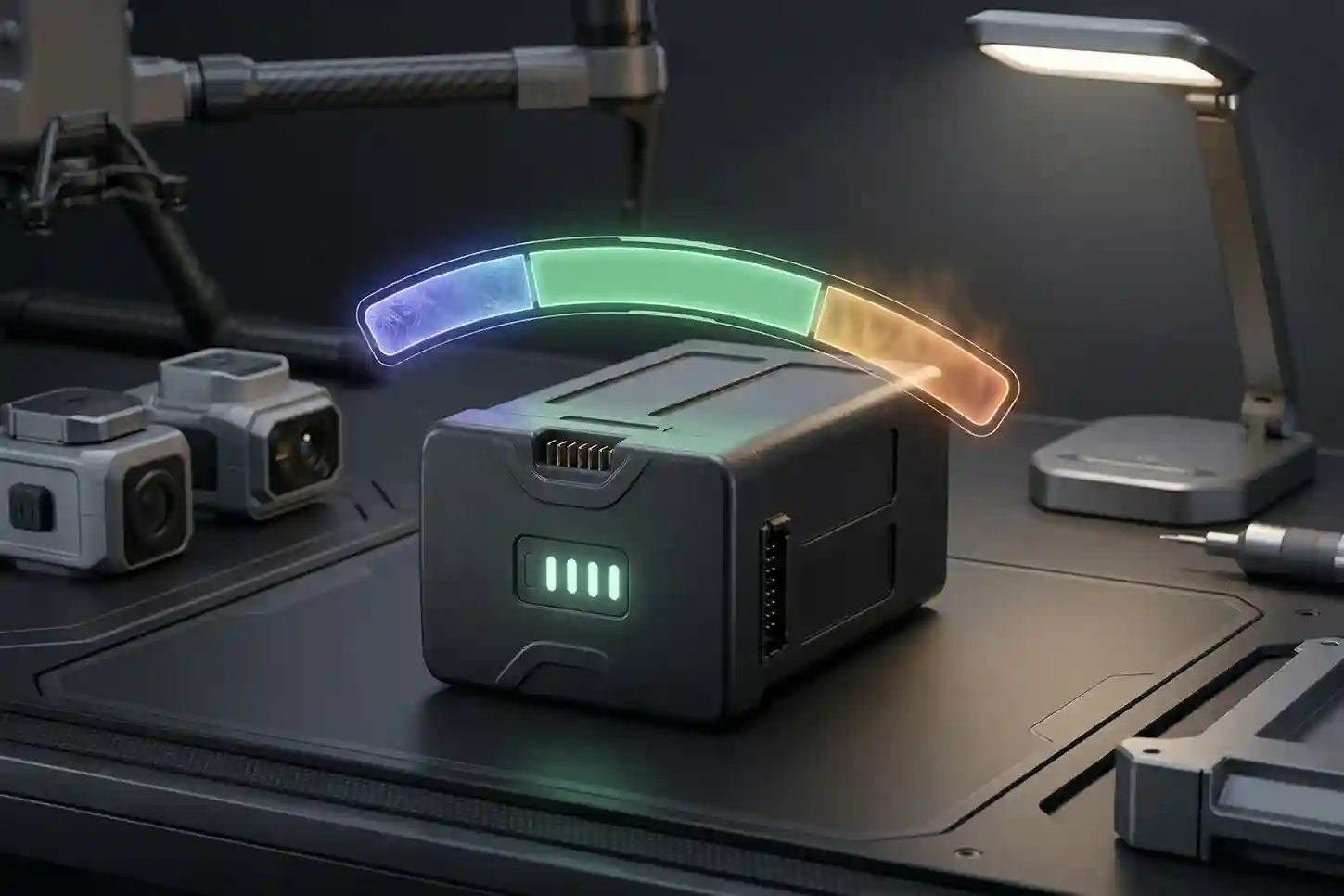
Modern drone batteries, specifically those from DJI, are far more than simple “power bricks.” They are equipped with an internal Battery Management System (BMS) that serves as the brain of the power cell.
- Auto-Discharge Logic: DJI batteries are programmed to protect themselves. If left inactive for 5–10 days, they will automatically begin to discharge to a safer storage level of approximately 60%.
- The Thermal Sweet Spot: High heat is the leading cause of battery swelling and internal failure. To maintain the integrity of the chemical layers, batteries must be stored in a controlled environment between 15°C-25°C.
- Safe “State of Charge” (SoC): Storing a battery at 100% or 0% is the fastest way to kill its lifespan. Professional standards require storage at 40-60% charge to minimize stress on the cells.
Maximum Reliability and Fleet Longevity
Every professional operator desires a fleet that is ready at a moment’s notice. Correct battery care directly translates into Equipment Reliability, extending the life of your batteries and reducing unexpected downtime during critical missions.
- Calibration for Accuracy: By calibrating your batteries every 3 months (or ~20 cycles), you ensure that the “Return-to-Home” (RTH) calculations in your app are accurate. This prevents in-flight power loss or aircraft failure due to false voltage readings.
- Warranty & Compliance: Following these strict manufacturer procedures is often a requirement to maintain your DJI warranty, comply with aviation safety guidance, and protect your insurance coverage.
- Safety of Infrastructure: Using fire-resistant LiPo bags or metal cases protects your personnel, aircraft, facilities, and vehicles from the intense heat of a lithium fire, which is notoriously difficult to extinguish once it begins.
Your Professional Battery Safety Checklist
To ensure your operations remain safe and compliant, implement these procedures immediately:
- Immediate Storage Prep:
- Verify batteries are at 40-60% charge before putting them away.
- Power off and remove batteries from the aircraft; never store them inside the drone.
- Place them in a fire-resistant container in a dry, ventilated area.
- Long-Term Maintenance (Every 3 Months):
- Perform a Calibration Cycle: Charge to 100%, discharge to 10-15%, let it cool, then recharge to 100%.
- For long-term storage, fully charge once every 3–6 months, then discharge back to 50-60% to maintain chemical activity.
- Grounding Procedures:
- Immediately retire any battery showing signs of swelling, overheating during use, rapid voltage drops, or error messages in the DJI app.
- Never attempt to repair a damaged battery; isolate it and dispose of it through approved recycling channels.
Read the full guide here
 English
  العربية