
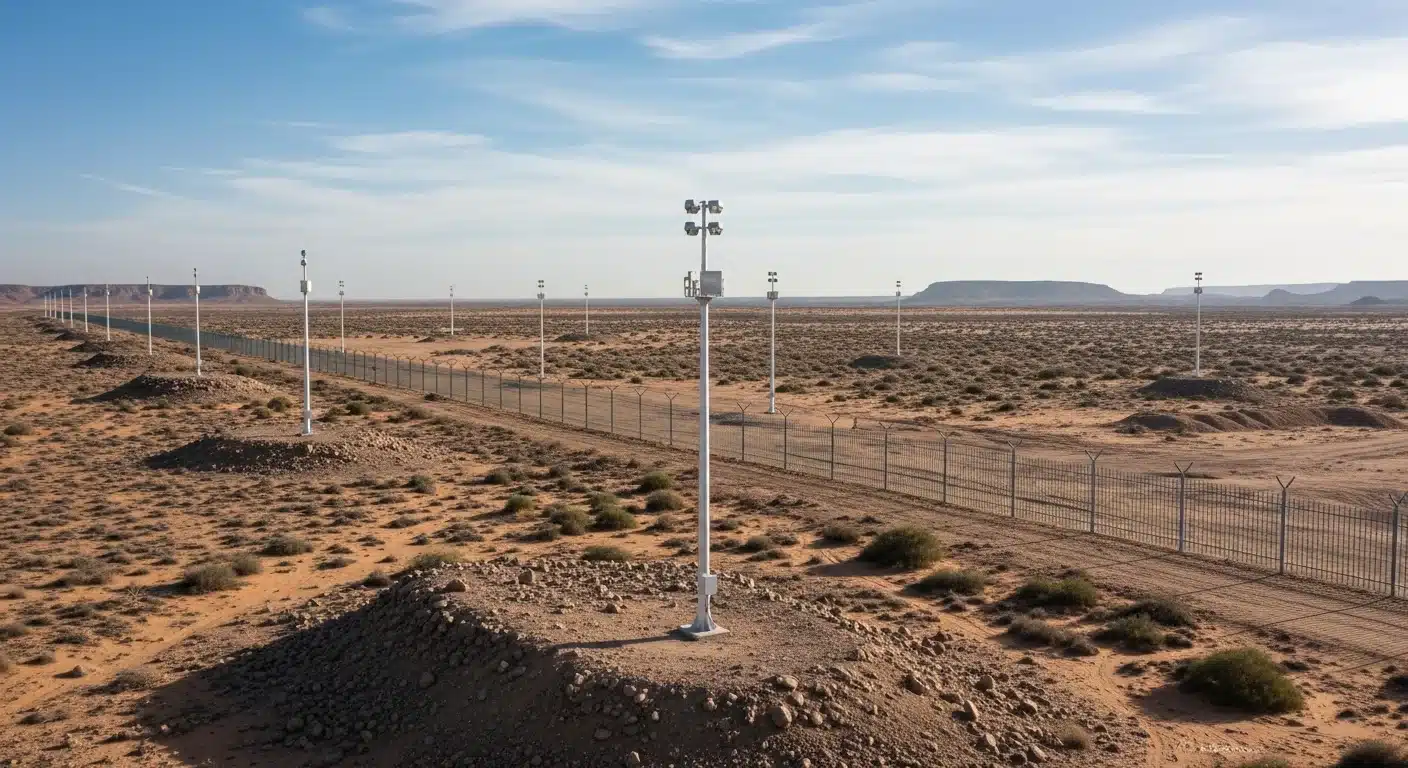
Understanding TDOA Technology
Unlike active radar systems, which emit radio waves and detect reflections, TDOA is a passive sensing technique. It works by measuring the exact time it takes for a drone’s radio frequency (RF) signal to reach multiple synchronized sensors distributed across the airport perimeter.
"By triangulation of these timestamps, the system can pinpoint the 3D location and flight path of a drone with incredible precision, without emitting any interference that could disrupt airport communication systems."
The Benefits of Passive Surveillance
Passive systems offer several advantages in high-stakes environments:
- No RF Interference: Since the system doesn’t emit signals, it is entirely safe for use near sensitive aviation electronics and ILS (Instrument Landing Systems).
- Stealth Monitoring: It detects drones that utilize standard remote control and telemetry frequencies without alerting the operator.
- Cost Efficiency: Distributed sensors are easier to maintain than high-power scanning radars.

Real-Time Mitigation and Integration
Detecting a drone is only half the battle. Our integration with Unified UTM (Unmanned Traffic Management) platforms allows airport security teams to receive instant alerts on a C2 (Command and Control) dashboard. This includes the drone’s altitude, speed, and—depending on the sensor density—the location of the pilot.
In Saudi Arabia, where Vision 2030 is driving massive expansion in airport infrastructure and air travel, integrating passive drone detection is not just an option—it is becoming a foundational component of modern airport security architecture.
جدول المحتويات
Share This Article

Riyadh
شارع الأمير سعود بن عبدالله بن جلوي، القيروان، الرياض 13533، المملكة العربية السعودية
Dhahran
وادي الظهران للتقنية، 8783 شارع ابن الهيثم، الظهران 34464، المملكة العربية السعودية
النشرة الإخبارية
© 2026 All rights reserved.
سياسة الخصوصية | الشروط والأحكام