

The Problem of Maintenance Shutdown
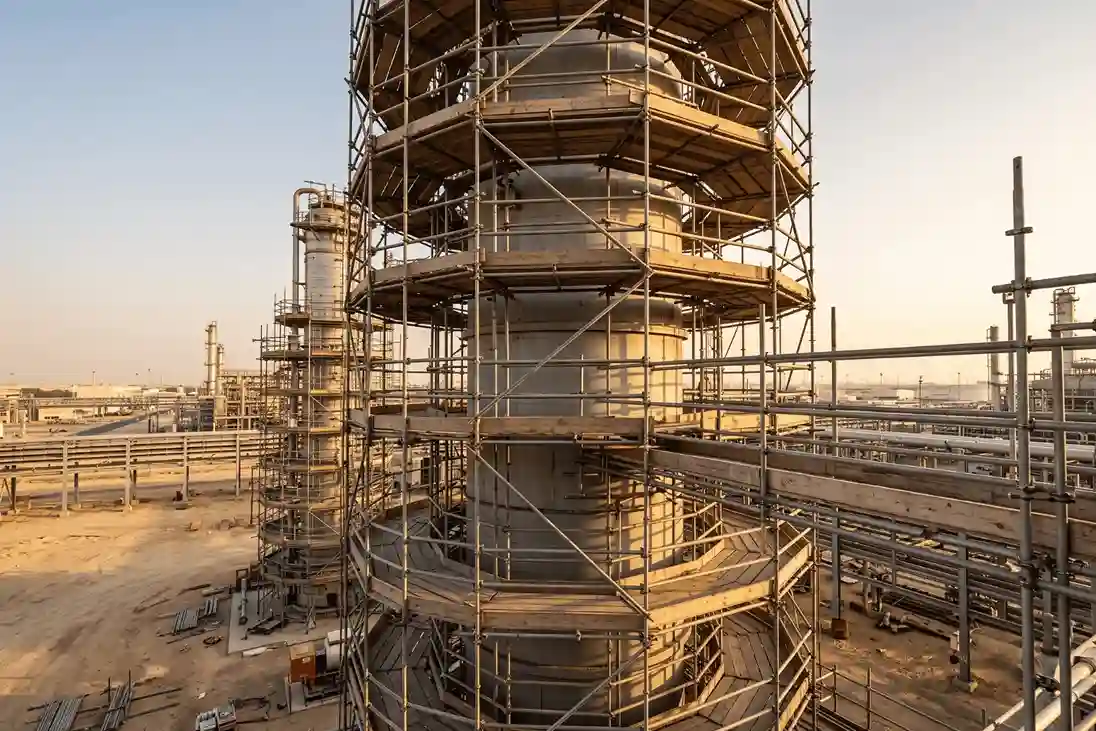
Modern industrial energy hubs, like the King Salman Energy Park (SPARK) which spans a 50 square kilometers master-planned zone, face major challenges checking massive infrastructure networks without halting workflows.
Traditional asset tracking relies on manual walkthroughs and emergency fixes, which introduce severe financial losses and direct operational bottlenecks.
Within the oil, gas, and refining sector, an unplanned equipment shutdown inflicts a heavy penalty costing over SAR 1.8 million per hour in lost production, which averages an annual revenue drain of SAR 327 million per operating plant.
Because unexpected failures give zero notice, emergency repairs run roughly 35% more expensive per minute than a planned, systematically scheduled maintenance outage due to emergency labor fees and rush shipping.
Even when maintenance is planned, traditional access methods create a costly structural bottleneck.
To conduct visual or thermal reviews of tall processing towers or large storage tanks, operators must physically construct massive metal frameworks:
- Physical scaffolding assembly, continuous field modification, and final teardown cycles consume between 5% and 10% of an energy facility’s total turnaround budget, standing as the third-largest expense category behind direct labor and raw materials.
- Constructing a standard, high-altitude industrial scaffolding matrix tower around active processing columns costs anywhere from SAR 937,2 to SAR 1.8 million per individual unit.
- Building these frames requires three days to two weeks of ground construction, forcing the asset to remain idle long before data collection begins.
Furthermore, if internal refractory insulation linings fail within a fired processing heater, it triggers immediate structural shell overheating, costing facilities more than SAR 3,750,000 per day in lost manufacturing availability.
The Solution
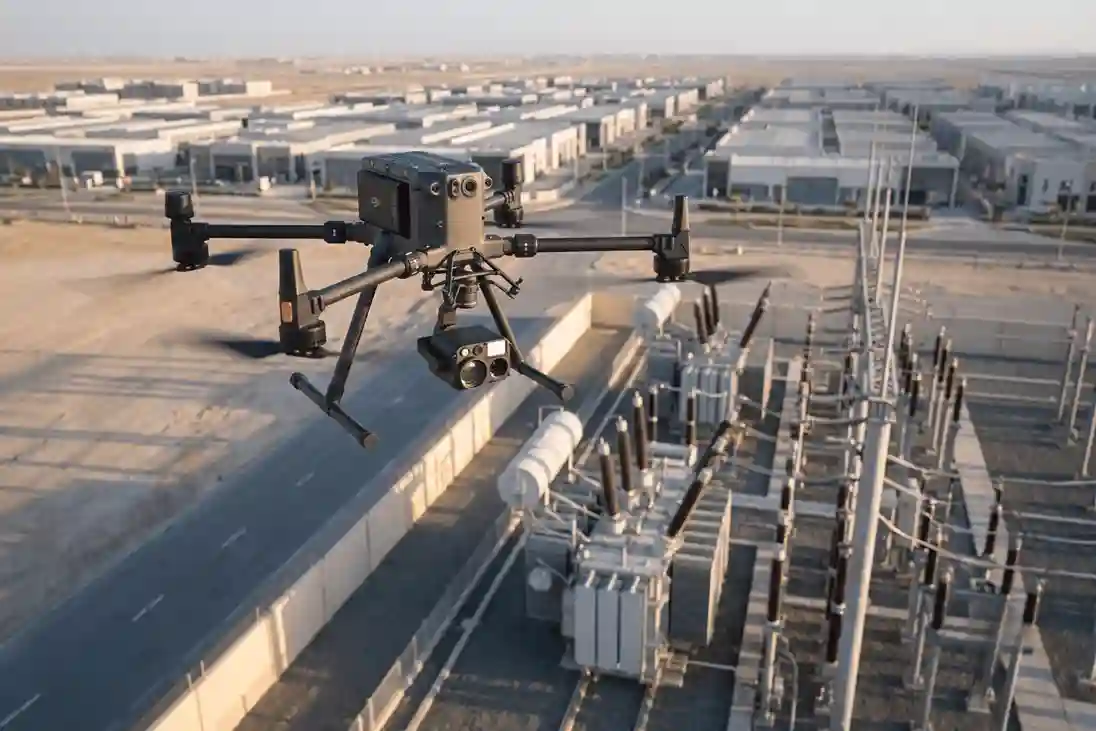
To eliminate these operational bottlenecks and safety hazards, geomatics teams deploy specialized drone inspection workflows using heavy-lift enterprise aircraft. The foundation of this non-shutdown inspection routine is the DJI Matrice 400 platform.
This quadcopter is engineered to handle complex industrial spaces, supporting an automated maximum flight time of 59 minutes, a horizontal cruise velocity of 25 m/s, and an expanded total payload capacity of 6 kg.
This multi-gimbal airframe allows operators to mount multiple high-end tracking tools underneath the drone at the same time.
By equipping the aircraft with the DJI Zenmuse H30T multi-sensor payload, inspectors convert raw surface temperatures into an accurate digital view of the facility’s physical health.
The sensor core houses an uncooled radiometric infrared thermal camera that captures sharp thermal mesh files at a high 1280×1024 pixel resolution to instantly flag subsurface insulation anomalies and heat leaks.
To check high-altitude structural joints safely from a non-hazardous distance, the sensor uses a powerful hardware zoom system supporting 34x optical zoom and up to 400x digital zoom.
Additionally, the payload uses an integrated telemetry module to track precise object coordinates from a distance of 3 to 3,000 meters away, ensuring maintenance teams receive exact real-world dimensions for targeted repairs.
The Financial Outcome (Comparison)
Transitioning from traditional, manual maintenance practices to automated aerial diagnostics delivers a clear financial and operational advantage for utility managers.
| Inspection Method | Duration Timeframe | Fault Identification Success Rate |
| Manual Ground Crews | Baseline (100%) | 60% |
| Automated Drone Fleet | 50% Faster Time | 92% |
Shifting from slow ground walkthroughs to advanced aerial thermography reduces overall electrical grid inspection timeframes by 50%.
Instead of relying on manual notes near live high-voltage lines, the drone automatically maps entire yards in a single flight corridor.
More importantly, the high resolution of the airborne mapping system pushes successful electrical infrastructure fault identification from 60% up to 92%, catching overheating bushings and loose couplings before a catastrophic blackout occurs.
By catching structural insulation issues and grid anomalies early while the equipment is fully active, facilities completely avoid the staggering SAR 1.8 million per hour unplanned downtime penalty.
Furthermore, completely eliminating the need to spend SAR 937,2 to SAR 1.8 million per scaffolding tower saves up to 10% of the total Turnaround budget.
This workflow keeps surrounding ground labor fully productive and protects the energy hub’s long-term capital investments with clear digital data.
Ready to optimize your facility’s uptime? Consult with our expert to set up your drone inspection workflow for your operations.

 العربية