
Autonomous Maintenance: How the low altitude economy Will Inspect NEOM’s The Line in 2026
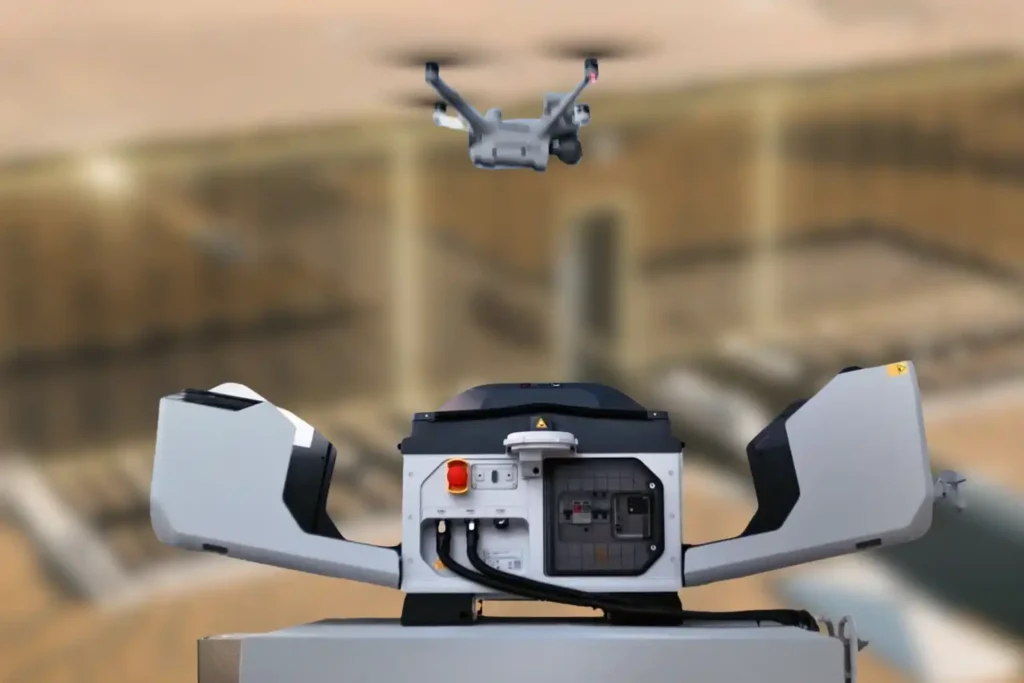
The Density Challenge When we talk about NEOM’s The Line, we are not discussing a standard skyscraper. We are talking about a continuous, 170km-long structure where structure and facilities are bound together in a straight, vertical line. Unlike traditional cities where utilities are spread out horizontally, The Line compresses everything from energy, water, transport, and structural beams into a tight, stacked footprint. This creates a unique maintenance nightmare: overlapped utilities and narrow, vertical corners that are impossible for humans to access safely. In this dense environment, a single pipe failure can cascade into critical electrical systems because they are “gathered” so closely together. Traditional maintenance methods like hanging platforms are too bulky and slow for these confined, high-tech corridors. The solution is not “more people.” It is a new layer of infrastructure. This is the low altitude economy, a dedicated digitized airspace where specialized autonomous robots navigate the tight gaps and vertical shafts to inspect, clean, and maintain the city without human intervention. The Invisible Maintenance Layer In 2026, the maintenance system of The Line will operate as a “Drone Hive,” seamlessly integrated into the building’s spine to handle the complex, gathered infrastructure. I. The Drone Hive (Advanced Docking Stations) Imagine a network of autonomous stations, such as the next-generation DJI Dock 3 (conceptually evolving from the current Dock 2), embedded directly into the utility layers of the megastructure. These compact, weather-proof stations act as home bases. At night or during low-traffic hours, drones automatically deploy to scan the narrow vertical shafts, creating a persistent cycle of monitoring that no human crew could match. II. Navigating the Narrow Corners The Line’s design creates deep, narrow recesses where utilities overlap. Standard drones cannot fly safely in these confined, GPS-denied zones. The solution is the Voliro T. Omnidirectional Flight: Unlike standard drones, the Voliro T uses tiltable rotors to fly in any orientation. It can hover sideways or upside down to navigate the tight corners between a water pipe and a structural beam. Contact Inspection: It can press a probe against a pipe buried deep in a vertical shaft to test for corrosion or sealant failure, ensuring integrity even in the most crowded utility zones. From Inspection to Intelligence The true power of this system isn’t just flight; it’s the ability to untangle the complexity of bound facilities. We are moving from simple inspection to predictive maintenance. III. Predictive Maintenance In a structure where facilities are gathered so tightly, you cannot wait for a leak to happen. The system uses predictive maintenance to analyze the “overlapped” layers of the building. Thermal Scanning: Drones fly the vertical corridors, using thermal sensors to “see” through the layers. They can detect a cooling leak behind a wall panel or an overheating cable tray hidden by a structural beam. The Digital Twin: Every byte of data feeds into NEOM’s Digital Twin. Because the structure and facilities are bound together, the Twin can predict how a vibration in the rail line might affect the plumbing stack next to it. It logs defects, identifies the exact replacement part for that specific narrow corner, and schedules the repair before a failure occurs. IV. Safety & Aesthetics By eliminating bulky external cranes, we preserve the sleek aesthetic of The Line. More importantly, using drones for these narrow, vertical corners removes the risk of sending personnel into confined, high-altitude utility shafts. It turns a high-risk job into a supervised digital workflow. Proving the Concept Today The technology to maintain the vertical cities of the future exists today. It just needs to be scaled. The low altitude economy is not science fiction; it is the operational standard for 2026. You can deploy these autonomous workflows on your current high-rise assets right now to reduce costs and risk and get a FREE 3-month progress monitoring period through talking to our expert.
 العربية
  English