
Milestones to Watch in 2026 as Saudi Arabia Advances Vision 2030
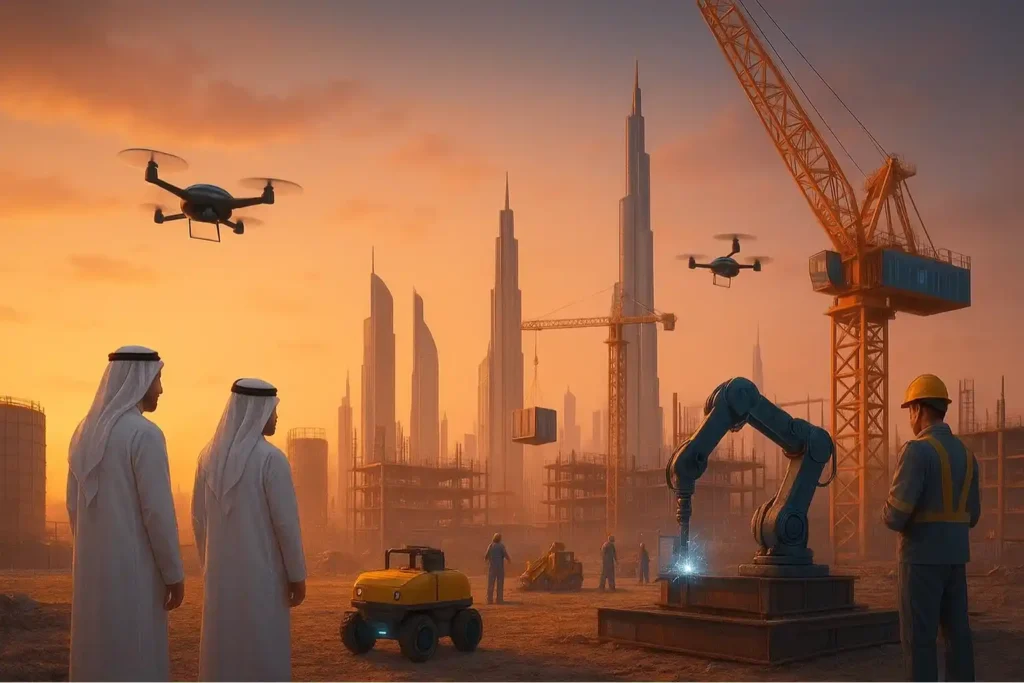
The Year of Realization For the past seven years, the world has watched Saudi Arabia move earth and sand on a scale never seen before. We have witnessed the largest construction sites in history, from the mountains of Trojena to the coasts of the Red Sea. But as we approach 2026, the narrative is changing. 2026 is the tipping point. It is the year where “artist renderings” transform into “operational assets.” It is the year where the dust settles, and the cities come to life. This transition presents a new, critical challenge for developers and government entities. The focus shifts from “How do we build it fast?” to “How do we keep it running perfectly?” Achieving these Saudi Vision 2030 milestones requires a fundamental pivot in technology. We must move from construction support to operational intelligence. The tools that built the cities, such as drones, LiDAR, and digital models are now the tools that will sustain them. The stakes in 2026 are incredibly high. The Kingdom will not just be building; it will be hosting. With major global events on the horizon and tourists arriving, the reliability of infrastructure becomes the new currency. A failed air conditioning unit in a luxury resort or a structural issue in a theme park is no longer just a “snag list” item; it is an operational failure. To prevent this, asset managers must adopt a proactive, data-driven approach to maintenance immediately. The Deliverables of 2026 To understand the scale of the challenge, we must look at what is coming online. The sheer volume of infrastructure being delivered in 2026 is staggering, and each project brings unique maintenance demands. I. NEOM: The Vertical Challenge By 2026, the NEOM region will see significant activity. While the full 170km of The Line is a long-term goal, early segments and the luxury island of Sindalah will be operational or nearing advanced stages. This introduces a unique problem: inspecting vertical infrastructure. Traditional maintenance crews cannot easily abseil down a 500-meter mirrored facade to check for cleaning needs or structural stress. The Saudi Vision 2030 milestones for NEOM depend on autonomous aerial systems, drones that scan the exterior continuously, detecting defects without human risk. Furthermore, the energy infrastructure powering these zones must be flawless. NEOM’s commitment to 100% renewable energy means that solar farms and wind turbines must operate at peak efficiency. Dust accumulation or a single damaged blade can disrupt the energy grid. Manual inspection in the desert heat is inefficient. Autonomous drones will become the primary inspectors, ensuring the city of the future remains powered. II. Red Sea Global: The Coastal Challenge The Red Sea destination is moving fast. After the opening of the first resorts in 2024 and 2025, the year 2026 sees the expansion of Shura Island, with eight additional resorts slated for completion. This shifts the focus to marine integrity. Hotels sitting over the water and subsea assets face constant corrosion and biofouling. Maintaining the pristine nature of these sites is non-negotiable. This requires robotic inspection, ROVs underwater, and drones in the air to monitor the environment and the assets simultaneously without disturbing the ecosystem. The Saudi Vision 2030 milestones here are about balancing luxury with ecology. Any leak or structural failure could damage the coral reefs that attract tourists. Therefore, the inspection technology must be non-intrusive and highly accurate. III. Qiddiya City: The Entertainment Challenge Qiddiya City has announced that its flagship theme park, Six Flags Qiddiya, will open on December 31, 2025. This makes 2026 its first full year of operations. This is a massive milestone. The park features record-breaking rides like Falcons Flight. The safety requirements for such high-performance machinery are extreme. Managers cannot rely on slow, manual checks for rides that travel at 250 km/h. They need real-time structural health monitoring. Drones equipped with high-zoom cameras and thermal sensors can inspect the high tracks of roller coasters before the park opens each day. They can verify that every bolt and weld is secure. This ensures that the thrill remains safe, protecting the reputation of the Kingdom’s entertainment sector. IV. Diriyah and Urban Heritage In Riyadh, the Diriyah Gate project continues to expand. By 2026, new luxury hotels like the Aman Wadi Safar are expected to open. This project is unique because it blends modern luxury with delicate mud-brick heritage architecture. The maintenance challenge here is preservation. Heavy cleaning equipment or standard industrial inspection tools might damage the historic surfaces. Drones offer a “touchless” inspection method. They can scan the heritage sites to detect water damage, erosion, or structural shifts to the millimeter without ever physically touching the ancient walls. This preserves the history while ensuring the safety of the modern guests inside. The Operational Tech Stack How do we manage assets of this complexity? The answer lies in the “Digital Handover.” We must carry the high-precision data collected during construction into the operational phase. V. From BIM to Digital Twin During construction, we used drones to create precise BIM (Building Information Modeling) files to guide the builders. In 2026, this data transforms into a Digital Twin. This is a live, virtual replica of the city. When a drone inspects a building in 2026, it updates the Digital Twin. Facility managers can sit in a control room and see the exact condition of a solar panel or a water pipe in 3D. They don’t just see a maintenance ticket; they see the asset’s history and its future. For example, if a drone detects a crack in a facade at The Line, the Digital Twin can instantly show the managers what materials are needed for the repair, how to access the area safely, and how critical the damage is. This speed of information is vital for maintaining the seamless experience promised by Vision 2030. VI. Autonomous “Smart” Inspection (Low Altitude Economy) Manual maintenance cannot scale to meet Saudi Vision 2030 milestones. There are simply too many assets and not enough inspectors. The future is the low altitude economy. Imagine autonomous drone docks
 English
  العربية