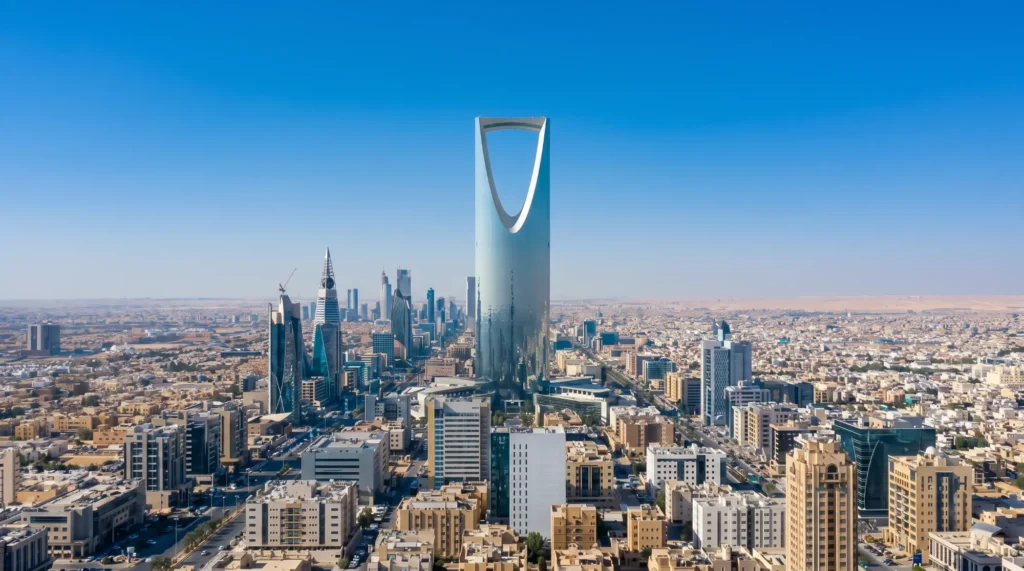
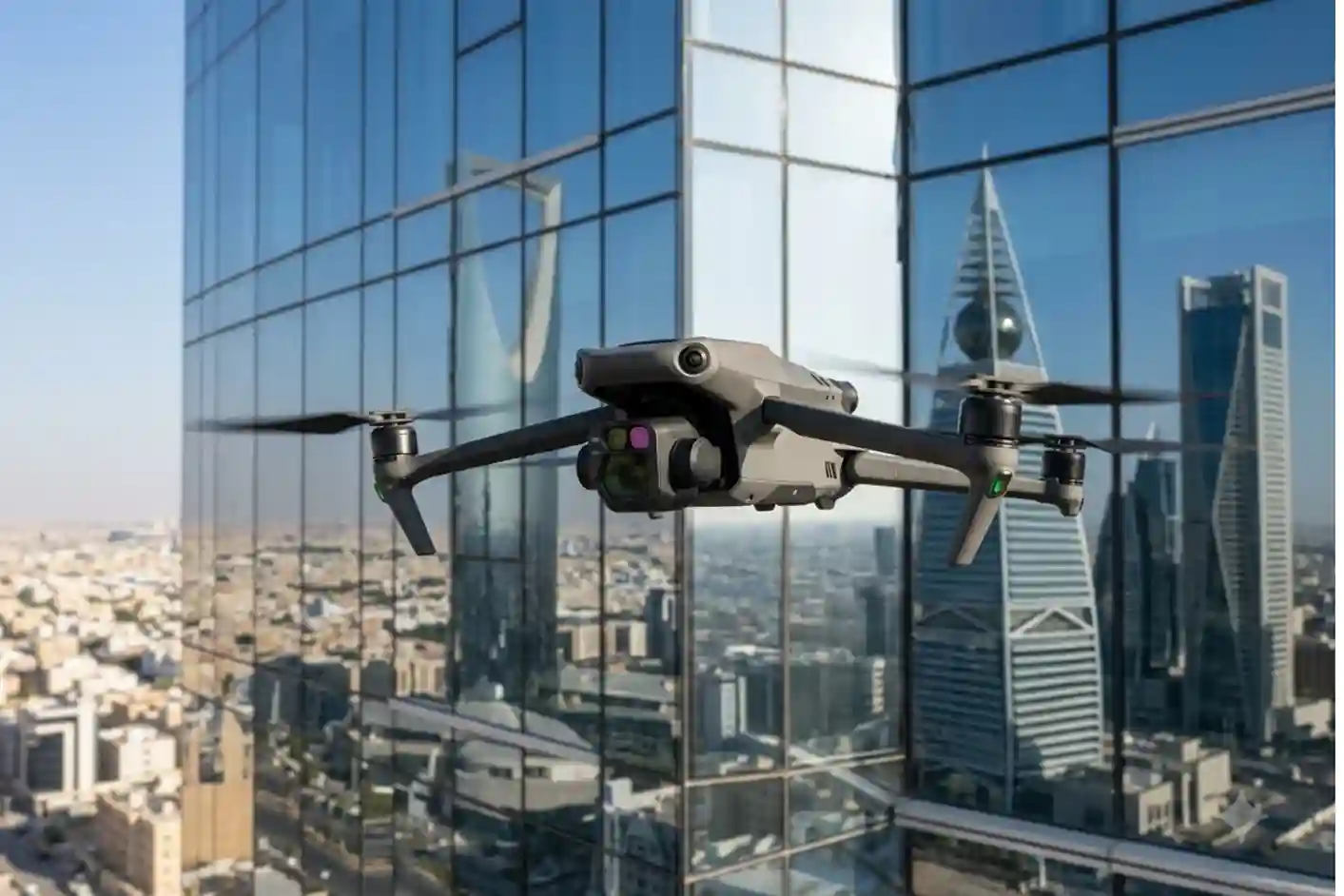
Traditional facade inspections are often stuck in the past. Facility managers usually rely on heavy scaffolding or rope-access teams to check for building damage.
This manual approach is slow and carries high operational costs. It often delays critical repairs that are needed to protect the building’s structural health.
While we previously explored how thermal imaging drones identify invisible energy leaks to stop electricity waste, the transition to full drone-driven maintenance is the next logical step.
By adopting innovation, managers can move from reactive cleaning to proactive asset preservation.
Core Benefits of Drone Inspections
Eliminating Human Risk
Safety is the most important factor in high-rise maintenance. Drones keep workers safely on the ground, which significantly lowers the chance of falls or injuries.
Switching to automated aerial logistics reduces near-miss safety incidents on active sites by 34%. This creates a much safer environment for the entire maintenance crew.
Time & Cost Savings
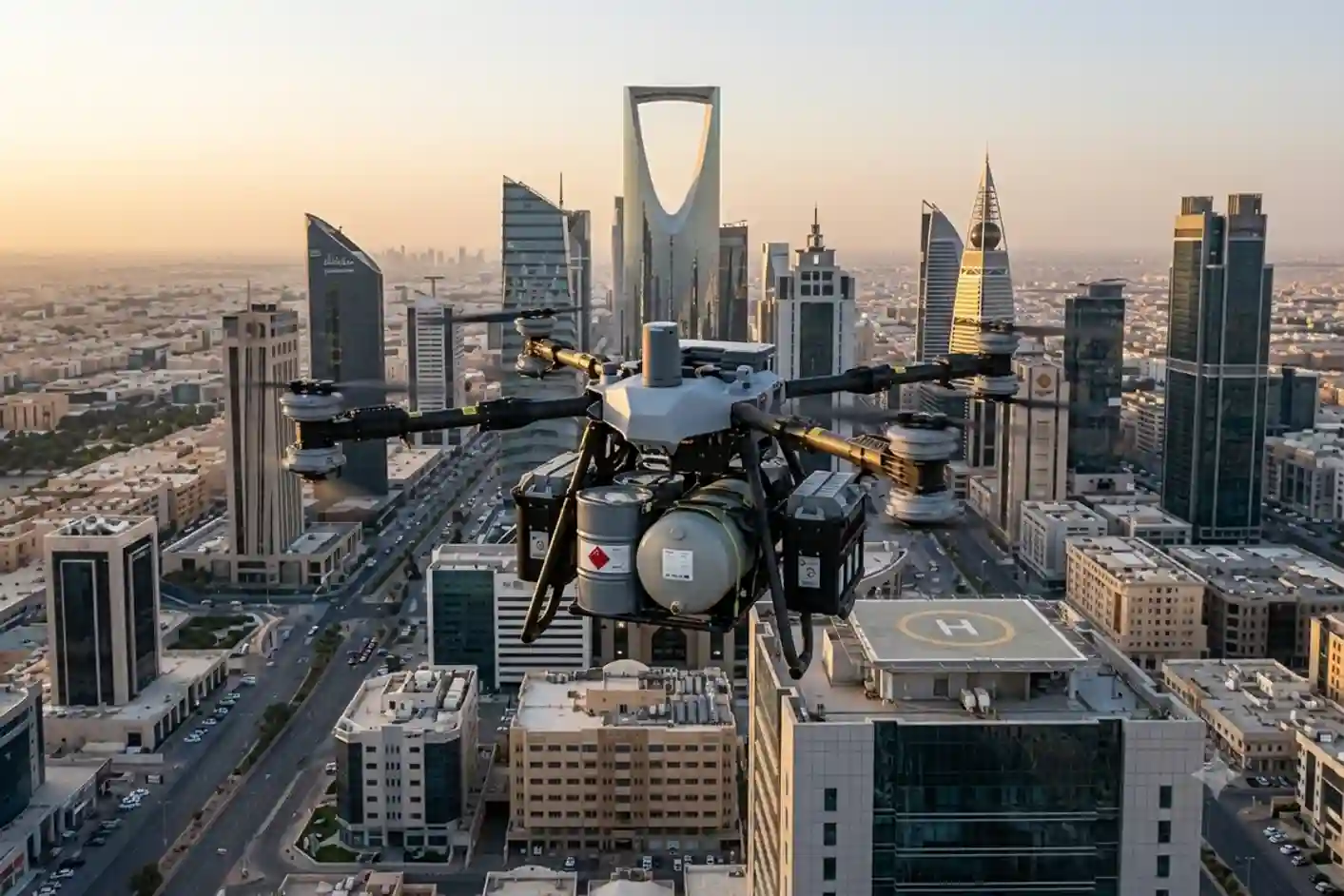
The difference in speed between manual labor and drones is massive. Setting up scaffolding for a 10-20 story building takes 1 to 3 weeks, but a drone can begin delivering materials to a site in just a few hours.
Furthermore, drones increase surveying efficiency by 60-fold. They can cover up to 120 acres per hour compared to just 5 acres via traditional manual methods.
Data Precision
Drones provide a level of detail that the human eye cannot reach from a distance. They capture every hairline crack and sealant failure with centimeter-level accuracy.
This precision removes the guesswork from facility budgets. Managers can now spend their money on actual repairs instead of on expensive access equipment.
Data Points Captured
High-Resolution Visual Imagery (RGB)
High-resolution visual imagery acts as the primary “eyes” of the inspection. It captures clear, detailed photos of structural damage and surface wear across the entire façade.
Thermal Imagery (Thermography)
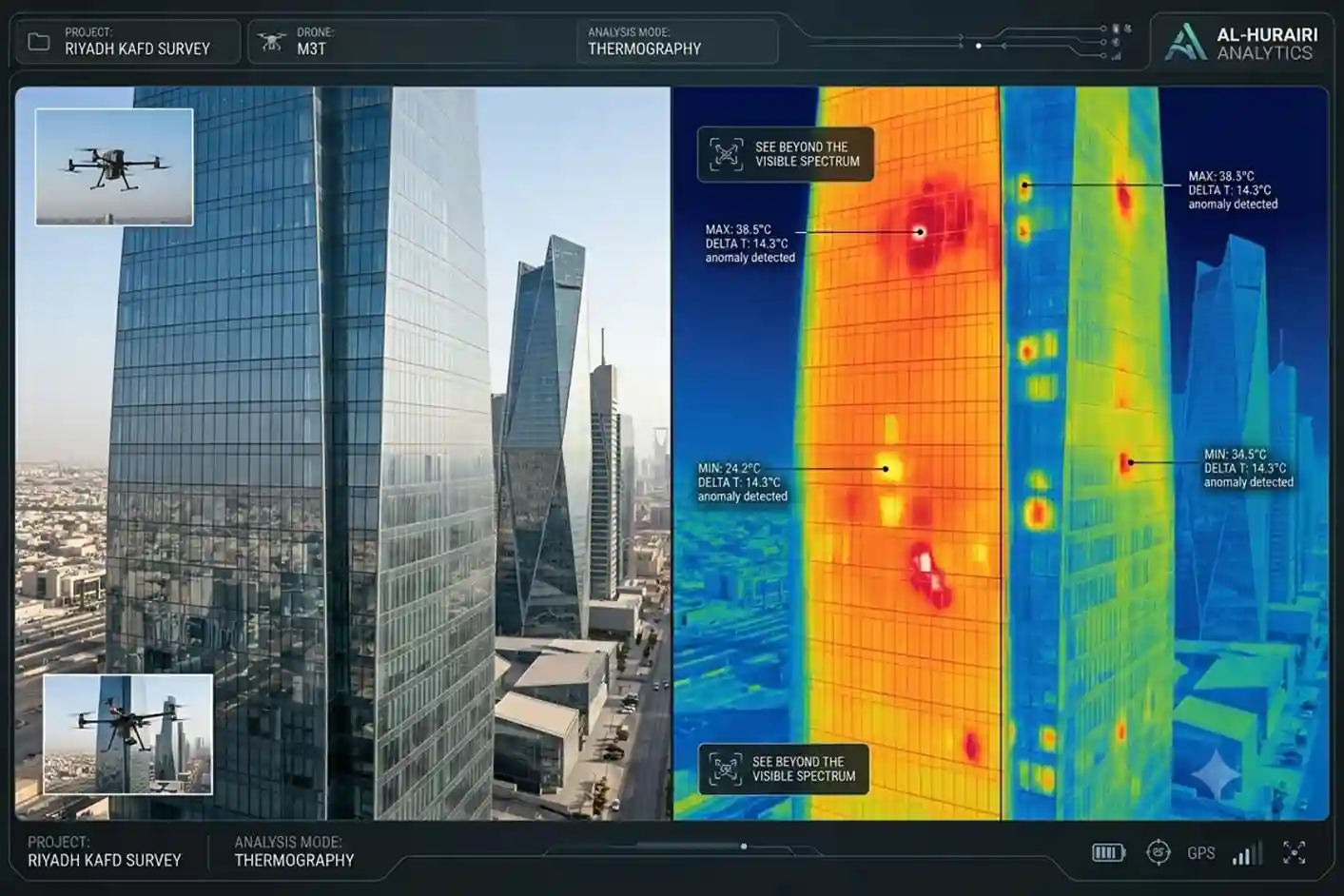
Thermography allows for the detection of hidden moisture and heat gain behind building walls. This is vital for maintaining the building’s internal temperature and reducing cooling costs.
3D Modeling & Digital Twins
By using photogrammetry, drones create 3D models and digital twins of the property. These models allow managers to virtually walk around the building to plan complex repairs.
When maintenance is required, heavy-lift drones like the DJI FlyCart 100 take action. It supports a payload of up to 85 kg, making it capable of transporting significant construction materials like insulation rolls and industrial sealants.
Turning Raw Aerial Data into Actionable Insights
Cloud Processing
Collecting raw data is only the first half of the job. Cloud processing turns thousands of individual aerial photos into a single, cohesive digital map.
This processing happens quickly in the office. It allows for much faster decision-making compared to waiting for manual paper reports to be filed.

 العربية